
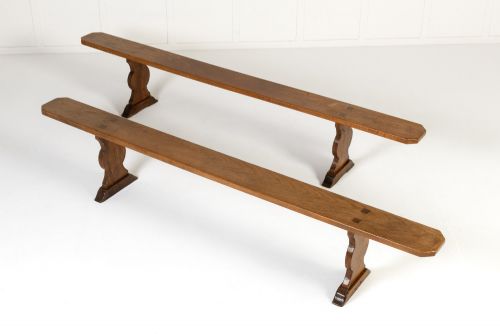
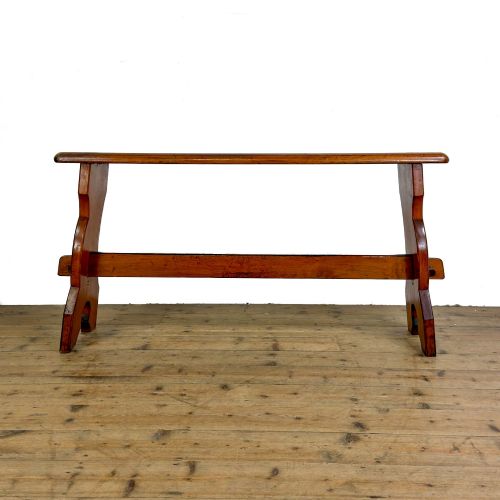
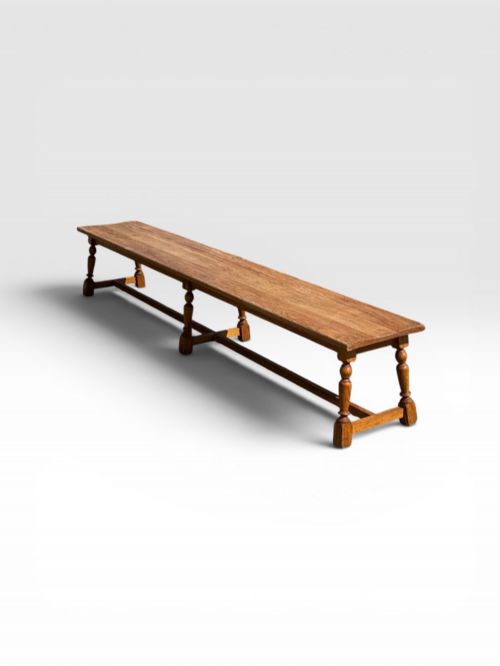
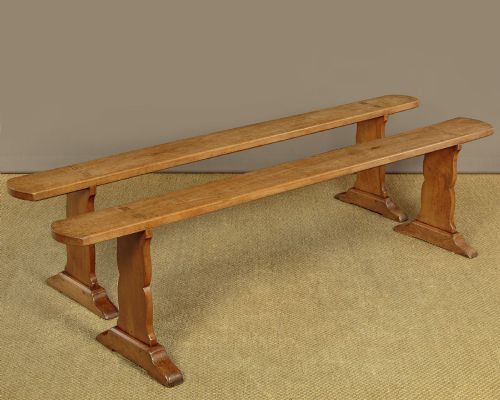



Country Trestle Bench
A country trestle bench offers honest utility and simple lines, grounding an interior with the grain of pine, oak, elm, or cherry.
Country Trestle Bench
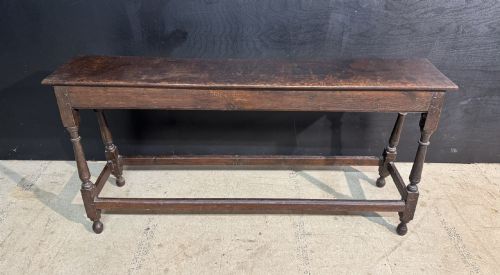
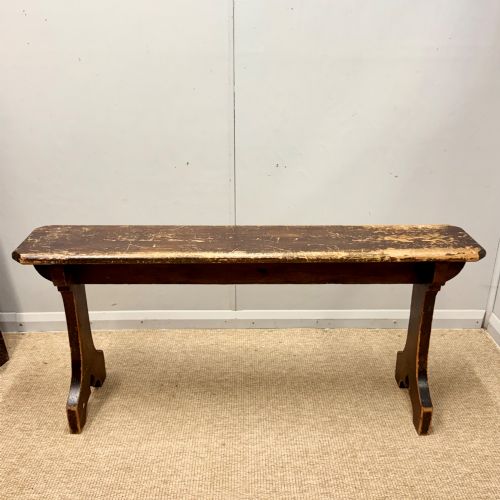
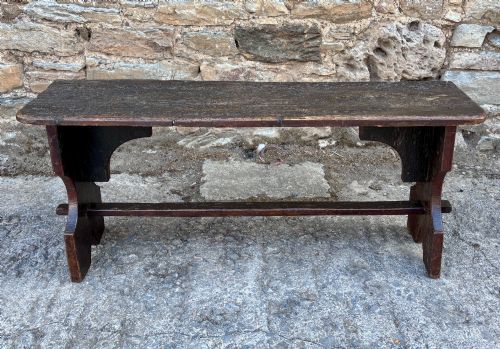
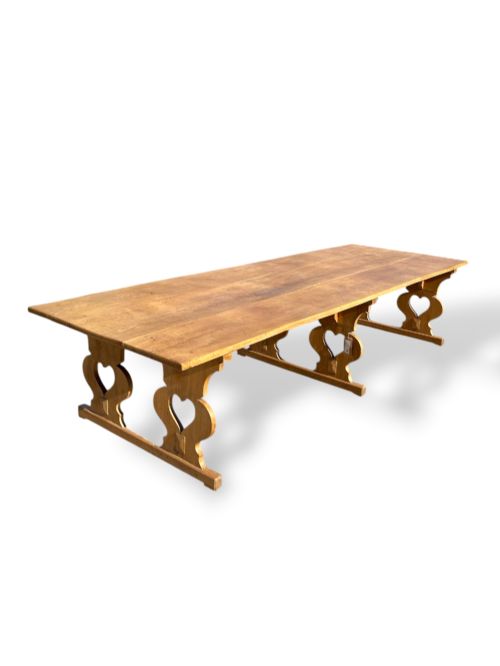
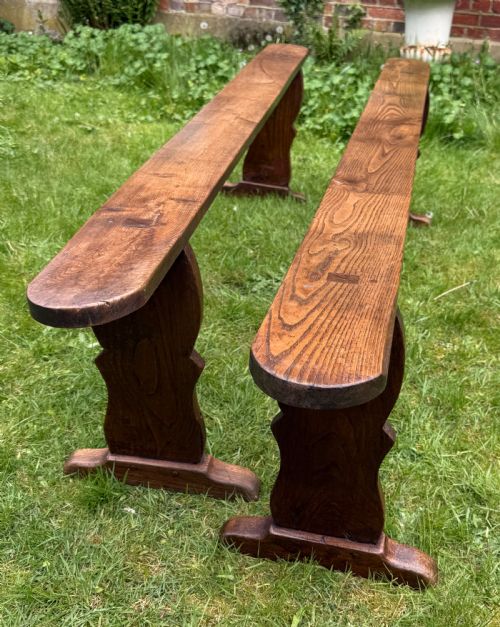
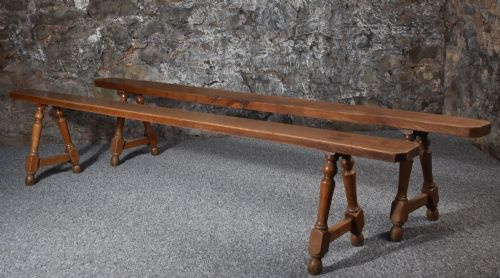
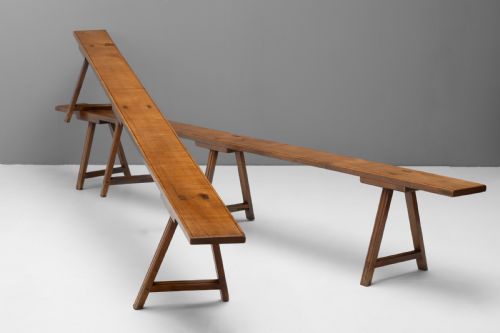
A country trestle bench brings utilitarian seating into domestic spaces, appearing in lengths from short hall seats to long refectory formats reaching nine feet. These pieces emerge from domestic, tavern, and agricultural contexts, built to serve practical needs rather than display formal ornament.
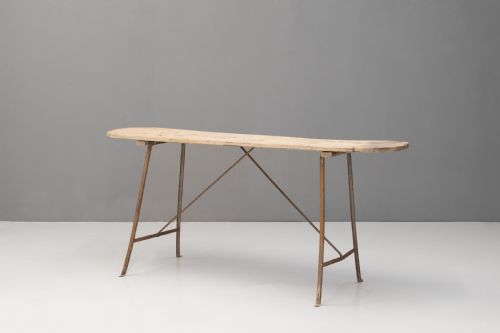
The inventory leans heavily towards nineteenth-century examples in pine and oak, alongside French and Scandinavian regional pieces in cherry, elm, and sycamore. Shorter stools and tables sit alongside the seating, reflecting the broad interpretation of rustic forms in the current selection.
Materials and construction methods
Makers relied on solid native timbers such as oak, pine, elm, and cherrywood, selecting boards for strength and utility. Wrought iron occasionally appears in structural brackets or fixings, supplementing traditional joinery.
Construction methods prioritize durability over refinement, using pegged joints, stretcher bases, and sturdy trestle supports. Surfaces show the marks of hand tools, scrubbed finishes, or accumulated layers of historic paint rather than high-gloss polishing.
One listed piece arrives with the wonderfully specific historical description of an original pine pig scratch.
Distinctions in quality
Quality rests upon the integrity of the timber and the honesty of the wear. Pieces fashioned from dense heartwood like oak or mature fruitwoods hold their structure better than softer, hastily assembled alternatives.
The character of the surface tells the true story. Untouched patination, natural fading from decades of sunlight, and deep integration of wax or grease distinguish a genuine working antique from a later reproduction.
The Country Trestle Bench Glossary
- Trestle
- A structural support consisting of a horizontal beam fixed to two splayed legs. This arrangement allows maximum legroom along the length of a bench or table.
- Patina
- The surface sheen and colour developed by timber over decades of handling, cleaning, and exposure to light. It is a key indicator of age and authenticity.
- Refectory
- A long dining format originating in monastic or institutional dining halls. These benches are proportioned to run alongside large communal tables.
- Scrubbed
- A finish achieved by vigorous washing and scouring of softwood surfaces, removing old finishes to expose pale, clean grain.
Country Trestle Bench: Frequently Asked Questions
How do I clean a pine bench?
Wipe surfaces down gently with a damp cloth and mild soap, avoiding harsh chemical strippers that strip away historic patination.
Feed dry timbers periodically with a modest application of beeswax to preserve the grain without creating an artificial gloss.
Are these benches suitable for daily dining?
Most long timber benches were built precisely for heavy domestic or tavern use, making them robust enough for modern dining tables. Check the seat height against your table clearance before purchasing.
Ensure floor surfaces are level to prevent rocking on rigid trestle feet.
How can I tell pine from fruitwood?
Pine displays a softer, more open grain with distinct growth rings and knot patterns, often taking on a honeyed tone with age. Fruitwoods like cherry and sycamore present a tighter, denser grain with warmer pink or amber undertones.
Weight provides a further clue, as dense fruitwoods feel noticeably heavier than equivalent pine dimensions.
What is a West Country bench?
This designation refers to regional vernacular furniture originating from the southwestern counties of England. These pieces frequently utilise local elm or oak, constructed with robust simplicity.
They carry distinct carpentry quirks tied to regional workshops rather than metropolitan cabinetmakers.