


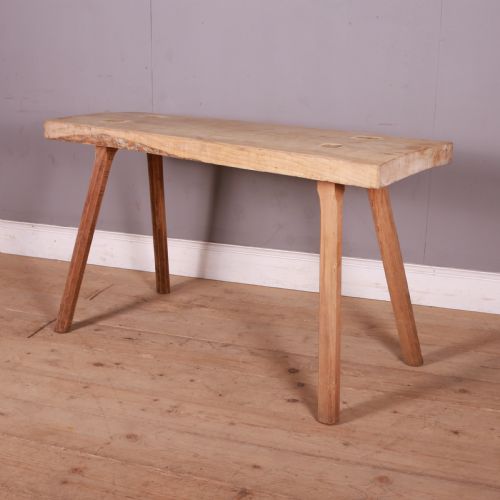


Antique Farm Bench
An antique farm bench brings honest utility and enduring character into a room, offering simple timber seating built for everyday labour.
Antique Farm Bench
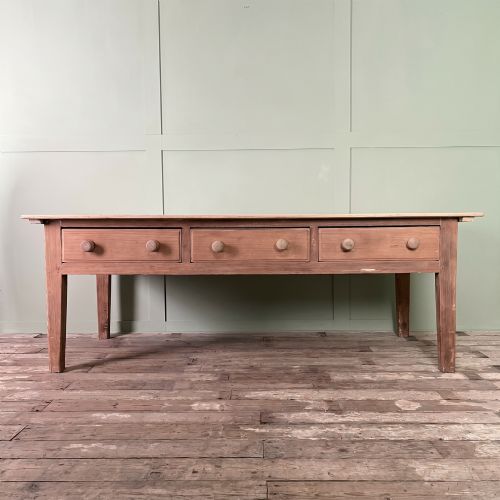
An antique farm bench is a utilitarian wooden seat originating from rural domestic or agricultural settings, designed for practical hard work rather than formal display. The selection on this page centres primarily on sturdy nineteenth-century forms, alongside related preparation tables and settles that share the same robust provenance.
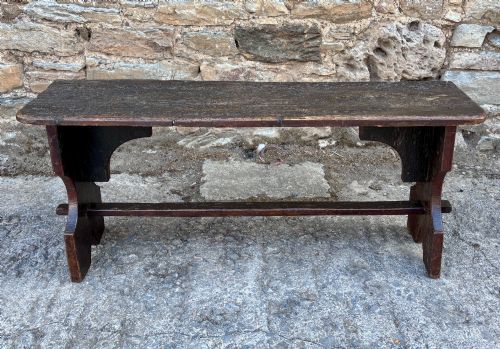
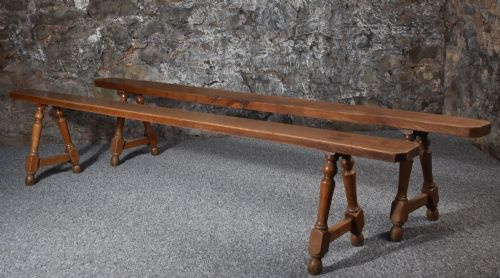
Buyers encounter pieces fashioned from regional hardwoods and softwoods, ranging from long cherry benches to narrow oak pig benches and pine storage settles. These items reflect the vernacular traditions of various European regions, including English, French, Scandinavian, and Hungarian workshops.
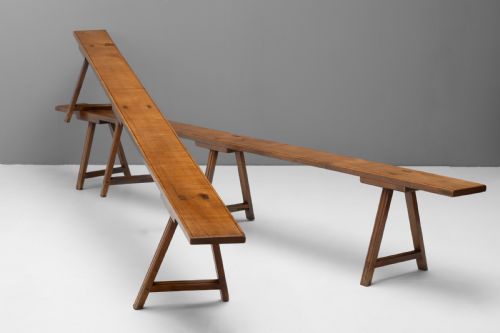
The primary forms include simple backless benches, box benches with integrated storage, and traditional farmhouse settles designed to keep draughts at bay. Each piece carries the distinct marks of its working past, offering straightforward seating or low display surfaces for modern interiors.
How they were made
Maker-joiners utilised whatever accessible local timber came to hand, combining sycamore, oak, pine, elm, and cherry wood within a single piece depending on structural needs. Tops and seats often employ thick pine or scrubbed sycamore, whilst legs and supports rely on tougher hardwoods like oak and elm.
Construction relies on straightforward traditional joinery methods suited to hard agricultural life, avoiding delicate ornamentation in favour of sheer physical strength. Surfaces frequently show the effects of daily scrubbing, heavy waxing, or original painted finishes that have worn down naturally over decades of use.
Several pieces preserve the rigorous scrubbed finish demanded by generations of dairymaids who kept their workspace spotless.
What varies in quality
The calibre of an antique farm bench rests largely on the integrity of its timber and the honesty of its surface preservation. Pieces with untouched scrubbed finishes or deep natural wax patination stand apart from those altered or overly stripped by later restorations.
Structural proportion and timber selection also divide ordinary utility items from finer vernacular examples. Heavy elm seats with well-turned or pegged legs demonstrate superior regional craftsmanship compared to purely utilitarian workshop benches.
The Antique Farm Bench Glossary
- Settle
- A wooden bench featuring a high back and solid arms, originally designed to block cold draughts in farmhouse kitchens.
- Pig bench
- A low, narrow wooden bench traditionally utilised for agricultural tasks, now frequently adapted for use as a coffee table.
- Scrubbed finish
- A timber surface repeatedly washed and scoured with water and soap, leaving a pale, clean grain characteristic of dairy and kitchen furniture.
- Form bench
- A simple, backless wooden bench intended for communal dining or working use around a farmhouse table.
- Trestle table
- A table construction where the top rests on two or more supporting frames rather than four corner legs.
Antique Farm Bench: Frequently Asked Questions
How are antique farm benches used today?
These benches fit naturally along dining tables, in hallways as a place to sit while removing shoes, or positioned against living room walls.
Shorter narrow versions also serve well as low coffee tables in open-plan spaces, combining rustic texture with practical surface area.
What woods were used for farm benches?
Joiners built these pieces from whatever regional timber was locally abundant and robust enough for daily farm work.
Common materials include pine for lighter sections, heavy elm and oak for structural strength, and cherry or sycamore for seats and table surfaces.
How do I clean an antique pine bench?
Maintenance requires little more than dusting with a dry cloth and occasionally applying a traditional bees-wax to nourish dry timber.
Avoid harsh modern chemical sprays or soaking the wood with water, which can damage historic scrubbed or waxed patinations.
How can I tell the age of a bench?
Dating relies on observing construction marks, tool traces, timber shrinkage, and the natural wear patterns accumulated over generations of use.
Pieces originating from the nineteenth century often display hand-sawn board widths and peg joinery rather than modern mechanical fasteners.