


Vintage French Workbench
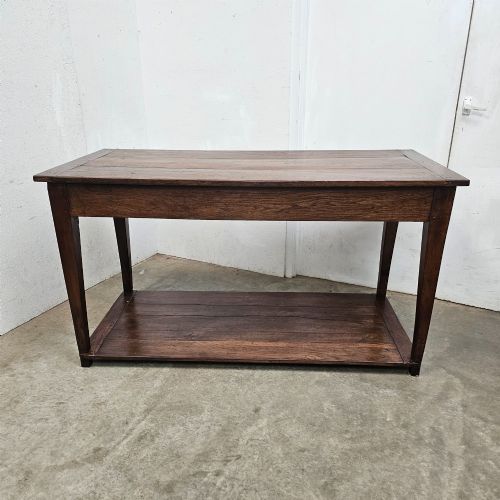
A vintage french workbench brings authentic utility and timeworn character into modern interiors as a striking console or prep table.
Vintage French Workbench
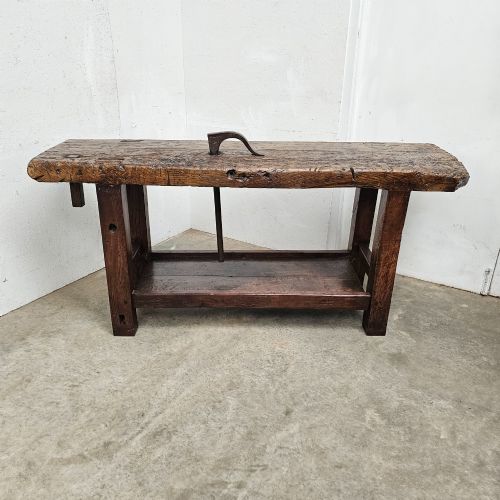
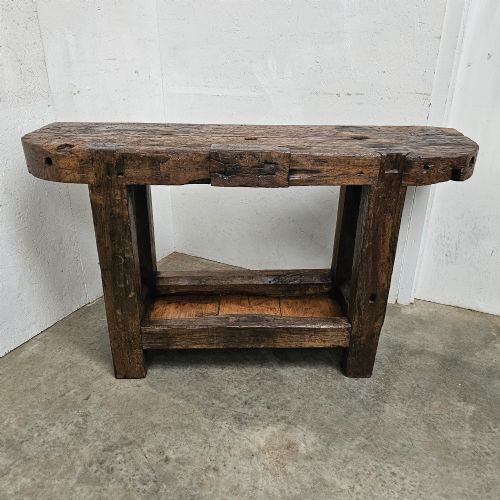
A vintage french workbench is a practical table designed for trades and crafts, appearing here in forms such as artisans' benches, craftsmen's benches, and watchmakers' tables. These heavy-duty pieces originate predominantly from the nineteenth century, spanning periods from eighteen sixty through to nineteen hundred.
The construction typically follows provincial, country, and primitive rustic styles rather than formal cabinetmaking traditions. Buyers will regularly encounter functional variants equipped with integrated vices, clamping bars, or dual tiers intended for specific workshop tasks.
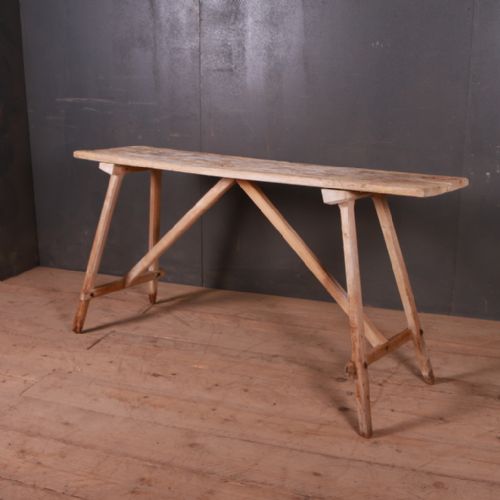
Alongside dedicated workbenches, the selection encompasses related functional forms including console tables, trestle tables, and cobblers' benches. These diverse utilitarian objects share robust proportions and a direct utility rooted in historical French working environments.
Materials and construction
Makers utilised dense native hardwoods including oak, elm, beech, sycamore, and pine to withstand heavy daily use in workshops. These substantial timber elements were joined with sturdy structural framing to create enduring work surfaces.
Metal components appear in forged iron and cast iron, most notably in functional additions such as vices, screws, and hardware mechanisms. The combination of heavy timber and utilitarian metalwork defines the structural integrity of each piece.
Listings feature nineteenth-century pieces spanning from eighteen sixty to nineteen hundred, constructed in oak, elm, pine, beech, and sycamore.
Evaluating quality and proportion
The distinction between examples lies in the integrity of the original timber and the presence of working mechanical elements like vices and clamping bars. Pieces displaying honest patination from prolonged workshop use hold greater appeal than heavily restored surfaces.
Scale and proportion also define the better examples, ranging from compact elm benches to substantial country house workbenches measuring over eight feet. The balance between sturdy wooden framing and functional hardware dictates the character of each item.
The Vintage French Workbench Glossary
- Clamping bar
- A sliding wooden or metal bar fixed to a workbench used to secure materials during woodworking tasks. This component often retains its original wooden screw mechanism.
- Trestle table
- A table comprising two or more support frames connected by a horizontal beam over which a board is placed. These sturdy tables served various utilitarian functions in French interiors.
- Provincial
- Denoting styles originating from the regions outside Paris, characterised by straightforward construction using local materials. These regional pieces reflect traditional craftsmanship rather than academic design.
- Vice
- A mechanical screw apparatus mounted to the side or end of a workbench to hold workpieces securely. Original vices often exhibit heavy iron or wooden construction.
- Scrubbed finish
- A surface treatment resulting from repeated washing and scouring of softwood or hardwood tables. This process leaves a pale, clean timber texture free from modern varnishes.
Vintage French Workbench: Frequently Asked Questions
What is a vintage french workbench used for today?
These robust tables function exceptionally well as kitchen prep islands, hallway console tables, or distinctive desk surfaces in modern residential settings. Their generous proportions and sturdy surfaces easily accommodate daily domestic tasks.
Beyond utilitarian roles, they serve as focal points in living spaces, bringing historical texture and architectural weight to a room. The integrated vices and deep timber tops offer distinct visual character that polished modern furniture lacks.
How do I identify a nineteenth-century piece?
Nineteenth-century examples display construction methods typical of pre-industrial or early industrial workshops, including hand-cut joints and dense native hardwoods like oak, elm, and sycamore. Tool marks and structural wear provide clear evidence of age.
Dates generally range across the eighteen hundreds up to nineteen hundred, encompassing specific periods like eighteen sixty and eighteen eighty. Examining the underside and the wear around working vices helps confirm the period.
Are these benches suitable for kitchen islands?
Many buyers utilise these sturdy tables as kitchen islands because their thick timber tops provide durable surfaces for food preparation. The lower shelves or two-tier designs also offer practical storage for cookware.
Heights and dimensions vary significantly, particularly with substantial country house models reaching lengths over eight feet. Checking the specific height ensures comfortable standing use in a kitchen environment.
What woods were used to build them?
French makers constructed these workbenches from hard-wearing local timbers including oak, elm, beech, sycamore, and pine. These woods were chosen strictly for their strength and resistance to heavy daily workshop labour.
Over the decades, exposure to oils, tools, and sunlight has given these woods a deep, weathered patina. Sycamore and elm combinations frequently appear on trestle tables, whilst oak dominates the heavier craftsmen's benches.