


Primitive Country Table
A primitive country table brings honest utility and straightforward timber character to a room, formed by rural makers who prioritised function over ornament.
Primitive Country Table
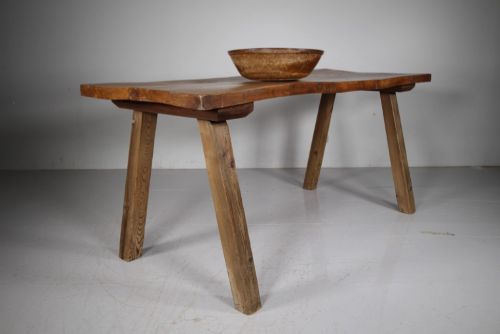
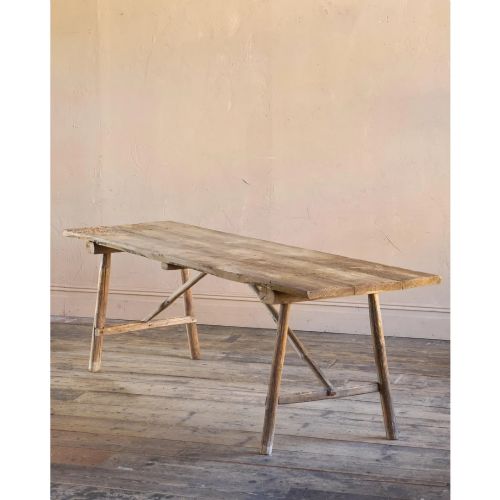
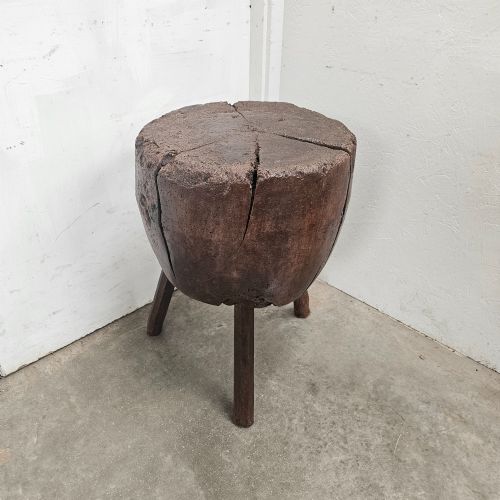
A primitive country table encompasses robust domestic and working surfaces built from solid woods across the eighteenth, nineteenth and early twentieth centuries. When searching for a primitive country table, buyers encounter formats ranging from generous dining boards and tavern tables down to small occasional stands, low coffee tables and heavy chopping blocks.
Makers in rural workshops fashioned these pieces for daily agricultural and household tasks rather than formal display. The selection here leans heavily towards nineteenth-century examples in oak, pine, elm and ash, drawing on vernacular English, Welsh and French traditions.
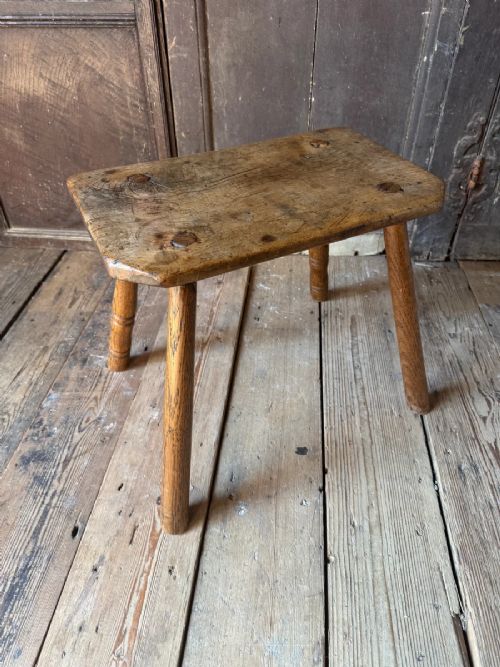
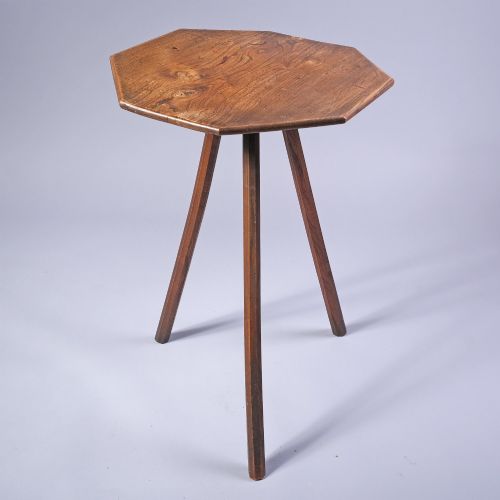
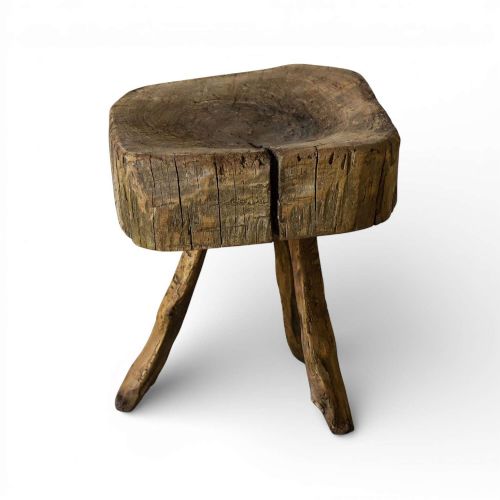
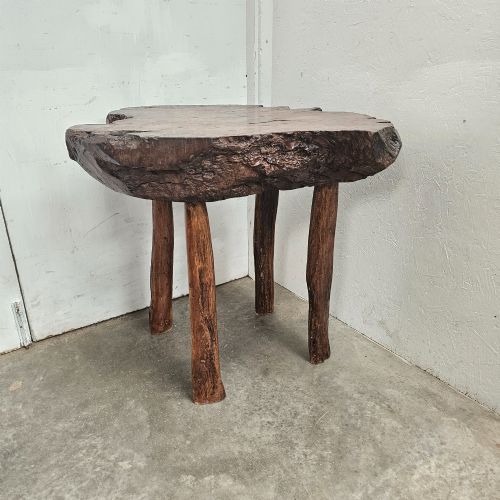
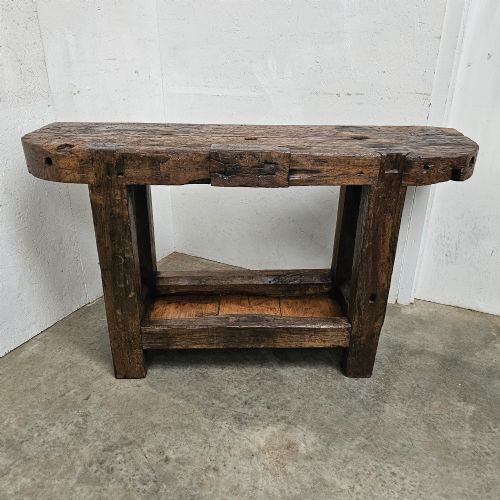
Forms include three-legged cricket tables, trestle constructions and narrow work benches originally put to use in dairies, kitchens or games rooms. Each surviving piece carries the marks of its working life, showing how vernacular design adapted directly to local needs.
How they were made
Constructed entirely from solid native timbers, these tables rely on regional woods such as oak, pine, elm, ash, sycamore and walnut. Makers selected planks directly from available local stock, often pairing different woods within a single piece, such as a sycamore top set onto ash legs.
Joinery is straightforward and functional, utilising pegged mortise and tenon joints, cleated ends and heavy trestle bases designed to withstand heavy daily labour. Surfaces show the straightforward results of hand-planing and chopping, leaving tool marks and natural grain patterns exposed without elaborate finishing.
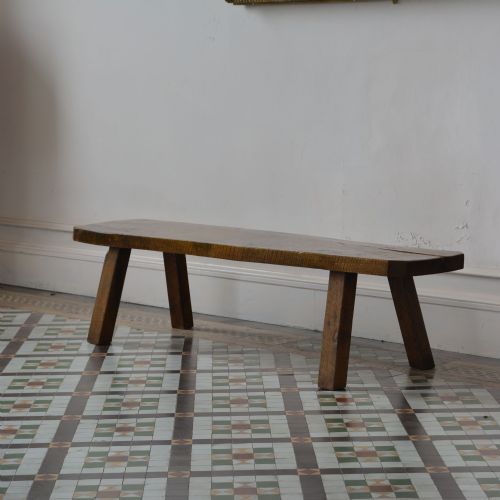
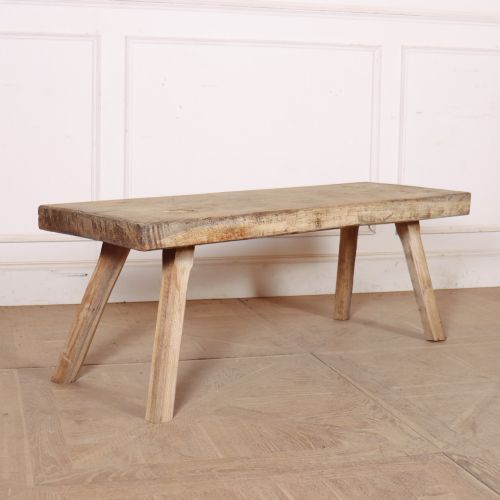
An eighteenth-century pig bench arrives ready to serve your coffee cups after a long previous career holding pork chops.
What varies in quality
Quality in these rural pieces rests on the integrity of the timber and the balance of the proportions rather than fine cabinet polish. A well-proportioned base with solid, honest wear commands attention because the structure remains sound after decades of utility.
The character of the surface timber dictates much of the appeal, where deep patination from years of scrubbing and handling elevates a simple plank top. Pieces that retain their original gnarled legs, unaltered heights and unpretentious fixings stand apart from those altered or overly restored.
The Primitive Country Table Glossary
- Vernacular
- Everyday objects designed and built by local craftsmen using traditional regional methods, without academic architectural influence. These pieces reflect the specific materials and domestic needs of their particular geographic area.
- Cricket table
- A small, lightweight occasional table typically supported on three splayed legs to maintain stability on uneven flagstone floors. This traditional three-legged form prevents rocking in rural cottages.
- Pig bench
- A low, narrow wooden bench or table originally utilised for heavy farm butchery tasks and later adapted for use as a coffee table. Their sturdy proportions and solid tops suit low seating arrangements.
- Game block
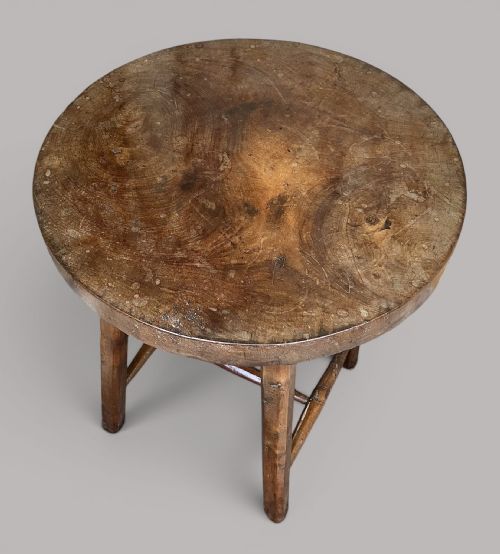
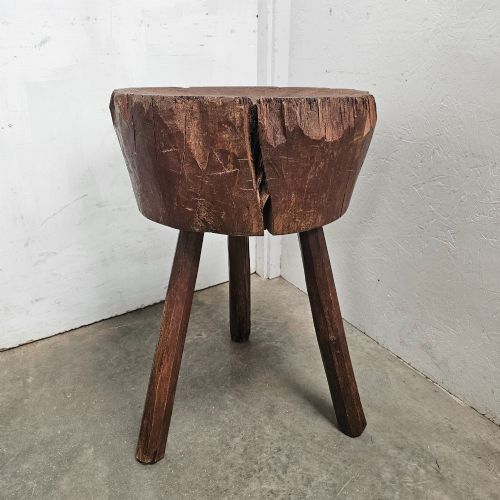
- A thick timber chopping block or heavy work surface used for preparing game and meat in French rural kitchens. These dense blocks often show extensive surface scoring from cleavers and blades.
- Cleated ends
- Wooden battens fixed across the grain at the shorter ends of a plank table top to prevent warping and splitting. This traditional carpentry detail accommodates the natural movement of solid timber over time.
Primitive Country Table: Frequently Asked Questions
What defines a primitive country table?
A primitive country table is a functional piece built by regional makers using solid local timbers like oak, pine, elm or ash, designed for everyday rural life rather than formal dining.
These tables lack academic ornamentation, relying instead on straightforward construction methods such as pegging, trestle bases or simple three-legged designs that put absolute utility first.
How were these tables used originally?
Makers constructed these surfaces for demanding domestic and agricultural tasks, including family dining, kitchen food preparation, dairy work and butchery.
Many examples began life as work benches, tavern tables or dairy boards, which accounts for the heavy timbers and robust build quality seen today.
How do I care for a primitive wood table?
Living with these pieces requires accepting their working history while protecting the dry, patinated timber from excessive moisture and sudden temperature shifts.
Treat the surface with natural wax periodically to nourish the old wood without creating an artificial gloss that masks the historical character.
Are these tables suitable for modern dining?
Many of these tables function well in contemporary spaces, provided you check the height and leg clearance against your seating arrangements.
Because original proportions vary widely according to regional workshop traditions, measuring the knee clearance helps ensure comfortable daily use.