
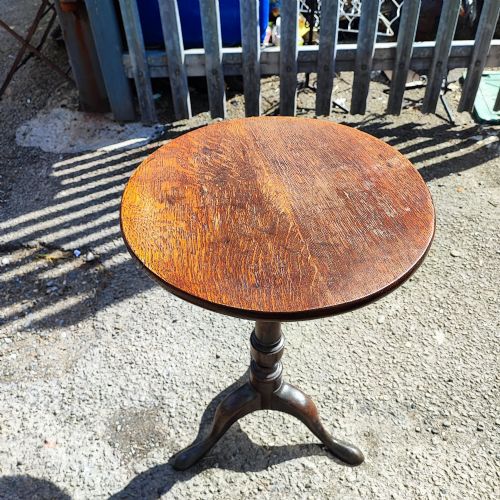
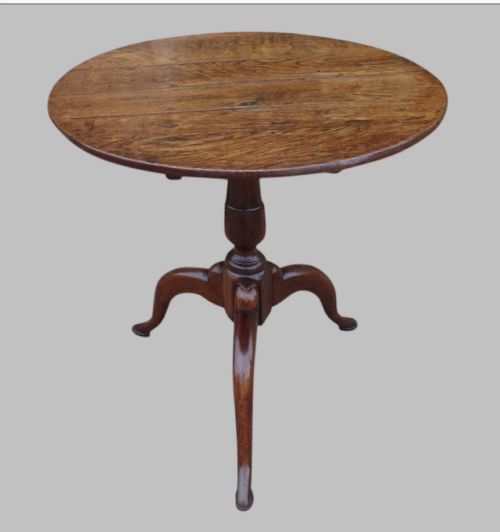
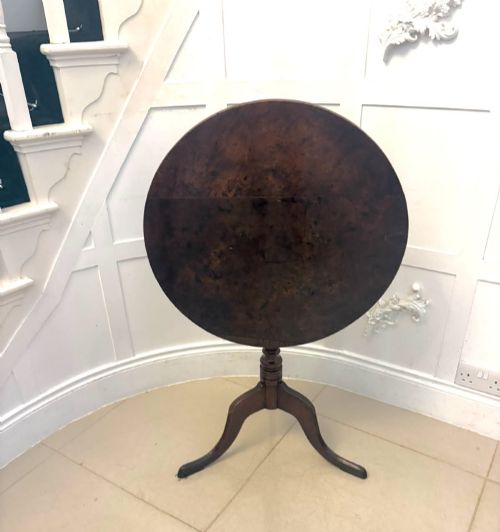
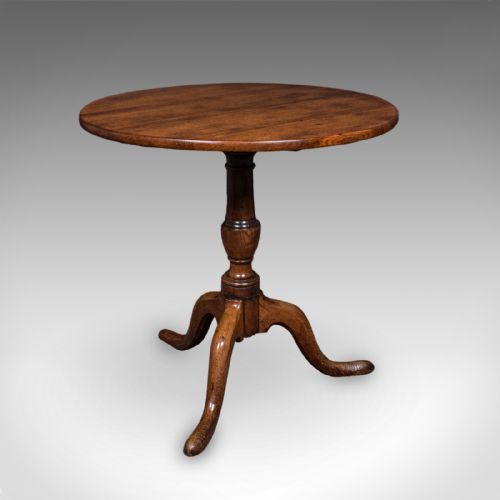



Round Oak Candle Stand
These round oak candle stand items are small timber tables built to hold lights, and collectors choose them for their honest country utility.
Round Oak Candle Stand
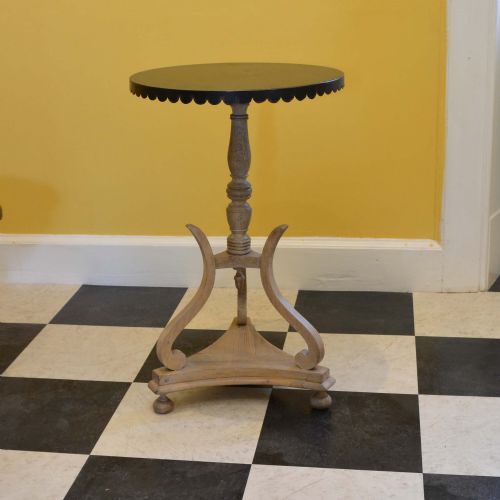
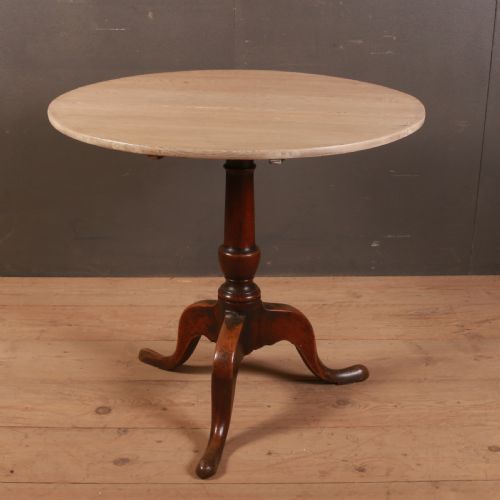
When you search for a round oak candle stand, you are looking at small functional tables designed for domestic illumination. These pieces take the form of occasional tables, side tables, and wine tables supported by tripod bases.
You are most likely to meet Georgian examples on this page, including George III country pieces and tilt-top designs. The materials extend beyond plain oak to incorporate burr oak, elm, beech, and occasional decorative inlays.
How they were made
Maker workshops shaped these tables from native timbers, using oak as the primary material alongside beech and elm for structural elements. Selected pieces integrate burr oak, satinwood, and yew wood to create contrasting surfaces.
Construction techniques include tilt-top mechanisms that allowed tables to stand flat against walls when not in use. Certain examples incorporate marquetry inlay or ebonised timber finishes to alter the visual weight of the top.
Some tables tilt so sharply they double as impromptu shields against rogue drafts.
What varies in quality
Quality in these tables rests upon the selection of timber and the proportion of the tripod base. Plain boards contrast with richly figured burr oak surfaces that demonstrate careful matching by the maker.
Construction integrity defines the upper tier of pieces, where turning on the pedestal and the fit of the tilt-top mechanism remain precise. Primitive regional pieces show simpler construction methods that reflect local workshop traditions rather than refined cabinetmaking.
The Round Oak Candle Stand Glossary
- Tripod base
- A three-legged support structure typical of small occasional and wine tables. This design ensured stability on uneven floors.
- Tilt top
- A tabletop mounted on a catch mechanism that allows the surface to pivot vertically. This feature saved floor space in smaller rooms.
- Burr oak
- A growth deformity in the timber that produces intricate swirling patterns. Cabinetmakers prized this wood for decorative table tops.
- Occasional table
- A small, movable table intended for specific, temporary uses such as holding a lamp or drink. These pieces date predominantly from the Georgian and Regency periods.
Round Oak Candle Stand: Frequently Asked Questions
What is a round oak candle stand?
A round oak candle stand is a small occasional table designed to hold a light source. These pieces typically feature a circular wooden top supported by a three-legged pedestal base.
Craftsmen built these items primarily during the Georgian and Regency periods using native hardwoods. Their compact size made them easy to move around domestic rooms as needed.
How were tilt top tables used?
Tilt top tables served as flexible furniture for living spaces and parlours. The pivoting mechanism allowed the top to lock flat for use or stand upright against a wall.
This saved valuable floor space when the table was not actively holding items. Country workshops adopted this design widely for domestic convenience.
What woods appear in these tables?
Oak forms the primary material for the vast majority of these pieces. Makers frequently combined it with beech for structural supports and elm for tops.
Selected examples incorporate decorative timbers such as burr oak, satinwood, and yew wood. Ebonised finishes and marquetry inlay also appear on specific tables.
How do I date a Georgian tripod table?
Dating relies on stylistic details, timber selection, and construction methods characteristic of the period. George III examples often show refined turning on the central pillar and neat leg attachments.
Primitive regional pieces from areas like Snowdonia display simpler local building traditions. Comparing the hardware and timber preparation helps establish the approximate decade of manufacture.