


French Timber Workbench
These heavy timber workbenches bring genuine industrial utility and rustic character to contemporary spaces.
French Timber Workbench
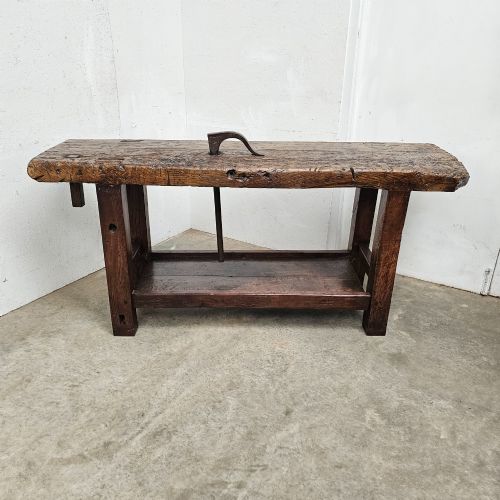
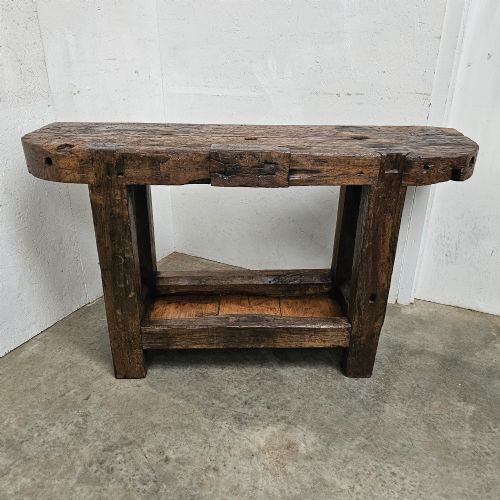
A french timber workbench represents robust utility, originating from 19th century workshops across France. The selection spans the 1860s through to 1900, capturing an era of honest craftsmanship.
Buyers encounter sturdy workbenches alongside related trestle tables and desks. Pieces vary from small primitive elm examples to substantial country house benches stretching over eight feet long.
Styles lean toward french country, rustic farmhouse, and industrial aesthetics. These utilitarian surfaces served craftsmen, artisans, and watchmakers before finding places in modern interiors.
Materials and construction
Constructed from durable woods including oak, pine, elm, beech, poplar, and sycamore. These heavy timbers provided the necessary mass for stable woodworking and daily trade.
Workbenches incorporate functional hardware such as forged iron, cast iron, vices, and clamping bars. These integrated metal components allowed artisans to secure materials firmly during production.
Evaluating construction and proportion
Quality rests in the selection of primary timbers and the integrity of the joinery. Denser woods like oak and elm command attention for their longevity and weight.
Proportion and scale distinguish individual pieces, ranging from compact artisan tables to substantial eight-foot country house workbenches. The presence of original working vices or clamping bars adds functional depth.
The French Timber Workbench Glossary
- Workbench
- A heavy utilitarian table fitted with vices or clamping bars for holding timber during construction. These surfaces carry the dents and marks of actual trade work.
- Trestle table
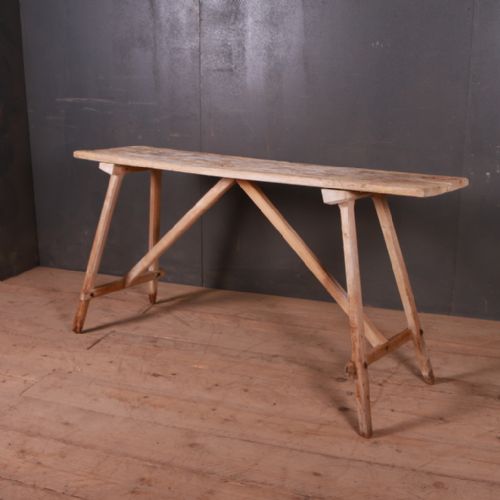
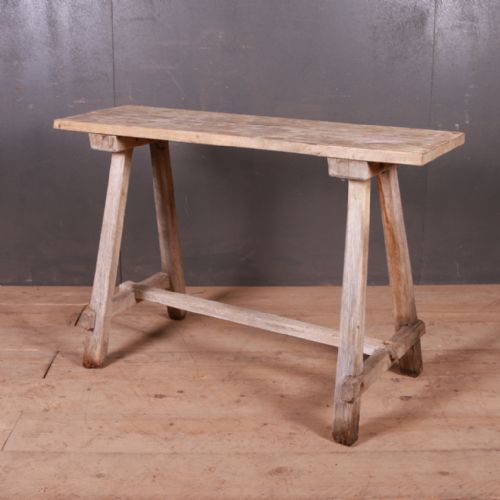
- A table comprising horizontal beams supported by trestles, appearing frequently alongside workbenches in these listings. They offer clean lines and sturdy construction.
- Elm
- A tough timber used in primitive furniture making. Its interlocking grain resists splitting under heavy impact.
- Clamping bar
- A wooden or metal mechanism built into a workbench to secure materials in place. This feature enabled precise hand tool work.
French Timber Workbench: Frequently Asked Questions
What were french timber workbenches used for?
These pieces served as heavy-duty working surfaces for carpenters, watchmakers, and artisans. They provided a stable platform equipped with vices and clamping bars for shaping wood and metal.
Today, buyers repurpose them as kitchen islands, sideboards, or large desks. Their sturdy build suits daily domestic use while retaining industrial character.
How do I date a 19th century workbench?
Dating relies on timber selection, fastener types, and signs of wear from hand tools. Listings from this period span specific years like 1860, 1880, 1890, and 1900.
Earlier examples often feature hand-forged iron and dense hardwoods like elm or oak. Machine-cut components and softer woods tend to point toward the end of the century.
How do I clean and protect the surface?
Preserve the original scrubbed timber finish by dusting with a dry cloth and avoiding harsh chemical cleaners. Many owners apply a clear wax to seal the wood against spills while maintaining its matte appearance.
Keep the benches away from direct heat sources to prevent the old timber from drying out and splitting. Embracing the historical marks is part of living with these pieces.
What is the difference between a workbench and a trestle table?
A workbench includes integrated joinery hardware such as vices and clamping bars designed for manual labour. Trestle tables rely on board-and-trestle construction without these workshop mechanisms.
Both forms share rustic french country aesthetics and sturdy timber frames. Workbenches generally offer heavier mass and greater utility function.