


French Provincial Workbench
These heavy timber tables are authentic french provincial workbench examples offering honest utility and robust character for contemporary interiors.
French Provincial Workbench
A french provincial workbench is a sturdy utilitarian table created for practical tasks in workshops and country houses. The pieces on this page span the nineteenth century, including specific dates such as 1860, 1880, 1890, and circa 1870.
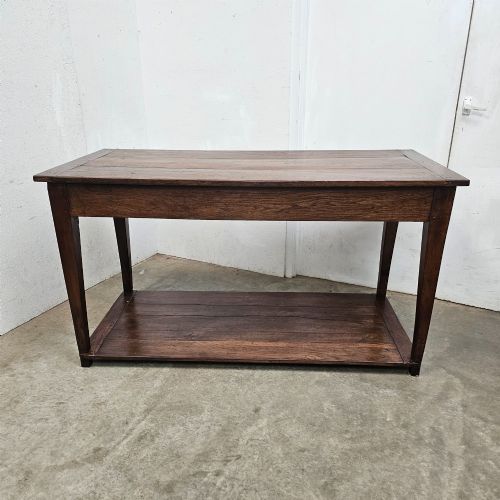
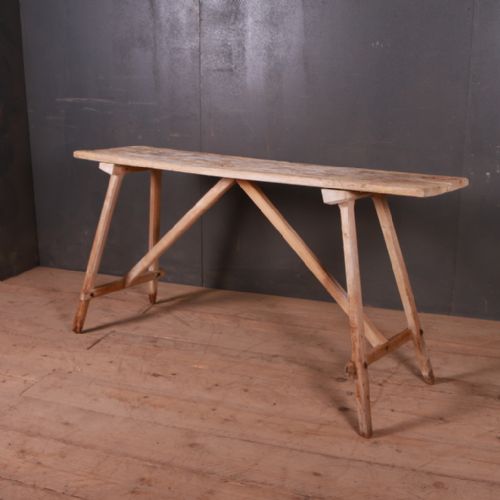
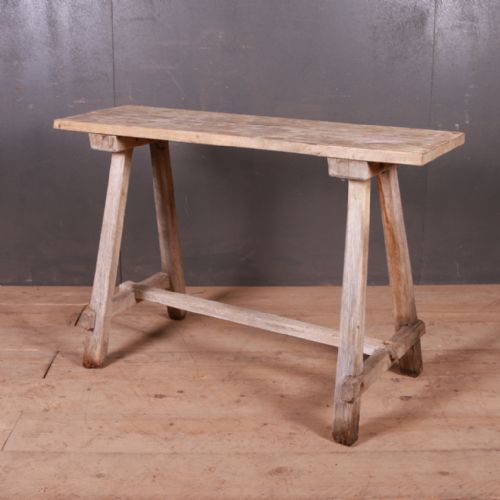
Buyers encounter various functional forms including trestle tables, two tier work tables, watch makers tables, drapers tables, artisans workbenches, cobblers benches, and serving sideboards. These objects bridge the gap between heavy industrial utility and rustic domestic charm.
Origins are grounded in French country traditions, often categorized under styles like French Provincial, French Country, French Primitive, and Rustic Country. The selection reflects hard-working furniture designed to endure generations of physical labour.
Materials and construction
Constructed primarily from solid timber, these pieces utilise regional woods such as pine, oak, sycamore, elm, fruitwood, chestnut, beech, poplar, and painted wood. Iron hardware frequently reinforces the heavy wooden joints and structural trestle frames.
Surfaces show the marks of historical use, appearing scrubbed, bleached, or retaining old painted finishes. The combination of dense hardwoods and softwoods provides the substantial weight necessary for a functional workbench.
The listings show nineteenth-century pieces constructed from pine, oak, sycamore, elm, fruitwood, and painted wood in rustic country styles.
Distinctions in quality
Quality rests in the integrity of the timber selection and the honesty of the construction. Dense woods like oak, elm, and sycamore provide superior structural longevity compared to softer timbers.
The character of the surface treatment defines the visual appeal. Scrubbed and bleached finishes that preserve the authentic grain and historical working marks elevate a piece above standard utility.
The French Provincial Workbench Glossary
- Trestle table
- A table supported by structural side assemblies rather than four independent corner legs. This form allows maximum legroom and provides exceptional stability.
- Scrubbed
- A surface finish achieved through vigorous cleaning that strips away modern coatings to reveal the pale, raw grain of the underlying timber.
- Bleached oak
- Oak timber treated to lighten its natural tone, softening the visual impact of the heavy grain while retaining durability.
- Cobblers bench
- A specialised low workbench fitted with compartments and ledges designed for footwear manufacture and repair.
- Drapers table
- An elongated work table traditionally used in fabric retail for measuring and cutting textiles.
French Provincial Workbench: Frequently Asked Questions
What is a french provincial workbench?
A french provincial workbench is a heavy timber table originally built for practical trade work in nineteenth-century French workshops and country settings.
These pieces combine robust construction with simple rustic forms, utilising materials like oak, pine, and elm.
How were these workbenches used?
They served as functional surfaces for artisans, watchmakers, cobblers, and drapers engaged in heavy manual labour or craft production.
Today, their durable construction and large surface areas make them suitable for use as dining tables, console tables, or kitchen islands.
How do I care for a scrubbed wood workbench?
Scrubbed wood surfaces benefit from gentle cleaning with mild soap and water to preserve the dry, raw texture of the timber.
Avoid heavy oiling unless you wish to darken the natural pale finish achieved through historical scrubbing.
How can I tell the age of these tables?
Age is indicated by nineteenth-century construction methods, hand-cut joinery, and the distinct patination accumulated from decades of actual workshop use.
Specific dates such as 1860, 1880, and 1890 are often recorded in the historical documentation of these pieces.