


Industrial Oak Console Table
An industrial oak console table brings robust timber and heavy metal into a room, offering a practical surface with honest utility.
Industrial Oak Console Table
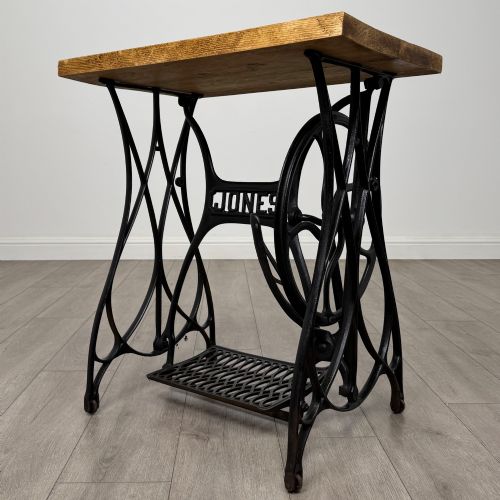
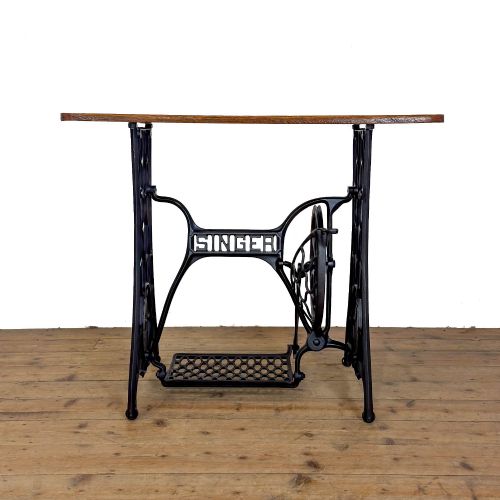
When you search for an industrial oak console table, you are looking at practical furniture repurposed from workshops, factories and provincial domestic spaces. These pieces combine sturdy oak tops with substantial iron or cast iron bases, bringing a utilitarian aesthetic to modern rooms.
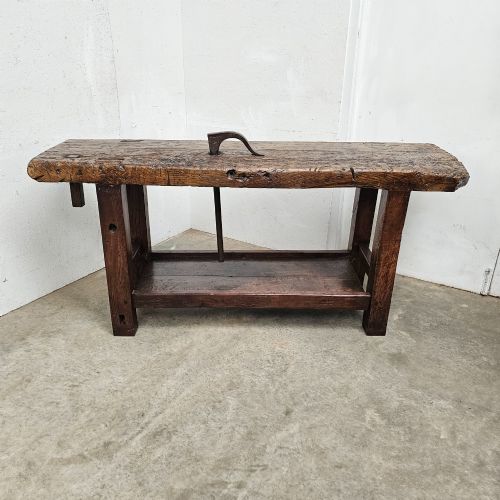
The versions you are most likely to meet on this page span the nineteenth and early twentieth centuries, including workbenches, sorting tables, sewing machine tables and side tables. They originate from British and French traditions, often featuring the original vices, clamping bars or trestle supports that reveal their former working lives.
Makers utilised resilient timbers like oak and beech alongside forged iron and metal to create surfaces designed for heavy labour. Today, these forms function well in hallways and living spaces, providing narrow surfaces with distinct character.
How they were made
Makers constructed these pieces using heavy oak planks for the tops, joined to withstand continuous strain in workshops and factories. Iron and cast iron formed the structural frames, often secured with visible bolts and brackets that provided rigid support.
Working elements such as wooden vices and clamping bars were integrated directly into the timber structure using traditional joinery methods. The materials were left largely untreated or finished with natural oils, acquiring a deep patina through decades of daily use.
The listings on this site feature oak alongside beech, cast iron and forged iron across pieces dated from the nineteenth century to nineteen twenty.
What varies in quality
The standard of a piece depends heavily on the integrity of its original working mechanisms, such as intact vices and functional clamping bars. Tables that retain their authentic industrial hardware stand apart from simpler domestic adaptations.
The depth of character in the timber surface dictates the visual appeal, with seasoned oak showing the marks of past labour rather than manufactured distress. Proportions and the balance between heavy iron bases and thick wooden tops also determine the success of the design.
The Industrial Oak Console Table Glossary
- Workbench
- A heavy wooden table fitted with a vice or clamping bar, designed for manual craft and trade work. These are frequently adapted for domestic use as console or side tables.
- Cast iron
- An iron-carbon alloy poured into moulds to create rigid machine bases and legs. It provides the heavy foundation characteristic of industrial furniture.
- Trestle table
- A table supported by two or more upright frames connected by a horizontal beam. This design offers maximum legroom and stability.
- Vice
- A mechanical screw apparatus attached to a workbench to hold material securely in place. Its presence denotes genuine workshop origins.
Industrial Oak Console Table: Frequently Asked Questions
Are these tables genuine antiques?
The pieces listed span the nineteenth and early twentieth centuries, originating from working environments like post offices and artisan workshops.
Their age is evident in the wear on the oak tops and the authentic patination of the iron and cast iron components.
How do I care for oak and iron furniture?
Wipe the oak surfaces with a dry or slightly damp cloth, avoiding harsh chemical cleaners that strip the natural oils. Natural wax can be applied periodically to nourish the aged timber.
Keep the metal and cast iron components clean and dry to preserve their historical finish and prevent corrosion.
What is the difference between a workbench and a console table?
A workbench was originally built for heavy manual trades, incorporating functional elements like integrated wooden vices, tool wells and clamping bars. A console table is a lighter domestic form meant for display.
Many pieces on this page are authentic workbenches utilised today in narrow spaces for their striking proportions and surface depth.