


Brown Timber Workbench
A brown timber workbench brings honest utility and rugged character into a modern interior.
Brown Timber Workbench
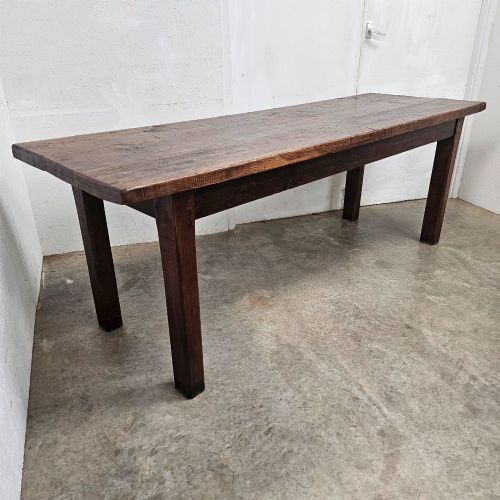
A brown timber workbench serves as a functional workspace or table rooted in practical trades, spanning the nineteenth century, eighteen-eighty, nineteen hundred, and the Edwardian period. These pieces originate from English and French traditions, encompassing styles such as French provincial, Victorian utilitarian, industrial salvage, rustic country, French primitive, and industrial.
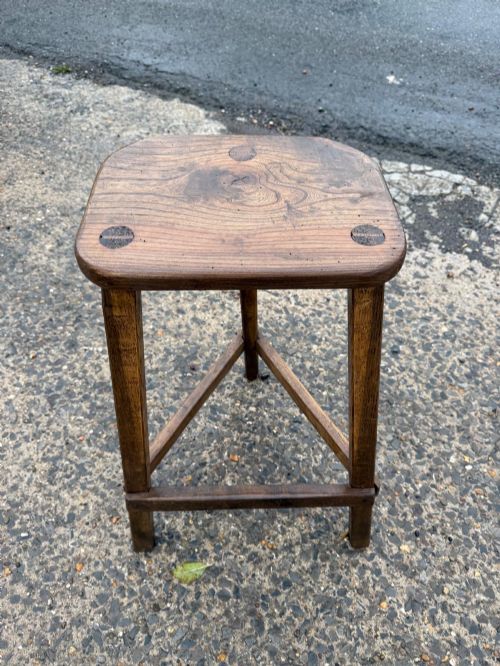
Buyers most frequently encounter robust tables and benches designed for specific crafts, including jewellers' benches, watchmakers' tables, and artisans' workbenches equipped with vices. Alongside these primary forms, the selection includes related items like machinist stools, tavern tables, trestle work tables, and artists' benches.
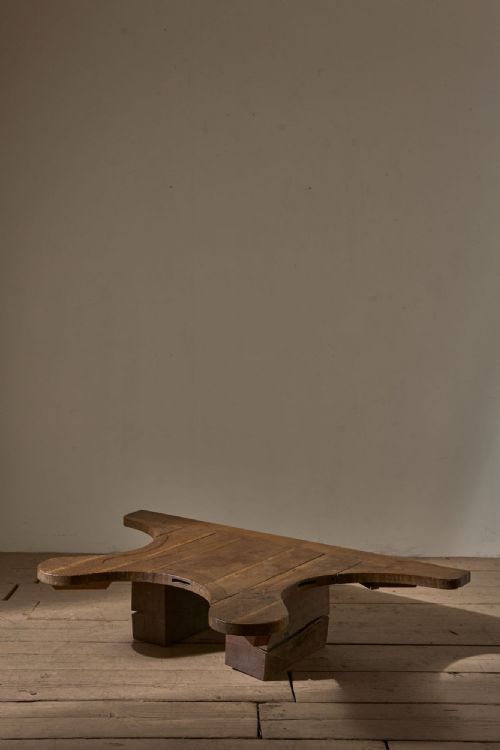
The enduring appeal of a brown timber workbench lies in its combination of heavy construction and honest wear, making it a versatile centrepiece for contemporary living spaces. Each piece reflects the specific demands of historical trades through integrated vices, thick tops, and utilitarian framing.
Materials and Construction
Makers constructed these sturdy items using a variety of robust woods including oak, pine, elm, beech, fruitwood, and general hardwood. These timbers provided the density and strength required to withstand heavy daily labour in workshops and studios.
Metal components played a crucial role in stability and function, with iron and cast iron utilised for vices, trestle supports, and structural bracing. This combination of dense timber and durable metal ensured the benches could endure intensive mechanical and manual pressure.
Some watchmakers' tables retain microscopic scratches and grooves where tiny gears and tweezers slipped centuries ago.
Assessing Quality and Character
Quality in these pieces is dictated by the integrity of the original construction and the honesty of the accumulated patina. Superior examples retain their authentic working mechanisms, such as functional wooden or iron vices, alongside thick, enduring tabletops.
The character of the timber itself defines the upper tier of the range, where deep grain patterns, natural wear, and original structural joints remain untouched by unsympathetic restoration. Lesser examples may show hurried repairs or mismatched replacement parts that obscure the utilitarian history of the object.
The Brown Timber Workbench Glossary
- Trestle work table
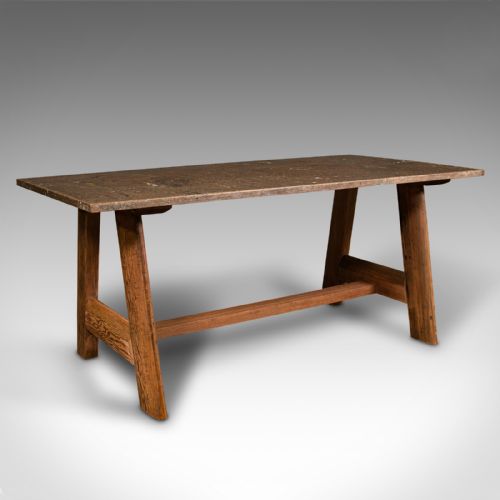
- A sturdy table supported by two or more trestles, commonly utilised in workshops and studios for general crafting and assembly tasks. This design allows for maximum legroom and exceptional stability under heavy loads.
- Patina
- The deep, lustrous surface sheen developed through decades of handling, exposure, and wear. It serves as a visual indicator of an object's age and authentic history.
- Artisans workbench
- A heavy-duty table designed specifically for manual trades and craftsmanship, frequently featuring integrated vices and tool wells. These benches were built strictly for utility rather than decorative display.
- Fruitwood
- A dense, fine-grained timber gathered from fruit-bearing trees such as pear or apple, often selected by makers for smaller specialised tables and seating. It offers a smooth texture and a warm hue that deepens considerably with time.
Brown Timber Workbench: Frequently Asked Questions
What is a brown timber workbench?
A brown timber workbench is a heavy, utilitarian table originally built for manual trades like carpentry, watchmaking, or jewellery. These pieces are constructed from dense woods and iron to endure rigorous daily labour.
Today, they are repurposed as statement furniture in homes, functioning as kitchen islands, desks, or coffee tables while retaining their historic character.
How do I style a workbench at home?
You can style a workbench by placing it in a kitchen as a prep island or using a smaller version as a console table in a hallway. Their strong timber surfaces and industrial details anchor a room naturally.
Keep surrounding decor simple to let the honest construction and historical patina of the bench remain the focal point of the space.
How do I date an antique workbench?
Dating relies on examining the construction methods, tool marks left on the timber, and the specific style of hardware used. Hand-cut joints and heavy iron vices often point towards nineteenth-century craftsmanship.
Comparing the timber species and form against documented regional workshop traditions helps narrow down the period of origin.
Are these benches suitable for daily use?
These benches are exceptionally sturdy and built to withstand heavy physical work, making them more than durable enough for modern domestic life. Their thick timber tops readily handle everyday activities without concern.
Applying a suitable wax or oil can protect the historic wood from moisture and daily wear while preserving the authentic surface.