
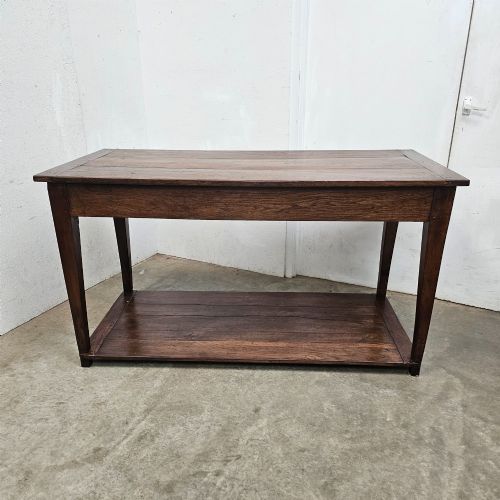
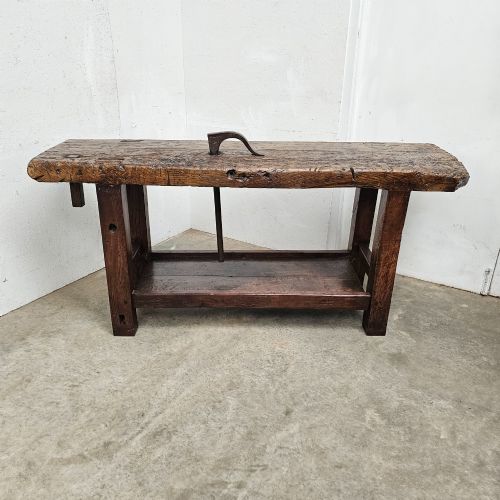


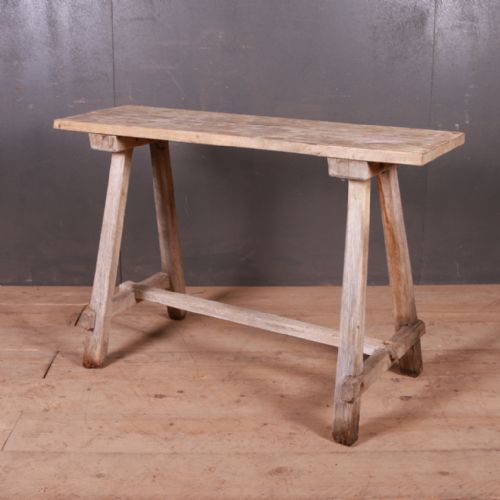
Oak Workbench Console
An oak workbench console brings working utility and robust grain into a modern hall, combining industrial function with rustic character.
Oak Workbench Console
When you search for an oak workbench console, you find sturdy timber surfaces originally built for trade, craft, and sorting tasks. These pieces now serve as narrow side tables and hallway consoles in residential interiors.
You are most likely to meet French provincial and rustic farmhouse examples dating from the nineteenth century down to the nineteen-twenties. Forms range from heavy joiners' benches fitted with vices to simpler trestle tables and post office sorting desks.
Most items combine a thick oak top with secondary timbers such as beech or structural metal elements. The proportions naturally suit narrow circulation spaces where depth is restricted.
Materials and construction methods
Makers built these heavy-duty items using solid oak and beech for durability under daily workshop pressures. Timbers were joined with traditional techniques to withstand the strains of woodworking and manual labour.
Metal components appear as forged iron vices, cast iron mechanisms, and iron bracing bars. These functional fittings provided the mechanical tension and stability required for craftsmen and sorting clerks.
Surfaces show the marks of genuine use, from tool strikes to worn grain. Some examples feature intentional bleaching of the oak to lighten the timber tone for domestic settings.
Every workbench carries the physical echoes of anonymous nineteenth-century French artisans through generations of hammer blows, saw cuts, and ink stains.
Assessing quality and character
Quality rests in the integrity of the original construction and the balance of timber proportions. Superior examples retain working vices, clamping bars, or original ironwork that demonstrate their authentic working origins.
The Oak Workbench Console Glossary
- Workbench
- A heavy carpenter's table fitted with a vice and clamping equipment. It provides a stable, flat surface for heavy manual work.
- Console
- A long, narrow table designed to stand against a wall in a hallway or reception room. It offers display space without blocking circulation.
- Trestle table
- A table comprising a horizontal top supported by two or more trestle frames. This design maximises legroom beneath the surface.
- Bleached oak
- Timber treated to lighten its natural dark tone, producing a pale, chalky finish. This process is popular in French rustic interiors.
- Clamping bar
- A sliding wooden or metal bar integrated into a workbench top to secure materials during fabrication. It operates alongside a bench screw or vice.
Oak Workbench Console: Frequently Asked Questions
How do I use a workbench as a console?
The narrow proportions of these tables make them ideal for narrow hallways, landings, and living room perimeters. They provide a sturdy surface for lamps and decorative objects while occupying minimal floor depth.
Ensure the height matches your space, as working surfaces are sometimes taller than standard domestic side tables. Freestanding stability relies on their substantial weight, so wall anchoring is rarely necessary.
Are these tables suitable for kitchens?
Solid oak and beech construction makes these surfaces robust enough for daily food preparation and kitchen island duties. Their historical use as craftsmen's benches means they tolerate heavy handling.
Protect the aged timber with appropriate oils or waxes to guard against moisture and staining from kitchen use. The original patinated finish benefits from gentle cleaning rather than harsh chemical stripping.
How do I date an antique workbench?
Dating relies on examining the construction methods, tool marks, and ironwork details. Hand-cut joints and forged iron components generally point to nineteenth-century production.
Later pieces from the twentieth century often incorporate machine-sawn timber and standardised metal fastenings. Comparing the wear patterns on the oak top with the style of any integrated vice helps confirm the era.
What is the difference between a workbench and a sorting table?
Workbenches include heavy wooden tops, bench stops, and mechanical vices designed for holding timber during carpentry tasks. They prioritize mass and clamping utility over open storage.
Sorting tables, such as post office examples, feature multi-tiered shelving or shallow compartments intended for paper and mail handling. Their frames are typically lighter and optimized for sorting rather than heavy hammering.