



Elm Blanket Chest
An elm blanket chest provides honest timber storage with deep regional character, spanning simple country workshops and formal Georgian parlours.
Elm Blanket Chest
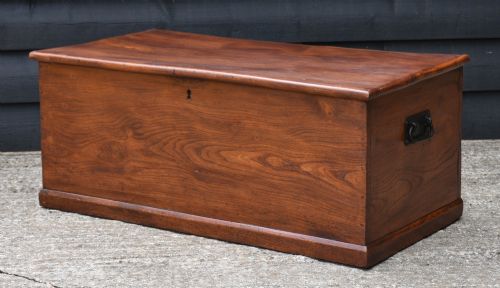
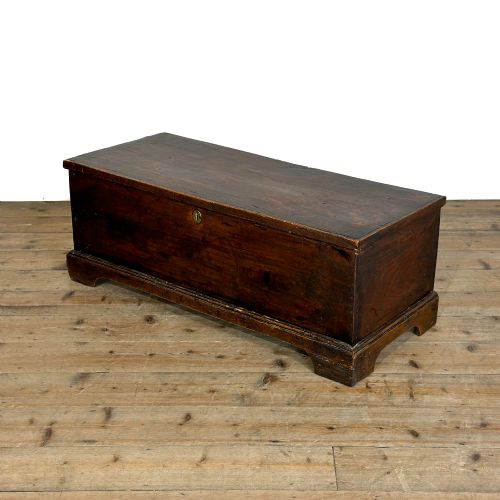
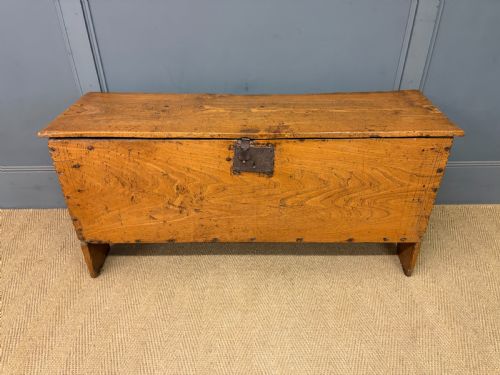
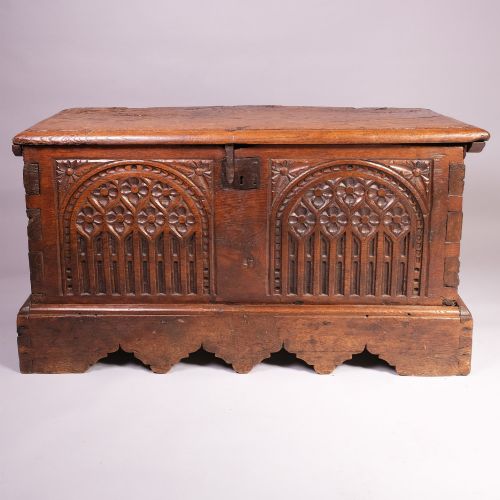
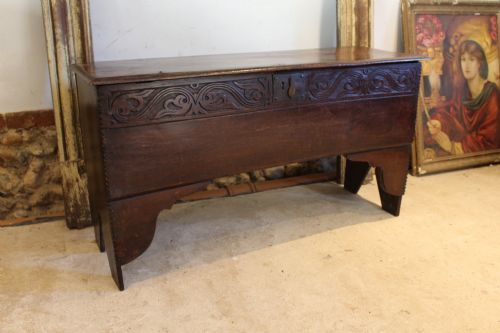
When you search for an elm blanket chest, you encounter robust storage pieces spanning several centuries of domestic use, most commonly originating from the Georgian period or the nineteenth century. These items appear as traditional six-plank coffers, flat-top trunks, mule chests fitted with lower drawers, and occasionally as specialised forms like cannonball boxes or bandaji chests. Regional examples, such as Welsh vernacular coffers or pieces utilising burr elm panels, show the distinct regional preferences of country makers.
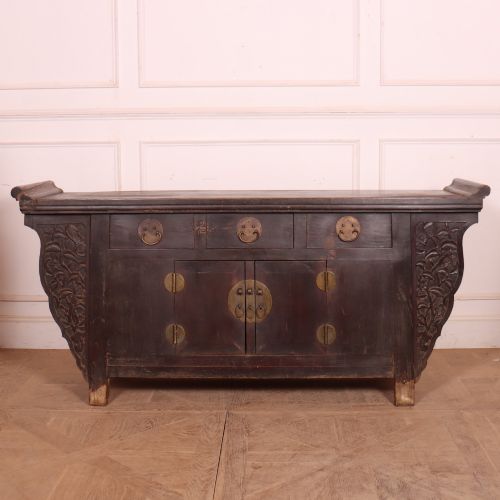
The construction of an elm blanket chest ranges from utilitarian boarded boxes built for domestic storage to sophisticated hardwood furniture intended for gentlemen's quarters. While British vernacular pieces dominate the record, the listings also encompass Chinese, Korean, and French variants that utilise local hardware and construction methods. The domestic versions typically serve to hold bedding, linens, or clothing, utilising the resilient nature of the timber to protect contents over generations.
Materials and Construction
The primary material, elm, is selected for its tough, interlocking grain that resists splitting, making it well-suited for heavy-duty storage boxes and boarded coffers. Makers frequently combine this timber with oak for structural framing or panels, while figure-rich burr elm is applied to visible surfaces for decorative effect.
Metal hardware plays an essential role in the construction, utilising wrought iron hasps, brass mounts, and carrying hoops to reinforce the joints and secure the lids. Joinery methods vary from simple butt joints pegged with wood in six-plank coffers to more refined dovetailed construction found in later drawer-fitted mule chests and travelling trunks.
Listings span multiple centuries, ranging from pre-16th century Gothic examples to 1920s Arts and Crafts pieces.
Judging Quality in Elm Chests
Quality in an elm blanket chest rests primarily on the character of the timber and the integrity of its original construction rather than decorative excess. Figured grain, particularly burr elm or highly grained boards, distinguishes a piece made for a polite interior from a purely utilitarian farm box.
Originality of surface finish and hardware also determines distinction, where untouched patination, original wrought iron or brass mounts, and undisturbed hinges elevate a piece. Conversely, later alterations, replaced boards, or stripped finishes diminish the historic integrity of the chest.
The Elm Blanket Chest Glossary
- Six-plank coffer
- A primitive chest constructed from six individual boards joined at the edges, representing an early and durable form of domestic storage. These pieces rely on simple pegging and boarded construction.
- Mule chest
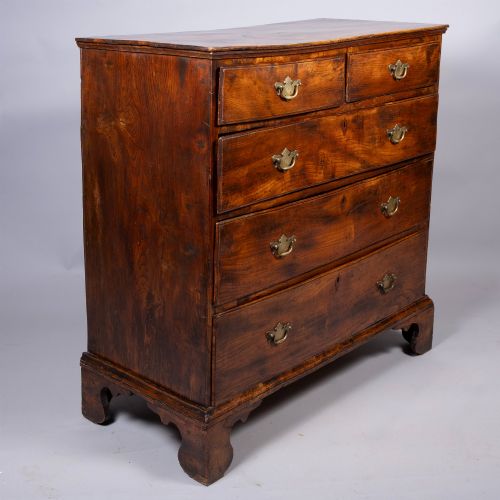
- A storage chest featuring one or more drawers built into the base beneath the main compartment. This form bridges the gap between the traditional blanket box and the chest of drawers.
- Burr elm
- An abnormal growth on an elm tree that yields timber with highly twisted, swirling grain patterns. Cabinetmakers prize this material for decorative veneer and feature panels.
- Bandaji chest
- A traditional Korean storage chest constructed from elm and fitted with extensive decorative metal hardware. These pieces serve primarily for storing garments and household goods.
- Hasp
- A slotted metal plate attached to the lid of a chest that fits over a staple to receive a padlock. This hardware secures the contents during transport or storage.
Elm Blanket Chest: Frequently Asked Questions
What is an elm blanket chest used for?
These chests serve primarily to store household textiles, blankets, and garments, utilising the robust properties of elm to keep contents protected. In modern settings, their flat lids allow them to function as coffee tables or window seats while maintaining their storage capacity.
Historically, they formed the central storage unit in domestic households, holding valuable linens and clothing away from damp floors and pests. Their heavy construction ensured they could double as seating or tables in smaller homes.
How do you date an elm blanket chest?
Dating relies on examining the construction methods, such as the transition from pegged six-plank joints in early examples to dovetailed corners in later Georgian and Victorian pieces. The style of the hardware, including iron strap hinges or brass campaign mounts, also provides clear chronological indicators.
Regional styles and secondary woods offer further clues, with 18th-century vernacular pieces showing different tool marks than 19th-century factory or workshop production. Comparing the patination and wear patterns around the feet and lid edges helps confirm the age of the timber.
What is a six-plank coffer?
A six-plank coffer is the simplest form of wooden chest, constructed from single boards for the front, back, ends, bottom, and lid. The vertical end boards often extend downward to form feet, lifting the main body off damp floors.
This method of construction represents centuries of vernacular woodworking traditions across Britain and Europe. Despite their simple design, these pieces offer immense structural strength due to the toughness of the elm boards.