
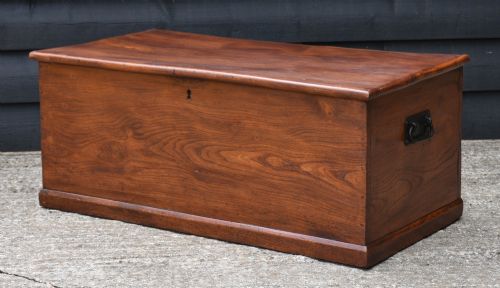
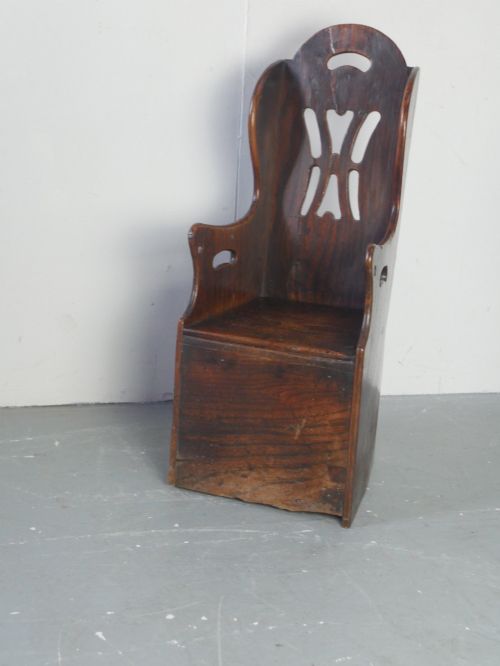
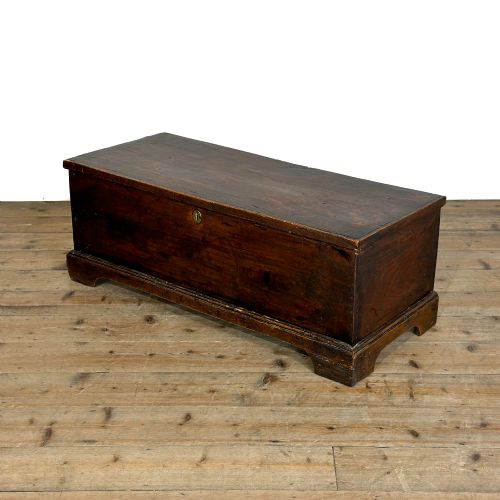

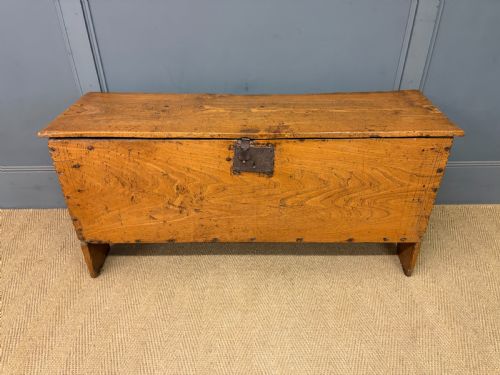
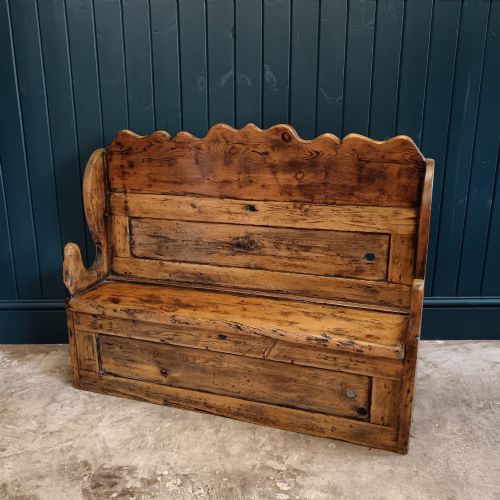
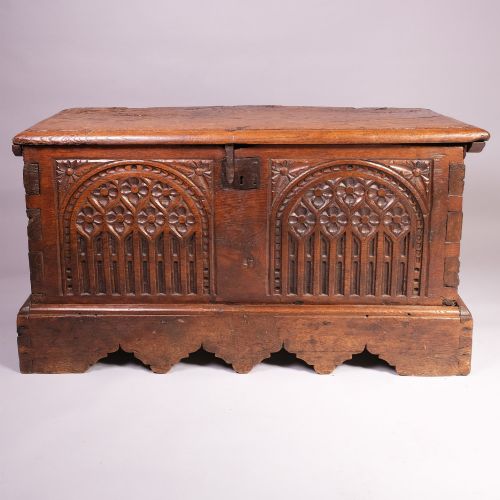
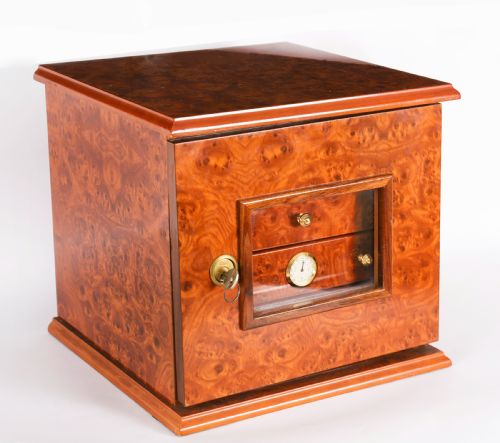
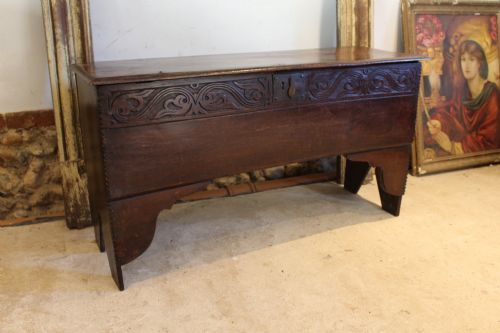

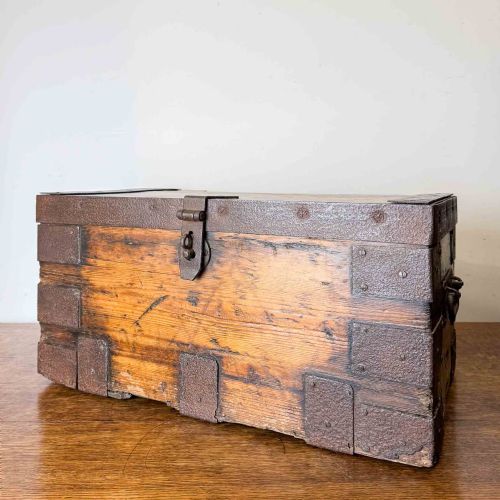


Elm Wooden Box
An elm wooden box offers a sturdy domestic receptacle fashioned from resilient native timber, combining practical storage with deep, figured grain.
Elm Wooden Box
When you search for an elm wooden box, you encounter a robust range of utilitarian vessels including blanket chests, six-plank coffers, and small tabletop boxes spanning the eighteenth and nineteenth centuries. These pieces emerge predominantly from vernacular and rustic country traditions, reflecting the honest carpentry of Georgian workshops and provincial makers.
The version you are most likely to meet on this page is the blanket chest or storage coffer, often constructed with simple dovetailed joints or straightforward planking. Alongside these sit specialised forms such as carpenter toolboxes, cellarettes, and dough bins, which demonstrate the timber's adaptability for both domestic and working environments.
Geographic variations appear across the selections, ranging from English country pieces to Welsh regional work and occasional French or Eastern examples. The enduring appeal of an elm wooden box lies in its direct service to past households, storing everything from blankets to documents and bread.
Character and Construction
Quality in these vessels rests upon the choice of timber and the integrity of the original construction rather than elaborate ornamentation. Highly figured burr elm panels and surfaces displaying a deep, rich patina separate superior boxes from plain utility containers.
The preservation of original ironwork, brass mounts, and working locks distinguishes a better piece from one altered by later replacements. Structural honesty, such as untouched board bottoms and original hinges, determines the lasting integrity of the carpentry.
Some miniature elm boxes served as lap desks for travelling children.
The Elm Wooden Box Glossary
- Elm
- A dense, tough native hardwood known for its twisting grain and rich figuring, frequently utilised in vernacular furniture and heavy-duty boxes.
- Burr Elm
- A highly decorative growth formation on the elm tree that produces swirling, knotted grain patterns prized for cabinet fronts and specialised boxes.
- Six-Plank Coffer
- A primitive storage chest constructed from six simple boards joined at the edges, often utilising basic pegging or dovetailing.
- Cellarette
- A specialised timber container or chest designed for holding wine bottles and decanters, frequently fitted with internal compartments.
- Dough Bin
- A domestic trough or box with a lid, traditionally used for resting bread dough before baking in rural farmhouses.
- Mule Chest
- A storage chest featuring one or more drawers beneath the main lift-top compartment, combining the utility of a coffer with a chest of drawers.
Elm Wooden Box: Frequently Asked Questions
What were elm boxes used for?
These vessels served everyday domestic and working needs across households and workshops. They stored textiles, blankets, documents, and provisions like bread dough.
Specialised variants held valuables, tools, or wine bottles. Their robust nature suited them for active daily service.
How do I care for antique elm?
Keep the timber away from direct heat sources and sudden humidity shifts to prevent warping. Regular dusting with a dry cloth maintains the surface.
Occasional application of traditional wax feeds the dry wood without building up heavy chemical layers. Allow the natural patina to breathe.
How can I date an elm box?
Examine the construction methods, such as hand-cut dovetails, forged iron hinges, and the style of any brass mounts. Eighteenth-century pieces often display simpler, heavier board work and vernacular touches.
Later nineteenth-century examples may incorporate refined internal partitions or machine-sawn elements. Nails and fixings provide further clues to the period of manufacture.
Is elm durable furniture wood?
Elm possesses a notoriously interlocking grain that resists splitting, making it exceptionally strong for heavy-duty furniture and containers. Carpenters relied on its toughness for items subject to rough treatment.
This resilience helps explain why so many utilitarian boxes survive in solid condition today. The timber ages gracefully under normal household use.