

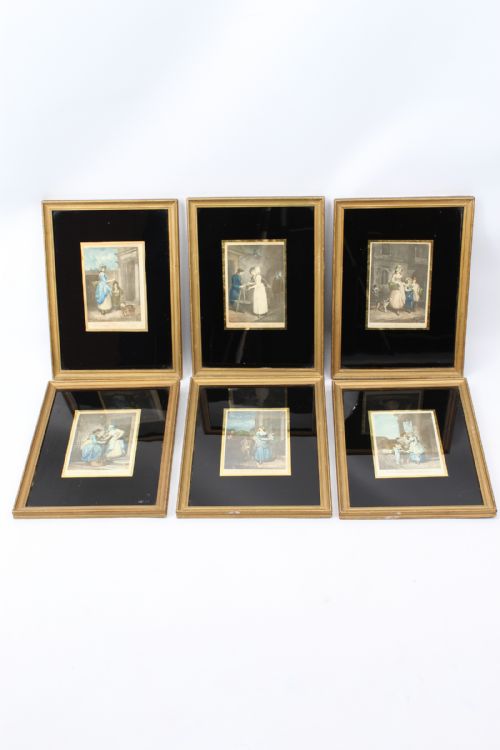


Eglomise Framed Wall Art
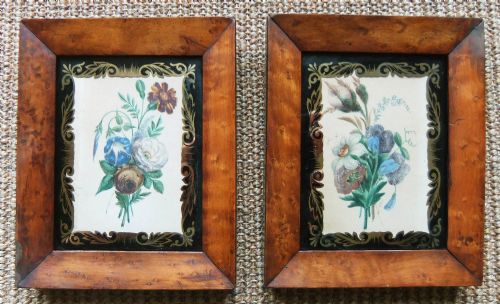
These eglomise framed wall art pieces combine delicate handwork and glass panels to bring depth and historic character to a room.
Eglomise Framed Wall Art
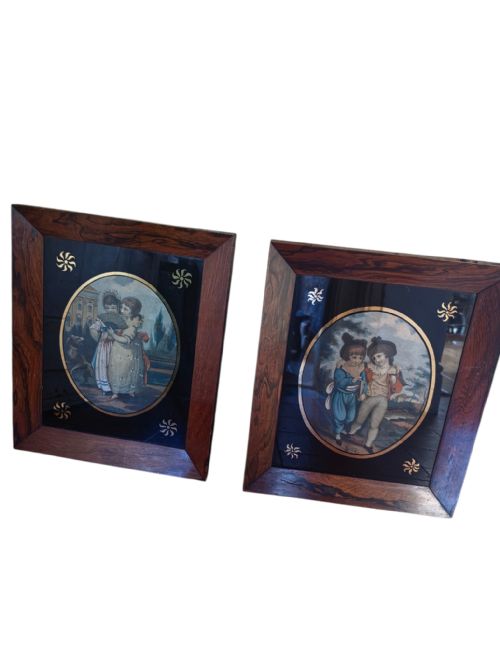
Eglomise framed wall art encompasses decorative pictures, reverse glass paintings, and framed textile works spanning the eighteenth and nineteenth centuries. Buyers searching for eglomise framed wall art encounter pieces housed in rosewood, maple, and giltwood frames that reflect Regency, Georgian, and Victorian tastes.
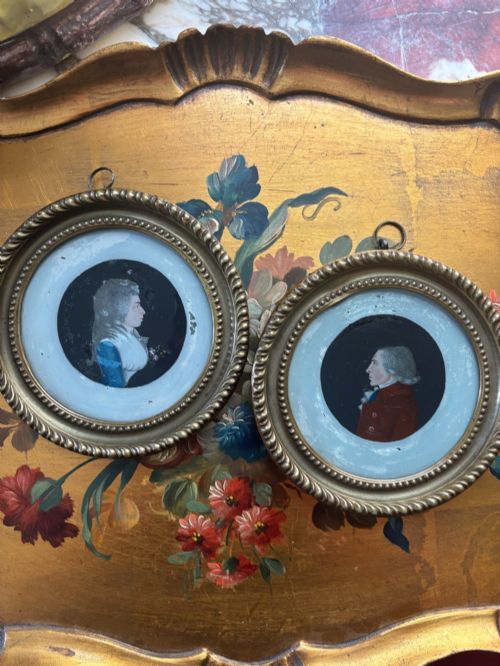
The selection ranges from portrait miniatures and silhouette paintings on glass to silkwork embroideries and engraved prints. Most examples rely on historic framing techniques where the glass itself bears decoration or borders.
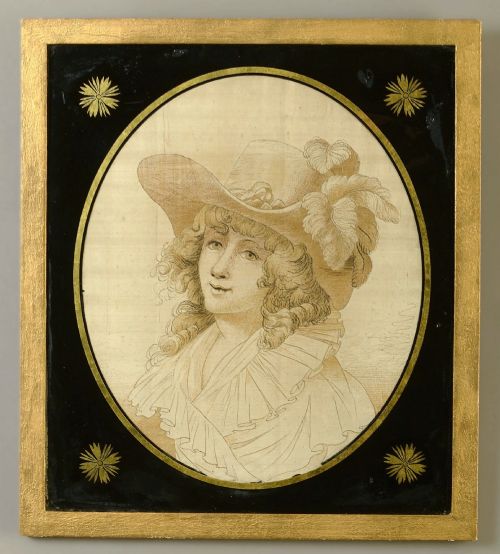
Domestic scenes, portraits of fashionable figures, and botanical studies dominate the imagery across these periods. These works capture the intimate scale and decorative ambition of British and European interiors from the 1700s through the Victorian era.
How they were made
Makers applied pigment, silk, wool, and paper within timber surrounds of maple, rosewood, and giltwood. Reverse glass painting and engraving demanded precise handwork directly onto the material, sealing the pigments behind the protective glaze.
Needlework pictures utilised fine silk and wool threads worked onto fabric grounds to create textured botanical and figurative compositions. Engravings and watercolours were often mounted alongside specialised mounts or verre églomisé glass panels decorated with gold and silver leaf.
Eglomise Framed Wall Art Retail Price Guide 2026
Typical asking prices for eglomise framed wall art among the pieces listed under this phrase on Sellingantiques today, from the lower quarter to the upper quarter. They describe what is for sale here now, not the wider market.
Listings span the eighteenth century, Regency, and Victorian periods, incorporating materials such as silk, pigment, maple, and giltwood.
What varies in quality
The distinction between standard and superior pieces rests on the crispness of the hand-rendered detail in the painting or embroidery. Finely worked silk needlework and detailed reverse glass painting display greater control of line and expression than simpler printed counterparts.
The harmony between the artwork and its period frame defines the overall integrity of the piece. Original glass panels, intact giltwood mouldings, and well-preserved timber surrounds elevate the visual coherence of the composition.
Henry Corbould·Wheatley
The Eglomise Framed Wall Art Glossary
- Verre églomisé
- A cold decoration technique where gold or silver leaf is applied to the reverse side of glass and etched before painting. This method produces a reflective, metallic border often seen on antique picture frames.
- Reverse glass painting
- An artwork painted directly onto the back of a glass pane so that the final image is viewed through the front. The smooth glass surface lends a distinct gloss to the pigment.
- Silkwork
- An embroidery picture worked predominantly in silk threads on a silk or linen ground. These needlework pieces were popular domestic crafts during the Georgian and Regency periods.
- Mezzotint
- A printmaking process of the intaglio family that achieves tonal gradation through small pits on the metal plate. It allows for soft shadows and rich dark areas within historic prints.
Eglomise Framed Wall Art: Frequently Asked Questions
What is verre eglomise?
Verre églomisé involves applying gold or silver leaf to the reverse of a glass sheet and etching designs into it before painting.
This process creates a luminous, metallic border that frames the central picture with a reflective sheen.
How do I care for antique glass art?
Protect these pieces from direct sunlight to prevent the fading of delicate silk threads, watercolours, and pigments behind the glass.
Clean the glass gently with a dry microfiber cloth, avoiding liquid sprays that might seep beneath the frame edges.
Are these frames original?
Many pieces retain their period rosewood, maple, or giltwood frames from the Georgian, Regency, or Victorian eras.
The materials and moulding profiles correspond directly to the dates of the artworks they enclose.