

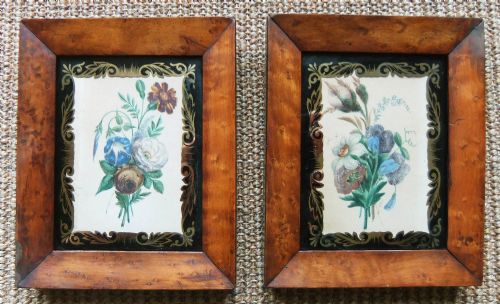
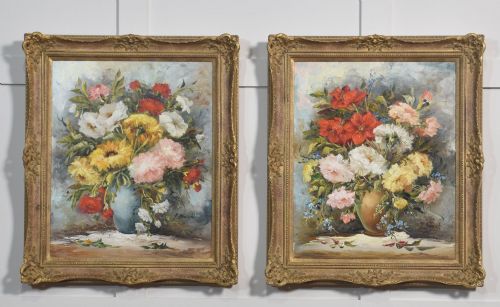
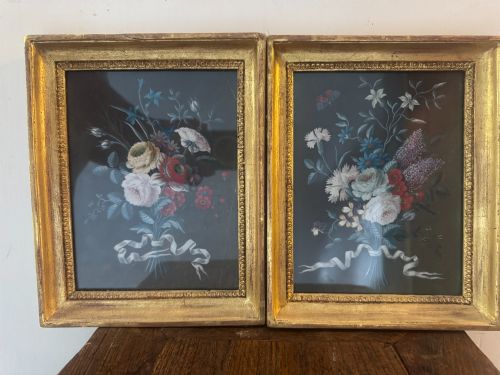


Framed Botanical Studies Pair
These framed botanical studies pair items bring natural history into a room with matched symmetry and quiet detail.
Framed Botanical Studies Pair
A framed botanical studies pair brings together two matched works depicting flowers, fruit, birds, or animals, designed to hang side by side. These pieces range from early nineteenth-century watercolours and gouache paintings to twentieth-century prints and oil paintings, reflecting periods from the Georgian era through to the 1930s.
The pairings on this page typically feature works on paper rendered in ink, gouache, or watercolour, alongside oil paintings on panel or canvas. Framed in wood with glass protection and occasional gold leaf or gilt details, they present natural subjects within traditional decorative styles including Victorian, neoclassical, and English country aesthetics.
How they were made
Makers produced these works using paper, watercolours, gouache, ink, and oil paint to capture accurate natural forms. Hand-painted details on paper or canvas demonstrate careful brushwork by artists working within specific regional schools and periods.
Framing utilised wood structures finished with gold leaf or gilt elements and protected by glass. These traditional enclosures preserved fragile works on paper and delicate oil paintings from environmental degradation over centuries.
Framed Botanical Studies Pair Retail Price Guide 2026
Typical asking prices for framed botanical studies pair among the pieces listed under this phrase on Sellingantiques today, from the lower quarter to the upper quarter. They describe what is for sale here now, not the wider market.
Materials documented across the page include paper, glass, wood, gold leaf, gouache, oil paint, gilt, and ink.
What varies in quality
The precision of the painting or drawing separates finer works from simpler decorative prints, particularly in the rendering of botanical and ornithological details. Hand-painted watercolours and gouache studies by named artists or distinct schools display a higher degree of observational skill than standard reproductions.
The quality of the framing materials also distinguishes the pieces, with period wood frames, gold leaf, and genuine gilt finishes adding substantial depth compared to later replacement mounts.
Manuela Bonati·M.K Rhodes
The Framed Botanical Studies Pair Glossary
- Gouache
- An opaque water-based paint that dries to a matte finish, frequently used in historical botanical studies for rich colour saturation.
- Ornithological
- Pertaining to the scientific study and depiction of birds, often found in detailed paired plates from the nineteenth century.
- Neoclassical
- A revival style drawing inspiration from classical antiquity, influencing the balanced composition and formal framing of earlier works.
- Gilt
- A thin layer of gold applied to wood framing surfaces, providing a reflective metallic sheen characteristic of period frames.
Framed Botanical Studies Pair: Frequently Asked Questions
How should I hang a framed botanical studies pair?
Hang the two pieces at eye level with a consistent gap between them to maintain the intended visual balance. Aligning the centre points ensures the matched composition reads correctly on the wall.
Keep them away from direct sunlight to protect delicate watercolours and paper from fading over time.
Are these pieces original works or prints?
The selection includes both original hand-painted watercolours, gouache studies, and oil paintings alongside historical prints. Examining the surface under magnification reveals brush texture or distinct printing dot patterns.
Descriptions specify whether a piece is a unique painted artwork or a period print.
How do I identify the period of the frames?
Period frames often exhibit traditional joinery, aged wood patination, and hand-applied gold leaf or gilt finishes consistent with eighteenth and nineteenth-century craftsmanship. Minor variations in the moulding indicate manual production rather than modern machine fabrication.
Replacing glass or backing boards can occur while retaining the original outer frame structure.
What subjects are most common in these pairs?
Botanical studies focus heavily on floral still lifes, individual flower specimens, and fruit pictures rendered with naturalistic precision. Ornithological and animal subjects also appear, reflecting nineteenth-century interest in natural history.
Pairs often match by subject matter, scale, and palette to create a cohesive display.