


Antique Watercolour Floral Study
An antique watercolour floral study captures botanical detail on paper with delicate pigment, offering lasting charm for the home.
Antique Watercolour Floral Study
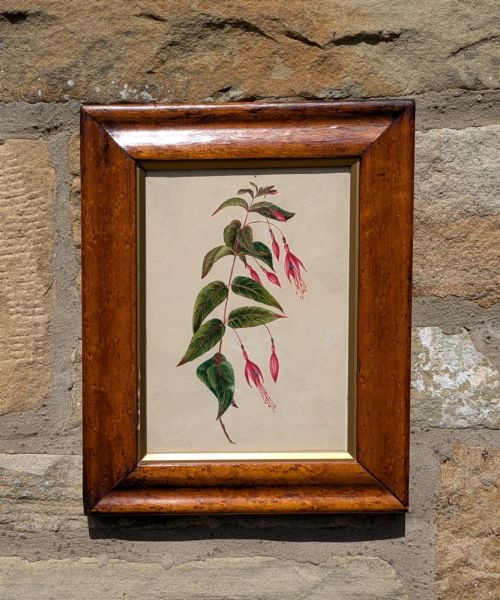
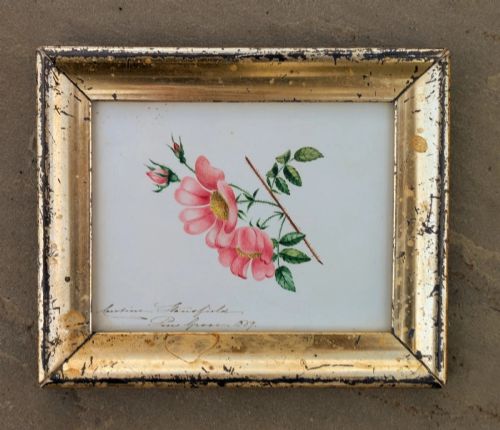
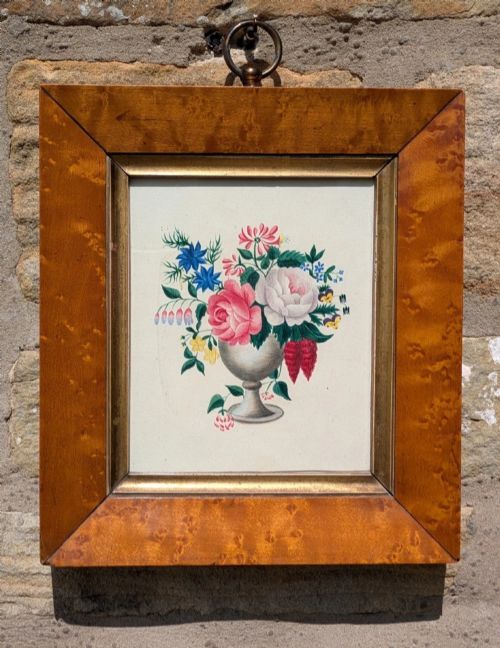
An antique watercolour floral study represents works executed on paper using watercolour paint, gouache, and pencil, capturing botanical subjects from various historical periods. These pieces include individual paintings, framed art, and sets of studies depicting flowers such as fuchsias, wild roses, azaleas, pansies, and wallflowers.
The selections available range from Regency and Victorian examples to 19th-century English school works and early 20th-century pieces. Buyers frequently encounter framed botanical paintings created during the Victorian and Edwardian eras, often highlighting specific floral varieties in natural settings.
Object types span from simple paintings to framed wall art, sometimes presented in pairs or sets of studies. Their origins trace across the 19th and early 20th centuries, reflecting changing aesthetic preferences in British botanical illustration.
How they were made
Artists painted these studies primarily using watercolour paint and gouache on paper support, occasionally incorporating pencil for initial outlining and structural detail. The fluid nature of watercolour allowed practitioners to build translucent layers of pigment, capturing the subtle hues and natural gradients of petals and leaves.
Framing materials typically involve wood, burr wood, glass, and gilt wood, which served to protect the delicate paper surfaces from environmental damage. Many works remain preserved within period frames that complement the botanical subject matter.
Pansies, wallflowers and cosmos caught on paper ensure your walls stay in perpetual bloom, minus the watering.
What varies in quality
Quality in an antique watercolour floral study rests upon the precision of the brushwork and the artist's ability to render botanical accuracy with tonal depth. Works featuring nuanced colour blending and well-defined composition stand apart from simpler decorative sketches.
The condition of the paper support and the preservation of the pigments significantly influence the overall standard of each piece. Superior examples retain vibrant colour tones without excessive fading, housed securely behind glass within period wood or gilt frames.
Edith Barrow·Grace Hastie·Marian Chase·Charlotte Isa James·Alice Macallan Swan·Marion Broom·Annie Mary Youngman·M.K Rhodes·Minnie Smythe
The Antique Watercolour Floral Study Glossary
- Watercolour paint
- A paint consisting of pigment suspended in a water-soluble vehicle, used on paper to create translucent colour washes.
- Gouache
- An opaque watercolour paint containing pigment mixed with a binding agent and white filler, adding solidity to floral highlights.
- Burr wood
- Wood featuring distorted grain patterns used to construct decorative frames that house these paper artworks.
- Botanical study
- A detailed artistic rendering of plant life created for scientific observation or aesthetic appreciation.
Antique Watercolour Floral Study: Frequently Asked Questions
What subjects appear in these studies?
These artworks depict specific flowers and plants, including fuchsias, wild roses, azaleas, pansies, wallflowers, cosmos, and pelargoniums. Artists often arranged them as single specimens or composed still-life groupings in baskets and jugs.
The selections also encompass broader botanical studies created by regional English schools and named painters from the nineteenth and twentieth centuries.
How do I identify a Victorian floral study?
Victorian examples typically exhibit meticulous botanical observation combined with soft watercolour washes and occasional gouache highlights on paper. The handwriting on the mount or the style of the framing often points to this period.
Signatures or attribution to named makers from the nineteenth century further help establish the age and origin of the piece.
Can I find matched pairs or sets?
Surviving examples occasionally include pairs of watercolours or multi-piece sets created by the same hand or school. These collections offer a cohesive display for wall art arrangements.
Sets often share uniform framing materials such as wood or gilt surrounds that reflect their period of origin.