

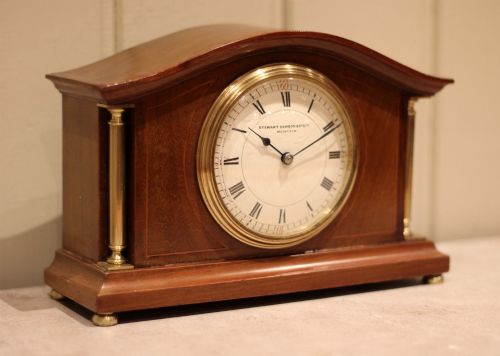
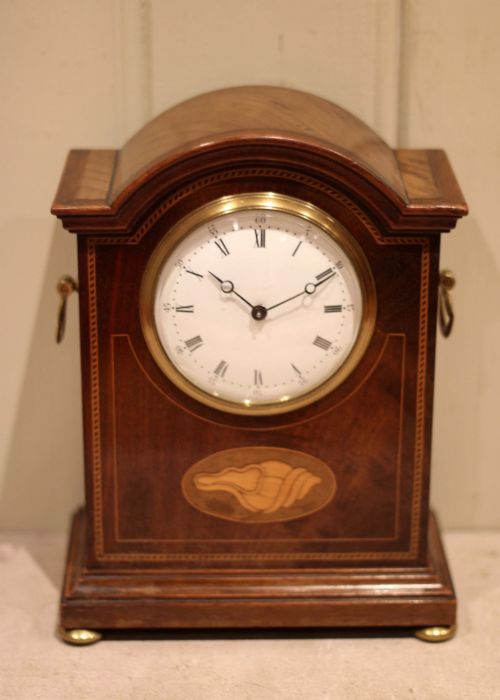
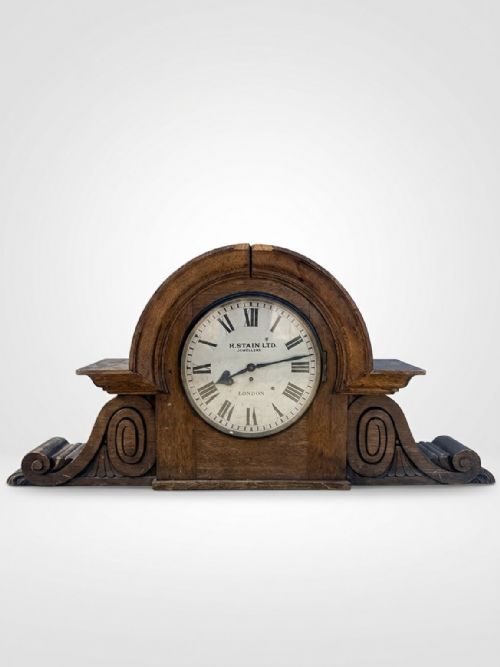
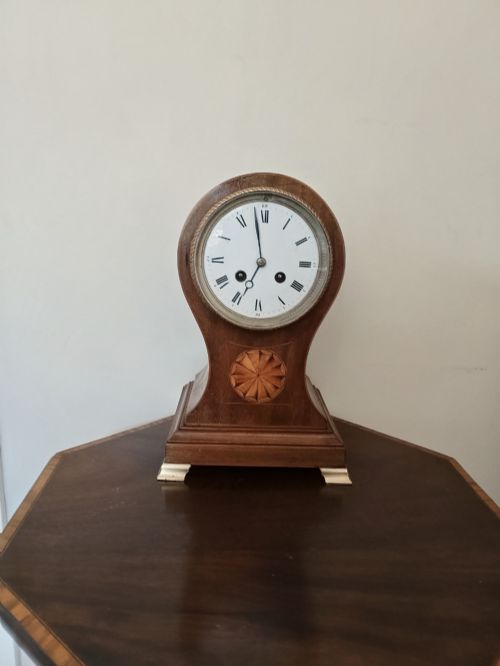



Edwardian Wooden Mantel Clock
An edwardian wooden mantel clock brings warm timber and steady ticking to a room, driven by brass movements that mark the hours with quiet authority.
Edwardian Wooden Mantel Clock
An edwardian wooden mantel clock is a domestic timekeeper designed to sit on the shelf of a living room or study. You are looking at table clocks and bracket clocks housed in mahogany, oak, walnut, and satinwood cases.
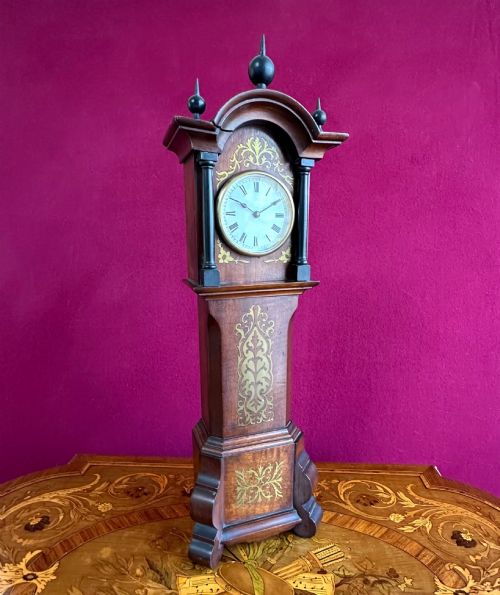
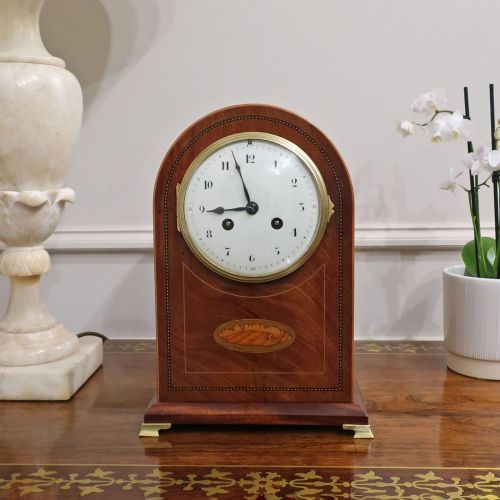
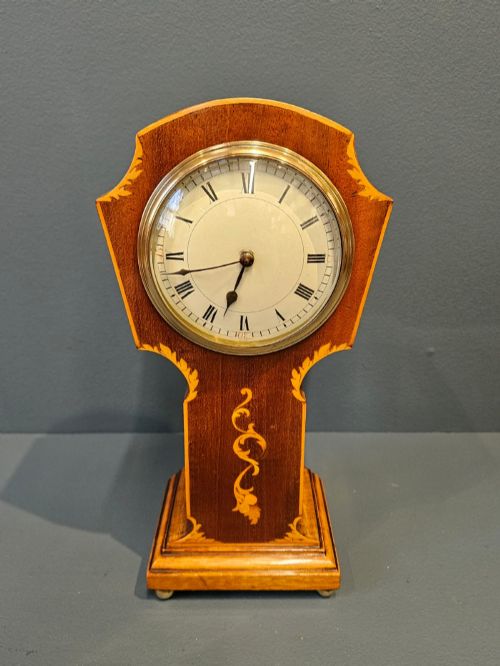
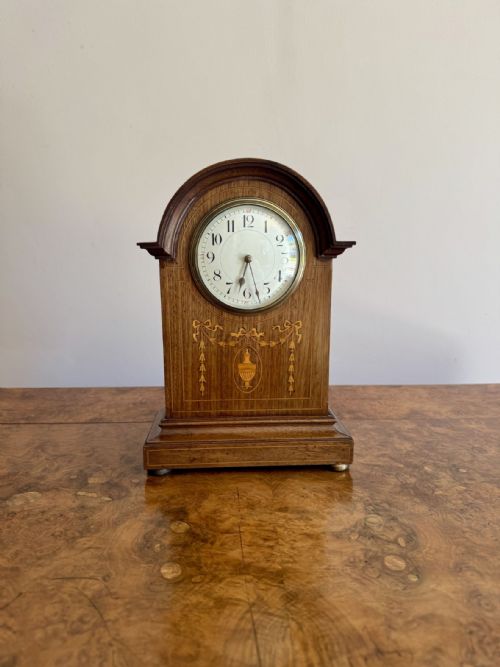
The version most commonly met on this page is the Edwardian inlaid mahogany mantel clock, often featuring delicate contrasting woodwork and a white enamel dial. These pieces span the late nineteenth century into the early decades of the twentieth.
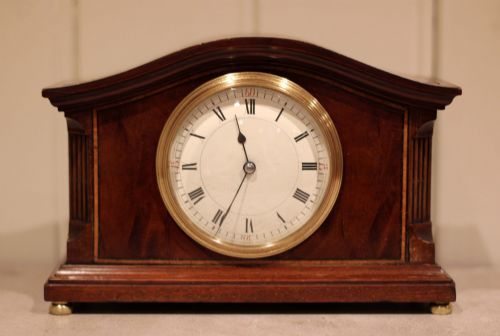
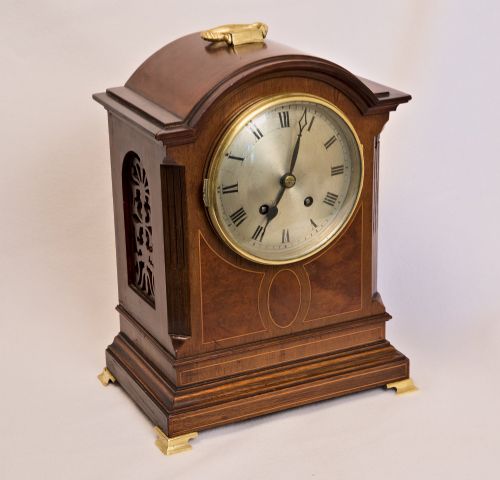
Makers ranged from large continental factories to regional British jewellers and silversmiths who sourced or assembled movements. The forms vary from balloon shapes and architectural bracket styles to simple upright architectural boxes.
How they were made
Cabinetmakers constructed the wooden cases using solid timbers and decorative veneers like mahogany, walnut, and oak. Delicate contrasting stringing and satinwood inlay embellished the surfaces of many Edwardian examples.
Makers fitted brass mechanical movements inside these wooden housings, employing fusee, spring-driven, or pendulum mechanisms. Enamel dials and cast brass bezels protected by glass completed the functional face of the clock.
One surviving mantel clock carries a presentation inscription recording its service inside an Irish doctor's surgery.
What varies in quality
The refinement of the timber case and the crispness of the inlay distinguish standard production from superior pieces. Hand-selected mahogany veneers and intricate satinwood stringing separate fine workshop output from plain utility boxes.
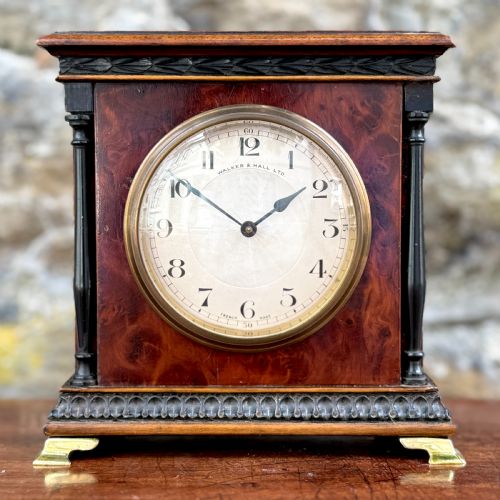
Movement pedigree also defines the upper tier of clocks, particularly signed mechanisms from established makers like Winterhalder and Hofmeier or Walker and Hall. The weight of the brass, the complexity of the striking train, and the clarity of the enamel dial all contribute to the standing of an individual clock.
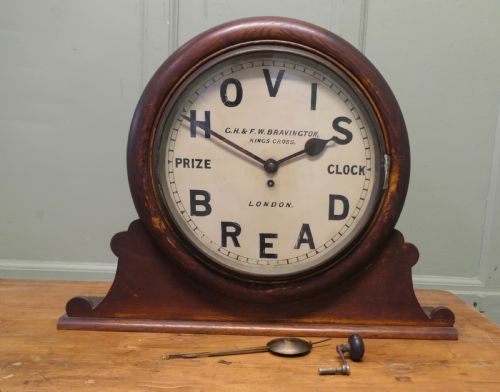
Winterhalder and Hofmeier·Walker and Hall·Jas Whitelaw of Edinburgh·G.H. and F.W. Bravington London·H.A.C.
The Edwardian Wooden Mantel Clock Glossary
- Fusee
- A conical pulley used in clock movements to maintain an even pull as the mainspring unwinds. This mechanism improves the timekeeping accuracy of the clock.
- Bracket clock
- A portable household clock originally designed to sit on a wall bracket or table. These substantial wooden cases often feature architectural tops and glazed side panels.
- Ting-tang
- A striking mechanism that sounds on two bells to indicate the quarters before the hour strike. It produces a distinctive two-tone chime.
- Balloon case
- A curvaceous clock housing tapering gracefully toward the top in a silhouette resembling a hot air balloon. This style gained popularity during the late nineteenth and Edwardian periods.
- Silvered dial
- A metal clock face treated with a silver solution to create a muted, reflective surface. Numerals are typically engraved and darkened for legibility.
Edwardian Wooden Mantel Clock: Frequently Asked Questions
How do I wind an edwardian wooden mantel clock?
Use the matching key provided with the clock to turn the winding squares on the dial gently until resistance is felt. Care must be taken not to over-wind the mainspring.
Most eight-day movements require winding once a week, while simpler timepiece variants may need attention at similar intervals depending on the train configuration.
Where should I place a wooden mantel clock?
Position the clock on a stable, level surface such as a mantelpiece, sideboard, or desk away from direct sunlight and drafts. A solid foundation helps the pendulum swing evenly.
Avoid placing mechanical clocks in damp rooms or areas with extreme temperature fluctuations, which can affect the wooden case and brass components.
How do I tell an Edwardian clock from a Victorian one?
Edwardian clocks tend to feature lighter mahogany cases with refined satinwood inlay and simpler, airier lines than their predecessors. Victorian examples often display heavier architectural details and darker oak or walnut timbers.
Stylistic influences also provide clues, as Belle Epoque and early Arts and Crafts motifs frequently appear alongside standard Edwardian aesthetic preferences.
What is the difference between a timepiece and a striking clock?
A timepiece is a clock designed solely to show the hours and minutes without any striking or chiming mechanism. It contains a simpler gear train focused purely on accurate time propagation.
A striking clock includes additional gear trains and hammers that sound bells or gongs on the hour and sometimes the quarters.