

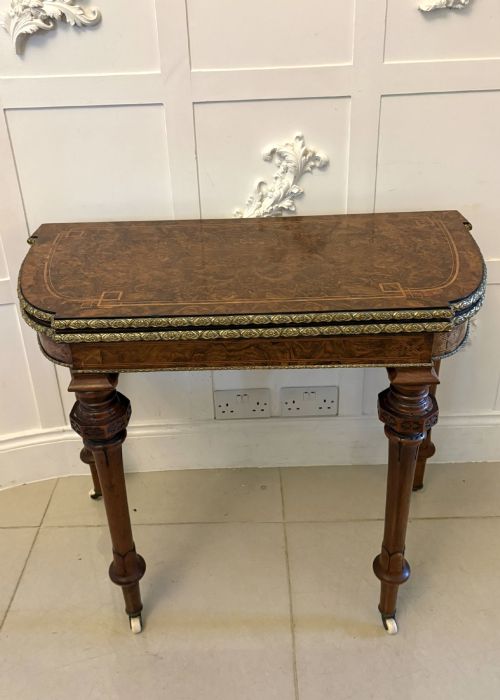


Edwardian Walnut Folding Table
These pieces for an edwardian walnut folding table bring versatile timber surfaces into a room, offering clever mechanisms and rich grain patterns for daily utility.
Edwardian Walnut Folding Table
When searching for an edwardian walnut folding table, a buyer encounters a selection that spans card tables, games tables, and drop leaf Sutherland designs. The pieces on this page lean heavily towards Victorian and Edwardian periods, alongside turn-of-the-century interpretations of Queen Anne styles.
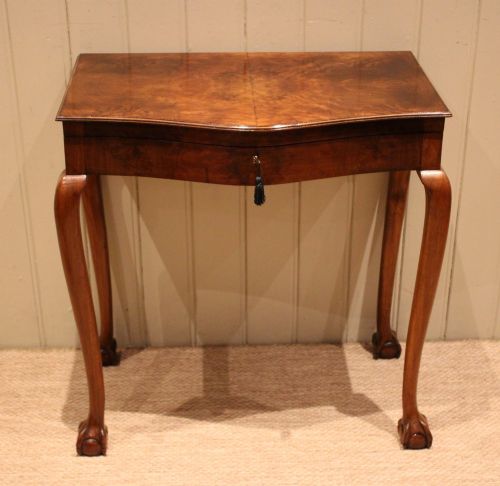
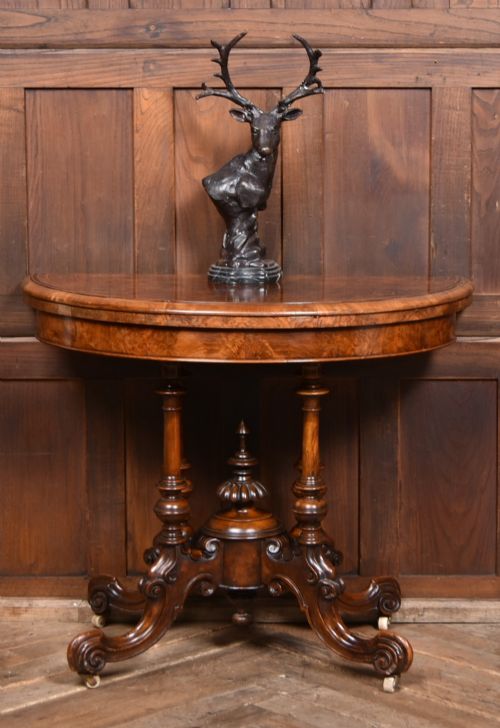
Forms vary from serpentine card tables and demi-lune shapes to compact tea stands and metamorphic writing desks. Most examples rely on clever folding or drop-leaf mechanisms designed to conserve space while delivering a polished timber top when expanded.
Materials and construction methods
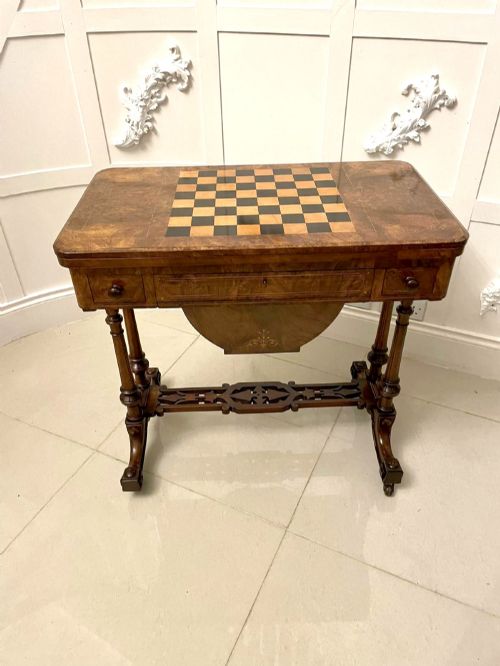
Cabinet makers utilised solid walnut and decorative burr walnut veneers over secondary timbers to achieve rich, figured surfaces. Inlays, wood marquetry, and Tunbridge Ware details frequently decorate the tops and borders of these folding surfaces.
Metal and ceramic components appear in supporting roles, with brass hinges and castors facilitating the folding and movement of heavy leaves. Baize linings often furnish the interiors of card and games tables, providing a soft playing surface beneath the timber lids.
Edwardian Walnut Folding Table Retail Price Guide 2026
Typical asking prices for edwardian walnut folding table among the pieces listed under this phrase on Sellingantiques today, from the lower quarter to the upper quarter. They describe what is for sale here now, not the wider market.
One unexpected variant houses a sewing machine inside a walnut console cabinet, hiding domestic machinery beneath a respectable folding wooden lid.
Distinguishing quality across examples
The degree of figuring in the walnut veneer sets baseline tiers of visual richness, with burr and flame patterns demanding greater skill from the cabinet maker. Precision in the joinery of folding leaves and hinges determines whether a table operates smoothly without dropping or sagging at the joints.
Signatures from established cabinet makers elevate certain pieces above anonymous workshop productions. The crispness of carved details, such as cabriole legs on Queen Anne style variants, separates standard production items from finer workshop commissions.
Edwards & Roberts·Howard & Sons Ltd·Maple & Co
The Edwardian Walnut Folding Table Glossary
- Burr Walnut
- Timber harvested from the growth excrescences of walnut trees, yielding highly swirled and mottled grain patterns. Cabinet makers prized this veneer for decorative table tops.
- Sutherland Table
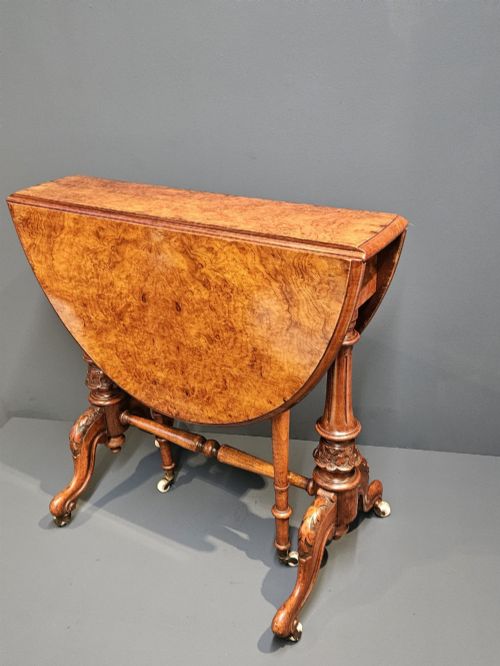
- A narrow drop-leaf table with hinged flaps that drop nearly vertically on both sides. The legs on each side swing outward to support the raised leaves.
- Demi-Lune
- A half-moon shape utilised in table top design, allowing the closed piece to sit flush against a wall before unfolding into a full circle or oval.
- Ormolu
- Gilded bronze mounts applied to furniture for decorative enrichment. These metallic accents frequently embellish the corners and rails of Victorian card tables.
- Baize
- A coarse woollen fabric, traditionally green, fitted to the interior wells of folding tables. It provides a durable, cushioned playing surface for cards and board games.
Edwardian Walnut Folding Table: Frequently Asked Questions
How do I operate a folding card table?
Most fold-over designs feature a hinged top that rotates ninety degrees before opening flat onto the supporting frame. The rear legs often pivot outward in tandem with the leaf to bear the weight.
Care must be taken to support the pivoting leaf evenly during this motion to avoid straining antique brass hinges. Once opened, the top typically reveals a baize-lined interior intended for gaming.
What is a Sutherland table used for?
A Sutherland table serves as a compact occasional surface that expands quickly when extra table space is required. The narrow profile allows it to stand against a wall when folded down.
Lifting both drop leaves and swinging out the supporting leg gates transforms the piece into an impromptu tea or dining table. This space-saving agility made them popular in nineteenth and early twentieth century parlours.
How do I identify burr walnut?
Burr walnut displays intricate, swirling grain patterns filled with small circular knot clusters and rich tonal variations. It appears as a veneer sliced from specialised tree growths rather than standard straight-grained timber.
This decorative sheet was laid over stable underlying woods on prominent surfaces like table tops and cabinet fronts. Its striking visual texture is a primary indicator of finer period cabinet making.
Where should I place a folding table in a room?
Folded tables sit comfortably against walls or behind sofas as console and side surfaces, occupying minimal floor space. Their decorative timber tops and inlaid borders ensure they function as display pieces when closed.
When guests arrive, the table can move to the centre of the room and unfold to provide a functional surface for drinks or games. Keeping them away from direct heat sources protects the walnut veneer and historic polish from drying.
How do I distinguish Edwardian pieces from Victorian ones?
Edwardian walnut tables frequently reflect lighter proportions and revival aesthetics, such as Queen Anne style cabriole legs. Their construction often incorporates simpler lines compared to heavily ornamented mid-nineteenth century equivalents.
Victorian examples tend towards darker, denser burr walnut veneers paired with elaborate ormolu mounts and serpentine shapes. Examining the internal secondary woods and hardware styles helps confirm the period of manufacture.