


Edwardian Walnut Card Table
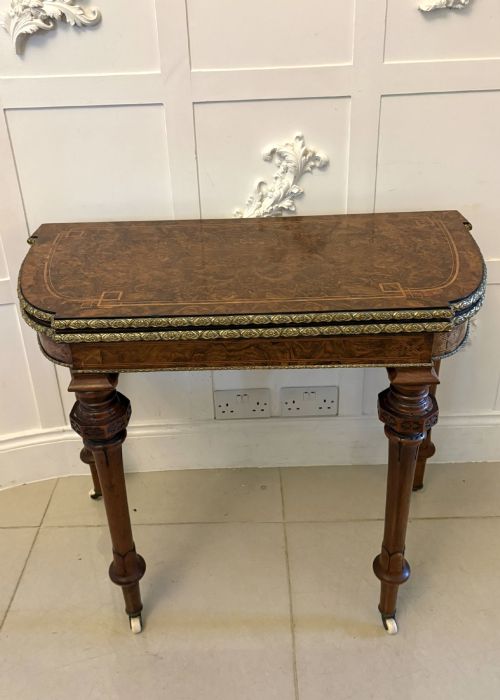
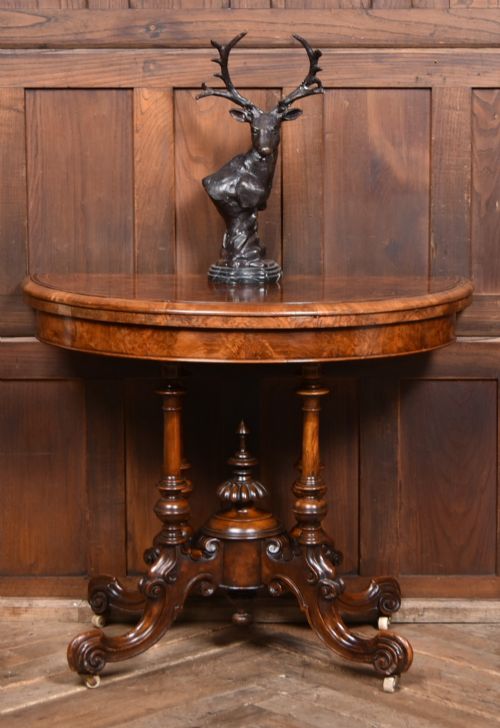
These pieces are an edwardian walnut card table, offering a folding surface for parlour games and refined entertaining in any home.
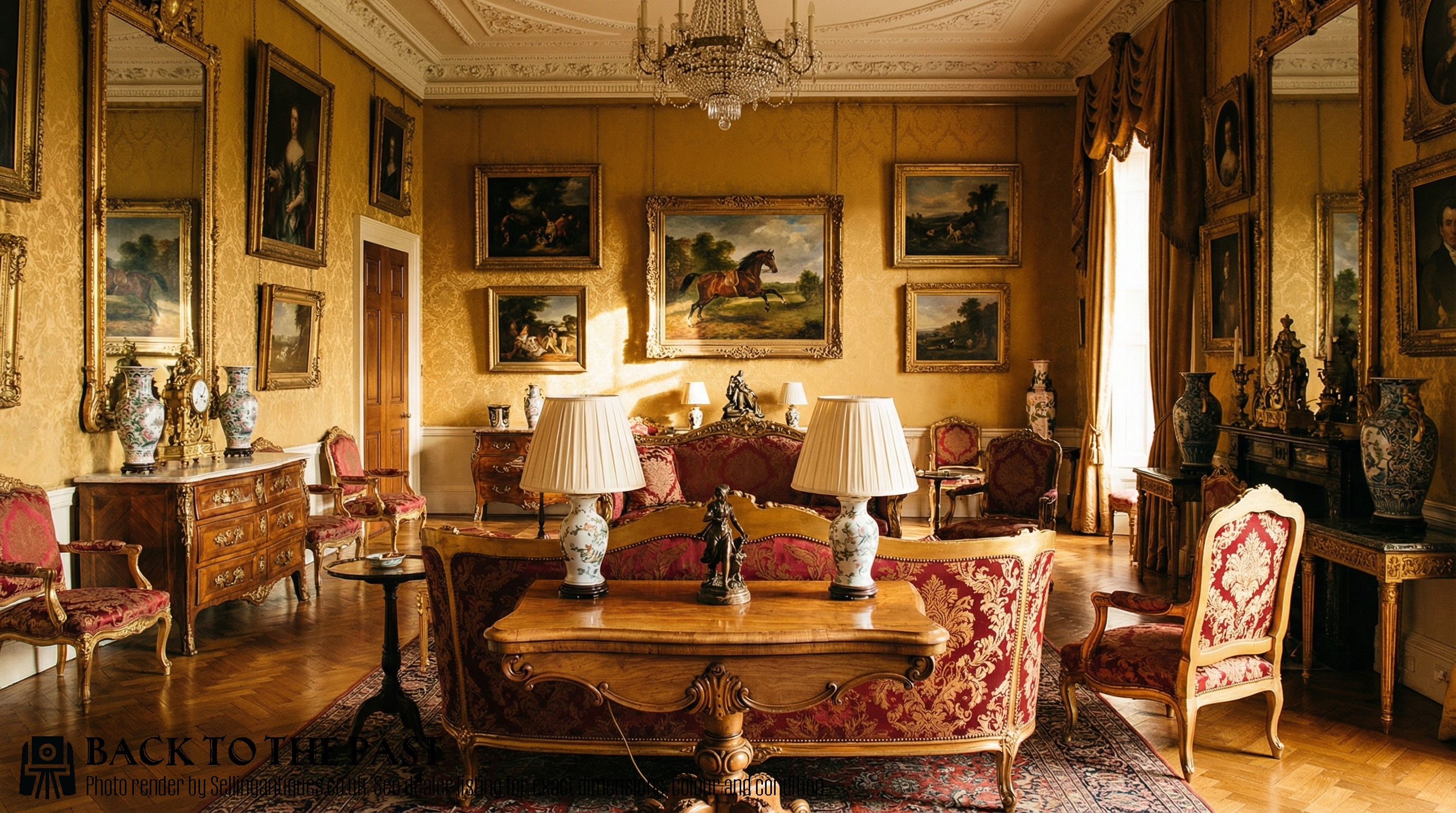
Edwardian Walnut Card Table
An edwardian walnut card table brings a compact, folding top designed for evening entertainment into the modern sitting room. The pieces found here span the Edwardian period, featuring both Queen Anne styles and simpler crossbanded forms.
Most examples rely on a fold-over leaf or a concertina mechanism that expands to reveal a baize-lined playing surface. They serve primarily as occasional or side tables when closed, adapting easily to daily domestic use.
How They Were Made
Cabinet makers utilised solid timber frameworks veneered with figured walnut and burr walnut to create rich surface patterns. Marquetry inlay, brass mounts, and crossbanding often decorate the top and borders.
The interiors typically conceal a baize playing surface beneath the hinged leaves. Turning and shaping form the cabriole or straight legs common to the period.
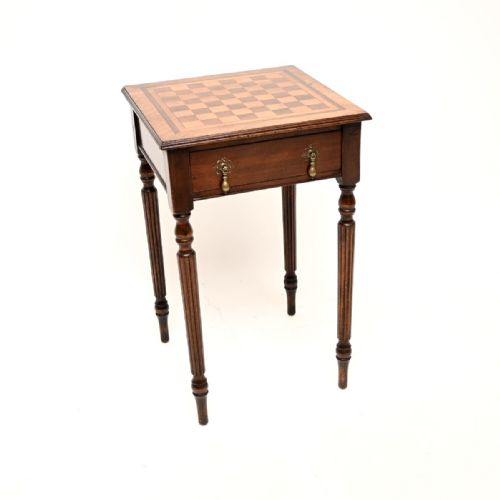
Object types include card tables, games tables, console tables, and occasional tables.
What Varies In Quality
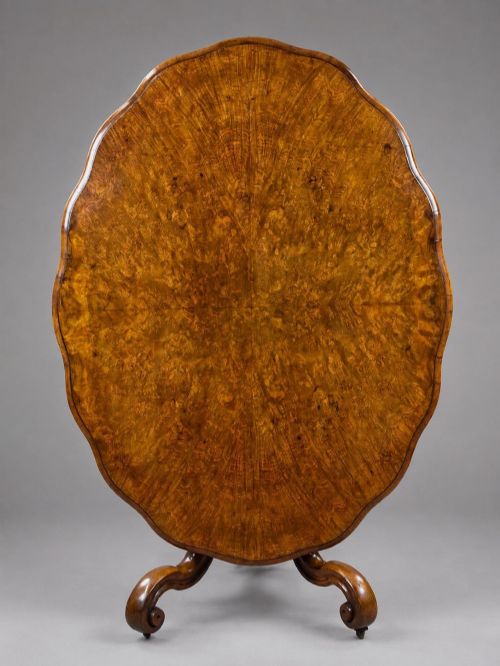
The depth and grain figure of the walnut veneer dictate much of the visual appeal across different examples. Highly figured burr timber and precise crossbanding separate standard pieces from finer ones.
The tightness of the folding joints and the smoothness of the concertina mechanism indicate the care taken in original construction. Intricate marquetry and well-preserved internal baize add further distinction.
Edwards & Roberts·Howard & Sons Ltd·Maple & Co
The Edwardian Walnut Card Table Glossary
- Baize
- A woolen felt material traditionally used to line the playing surface of games tables. It provides a soft, durable area for cards.
- Burr Walnut
- A specialised veneer taken from the gnarled growths of a walnut tree, prized for its swirling, highly decorative grain patterns.
- Concertina Action
- An expanding framework that supports a fold-over table top when opened. It allows the legs to extend outward symmetrically.
- Crossbanding
- A narrow strip of veneer laid around the border of a table top with the grain running perpendicular to the centre.
- Demi-Lune
- Half-moon in shape, describing tables with a curved front and a flat back edge designed to sit against a wall.
Edwardian Walnut Card Table: Frequently Asked Questions
How do I open the table?
Most pieces use a fold-over top that swings open on hinges, occasionally supported by a pivoting rear leg or an expanding concertina frame.
Lifting the top section reveals the hidden interior well and the baize playing surface beneath.
Where should I place it?
These tables sit comfortably against a living room wall as a side or console piece when folded shut.
Pulling them into the room allows both leaves to open fully for gatherings or display.
What is burr walnut?
Burr walnut comes from a knot or tree growth that produces complex, swirling patterns in the wood grain.
Cabinet makers slice this timber into fine veneers to adorn the tops of formal furniture.
How do I clean the wood?
Dusting with a dry, soft cloth keeps the polished walnut surface free from everyday grit and marks.
Avoid using harsh chemical sprays or excess moisture to protect the historic polish and veneer.