
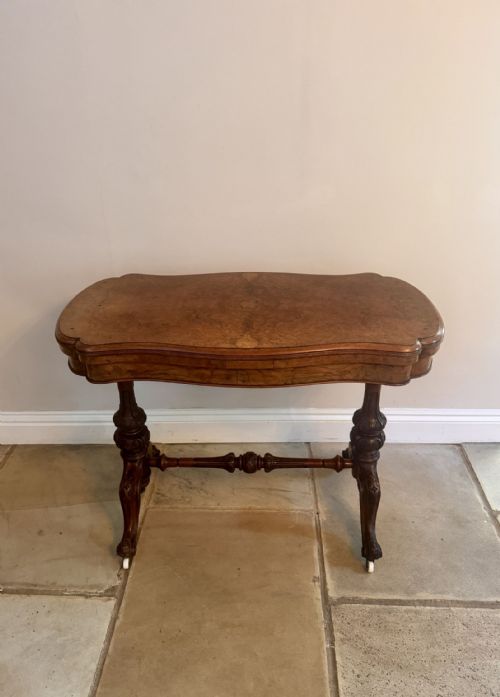
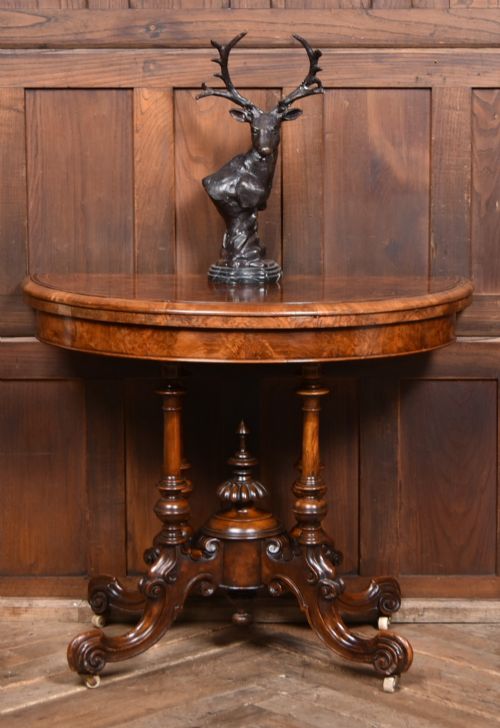
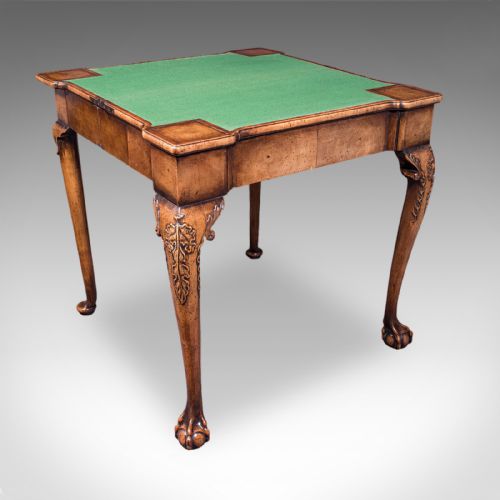
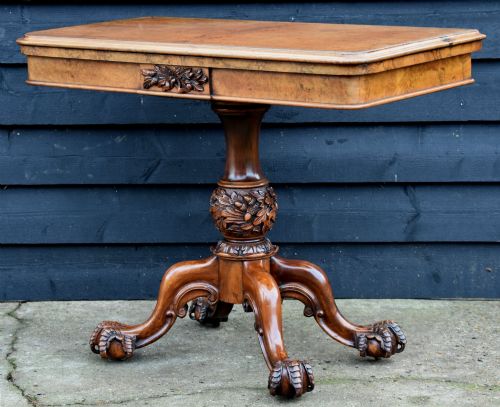
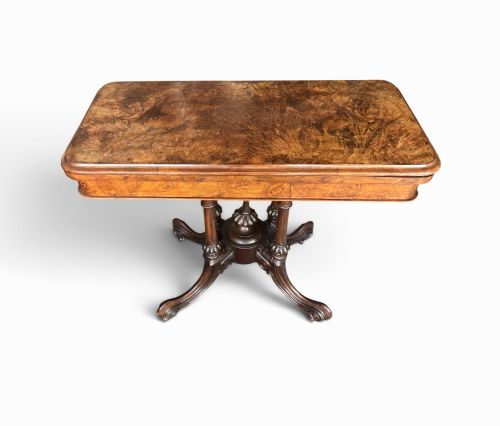
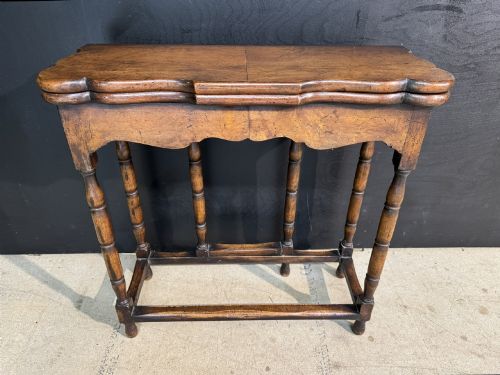
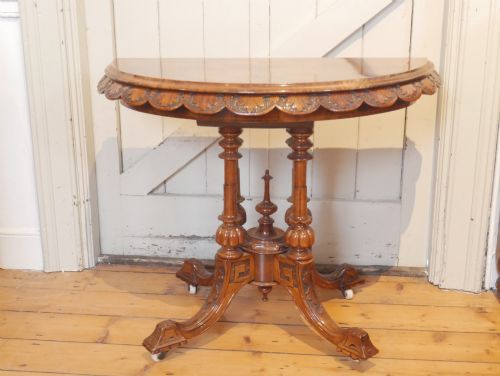
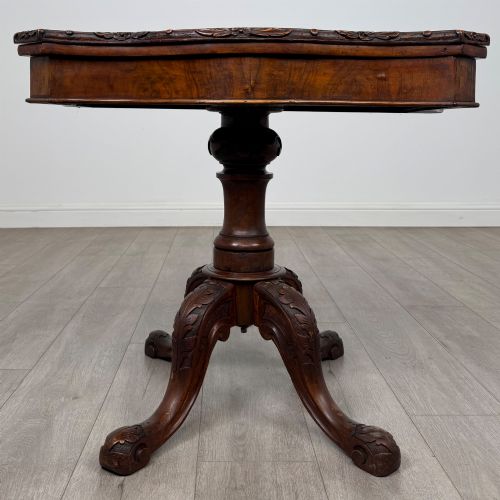
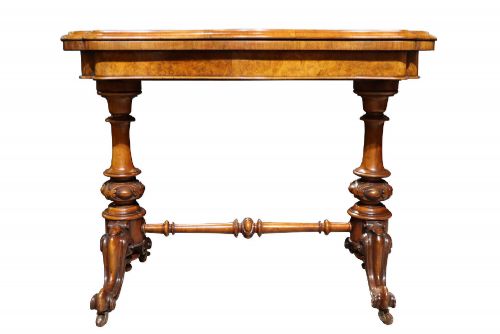
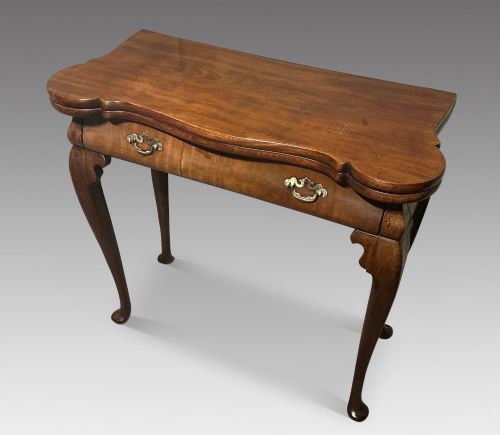
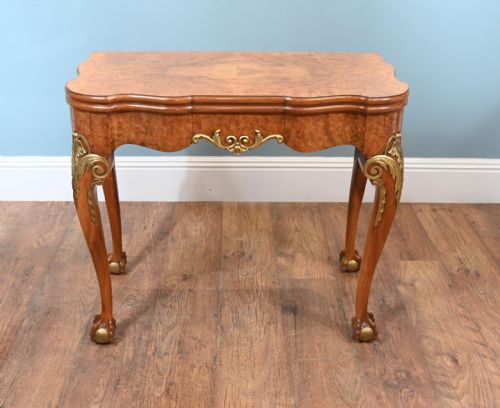


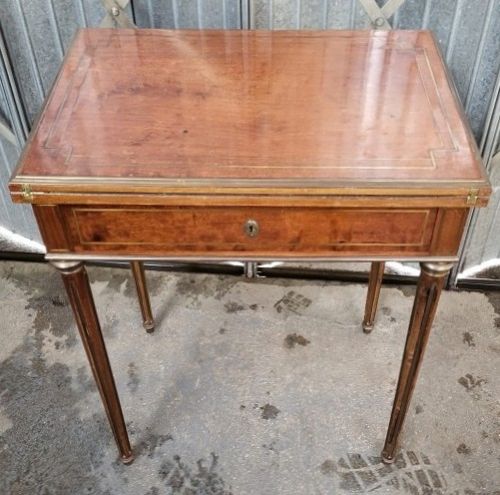
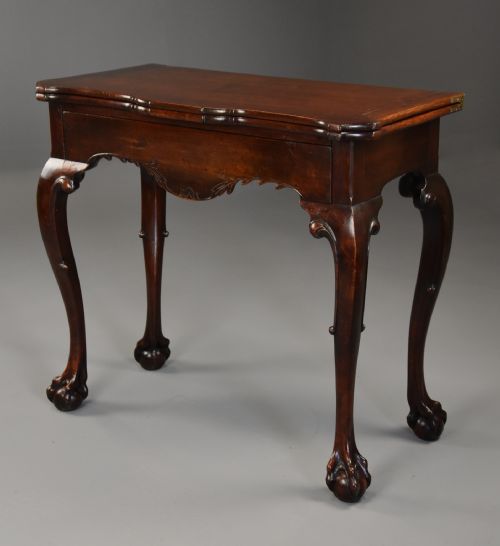

Walnut Fold Top Table
A walnut fold top table brings ingenious dual-purpose design to a room, shifting effortlessly from a compact console to a broad surface for cards, tea, or writing.
Walnut Fold Top Table
A walnut fold top table serves as a versatile piece of furniture engineered to expand its surface area when required. Buyers browsing this page encounter forms ranging from card and games tables to tea tables, occasional tables, and desks.
The selection spans centuries of design, with pieces originating from the 18th century, the Georgian era, and the Victorian period, alongside later 19th-century French examples and early 20th-century revivals. Victorian and Georgian items dominate the selection, offering figured and burr walnut timbers.
Makers and workshops utilised inventive mechanics such as rotating tops, pivoting leaves, and hinged supports to conceal playing surfaces, baize, and wells. These tables adapt easily to modern interiors as functional side consoles or focal points in a reception room.
Judging quality
Quality rests upon the selection of timber and the precision of the veneer work, where symmetrical burr walnut figures and crisp marquetry inlay distinguish finer specimens. The integrity of the folding mechanism and the smooth operation of pivot or gate-leg supports demonstrate the maker's original skill.
Proportion and carving also separate standard items from exceptional ones, particularly where moulded edges, serpentine shapes, and carved supports retain sharp detail. Original surface patination and minimal timber shrinkage indicate careful preservation over generations.
Some Victorian tables include hidden wells beneath the folding top intended specifically for storing sewing gear alongside playing cards.
Edwards and Roberts·Epstein and Co
The Walnut Fold Top Table Glossary
- Burr walnut
- Timber taken from a tree growth that produces intricate, swirling grain patterns. This highly decorative veneer appears on the top surfaces of many Victorian tables.
- Baize
- A coarse woolen fabric used to line the interior playing surfaces of card and games tables. It provides a soft, protective mat for counters and cards.
- Marquetry
- The art of applying pieces of veneer to a structure to form decorative patterns or pictures. Floral motifs frequently decorate the tops of Victorian examples.
- Crossbanding
- A border of veneer laid around the perimeter of a table top with the grain running perpendicular to the central panel. This technique frames the primary wood.
- Demi-lune
- A half-moon shape characteristic of tables designed to sit flush against a wall when folded. They open out into a full circular or semicircular surface.
Walnut Fold Top Table: Frequently Asked Questions
How do walnut fold top tables work?
The top leaf hinges open or rotates on a pivot to reveal a larger surface, often supported by a swing leg or a concertina frame.
When closed, the table functions as a slim console or side table against a wall.
What were these tables used for historically?
Households utilised them for social pastimes including card games, chess, and bridge, as well as for serving tea or writing.
The folding action allowed families to save floor space in principal rooms when entertaining was finished.
How do I care for a walnut surface?
Keep the timber away from direct sunlight and excessive heat sources to prevent the veneer from drying and lifting.
Apply a traditional beeswax polish occasionally and buff gently with a soft cloth to maintain the natural sheen.
How do I distinguish Georgian from Victorian examples?
Georgian tables generally display simpler, cleaner lines with straight legs and straightforward timber grains like red walnut.
Victorian pieces frequently feature burr walnut veneers, elaborate marquetry inlay, and heavier carved supports.