

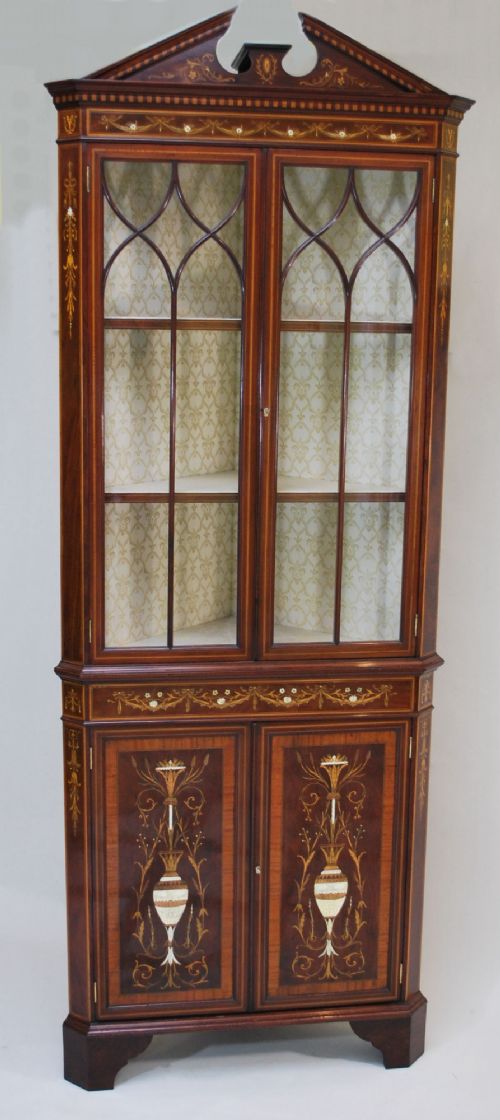
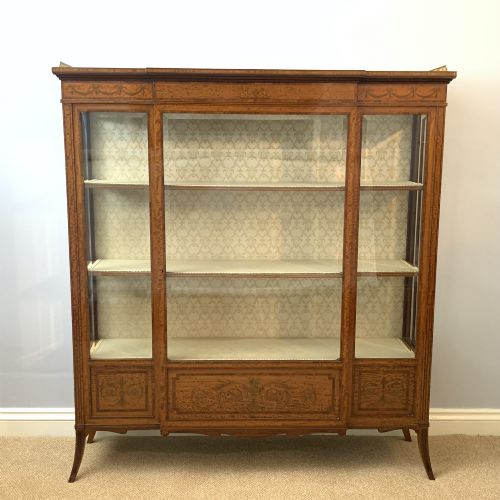
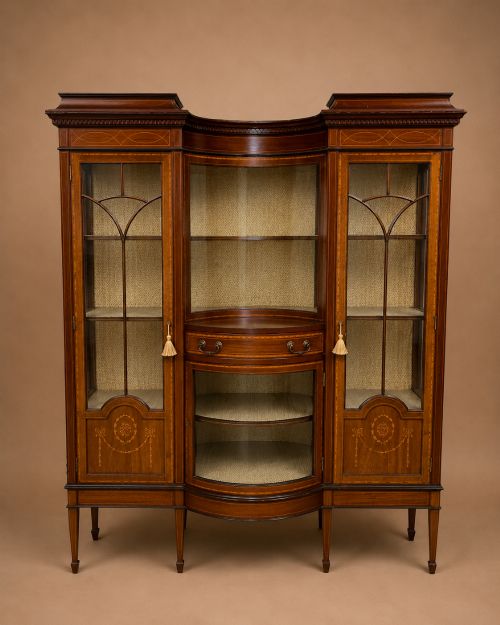
Edwardian Vitrine Cupboard
An edwardian vitrine cupboard brings glass-fronted elegance to a room, offering a refined stage for treasured objects.
Edwardian Vitrine Cupboard
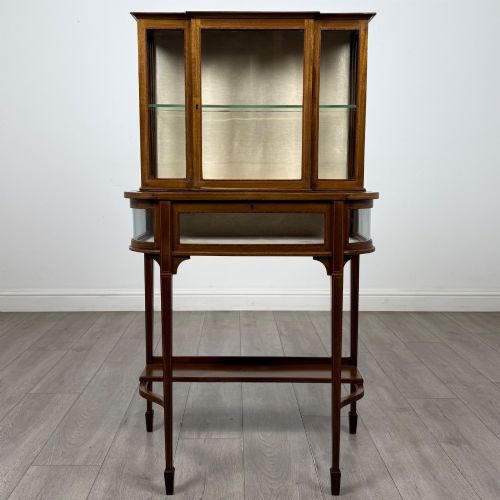
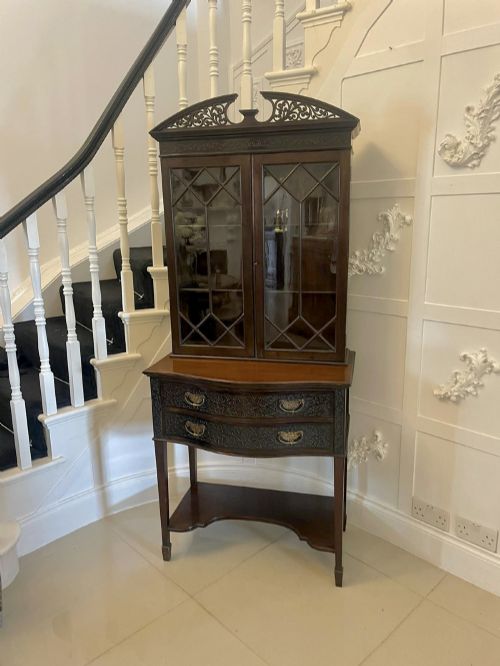
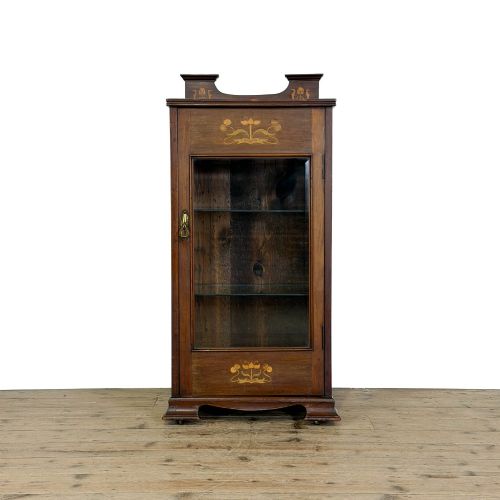
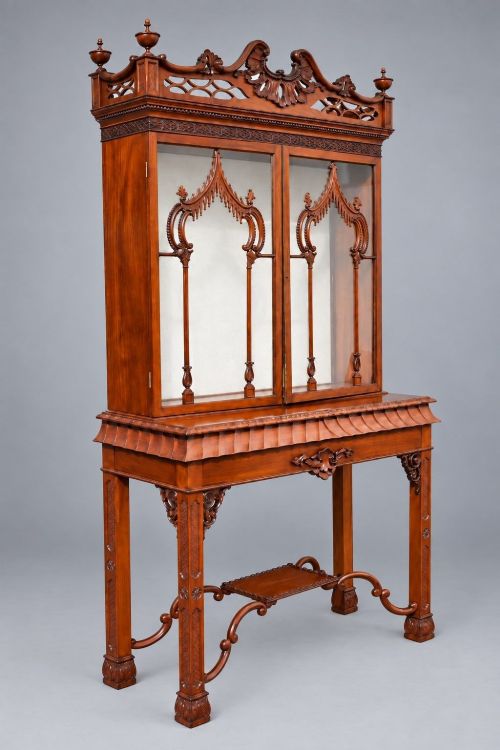
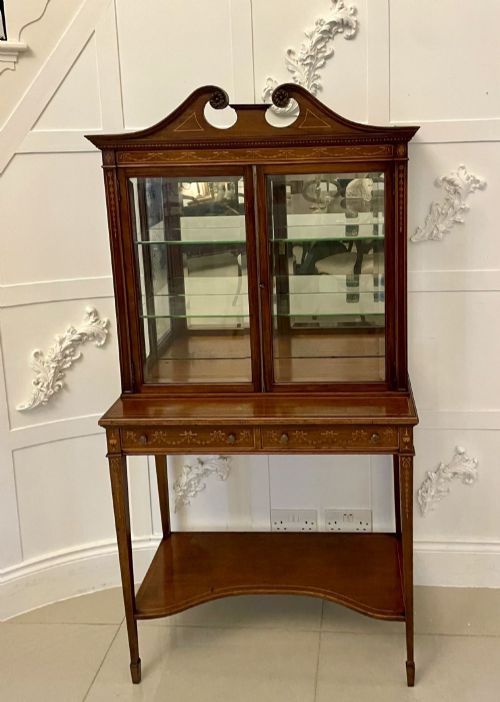
The edwardian vitrine cupboard spans the late nineteenth and early twentieth centuries, drawing heavily on Sheraton and Chippendale revivals. These glazed display cabinets and corner cabinets showcase the lighter, more graceful proportions favoured during the Edwardian era and late Victorian period.
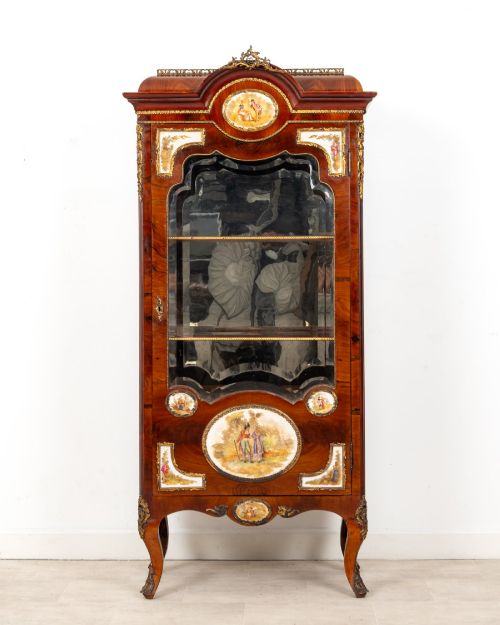
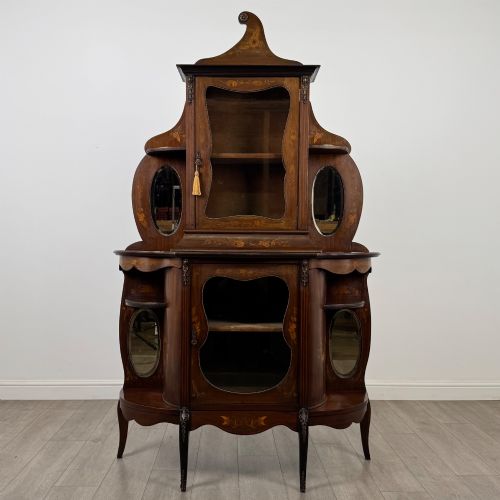
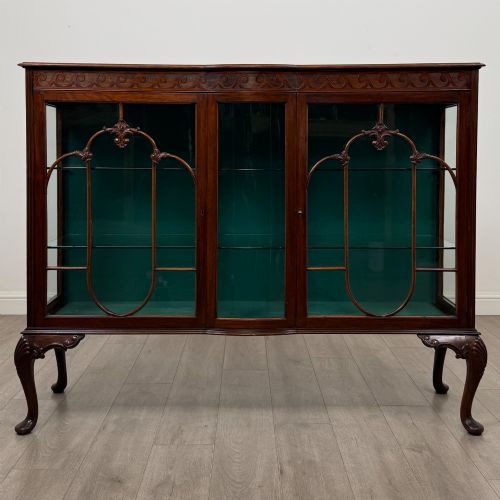
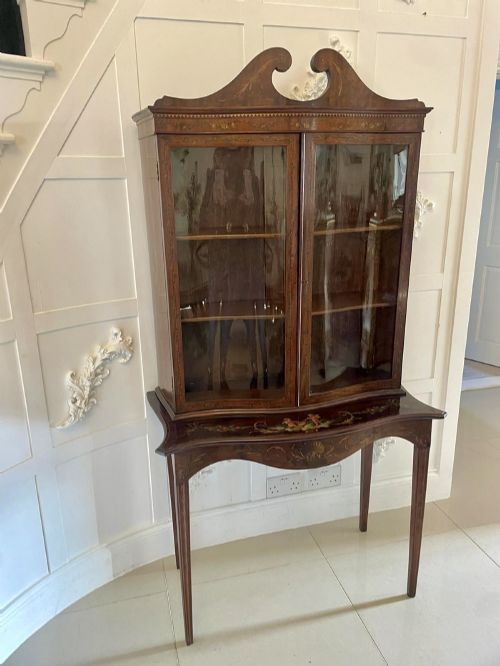
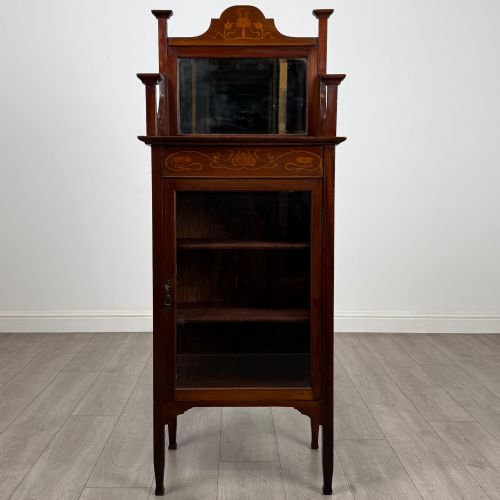
Mahogany remains the dominant timber, frequently enriched with satinwood inlay, marquetry, and painted decoration. Pieces range from slender bow-fronted vitrines to substantial two-part cabinets incorporating mirror backs and porcelain plaques.
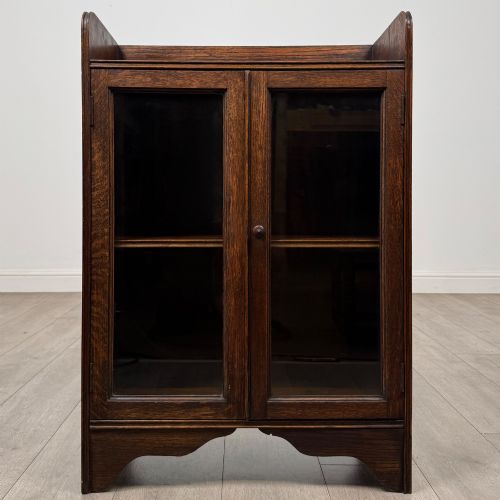
Walnut, oak, and satinwood also appear across the selection, reflecting diverse stylistic influences from Art Nouveau to Queen Anne revivals. The overriding purpose remains the display of ceramics, glassware, and small ornaments behind protective glass.
Materials and Technique
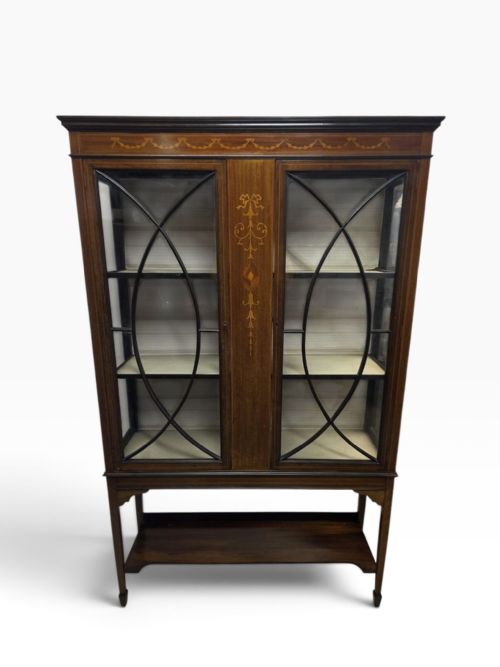
Cabinetmakers utilised solid timbers and selected veneers, applying satinwood inlay and marquetry to mahogany carcases with considerable precision. Glazing bars divide the glass panels into geometric or curvilinear patterns, framing the contents while maintaining structural integrity.
Interior surfaces frequently feature mirror backs or fabric linings to enhance the display of objects. Brass fittings, including delicate hinges and key escutcheons, complete the construction of these glazed cabinets.
The listings show substantial variety in form, encompassing both freestanding display cabinets and space-saving corner cabinets executed in mahogany, oak, and walnut.
Craftsmanship and Detail
Quality reveals itself in the crispness of the marquetry, the choice of figured wood veneers, and the delicacy of the glazing bars. Superior examples display meticulous hand-carved details and refined painted decoration rather than mass-produced uniformity.
The integration of original painted panels, mirror backs, and quality brass hardware elevates certain cabinets above standard commercial output. Structural balance and the seamless execution of curved bow fronts further distinguish the finer pieces.
Edwards & Roberts·Maple & Co.
The Edwardian Vitrine Cupboard Glossary
- Vitrine
- A glass-fronted cabinet designed for displaying fine porcelain, curiosities, or books. These glazed enclosures protect delicate objects while keeping them visible from multiple angles.
- Marquetry
- Decorative veneer work formed by fitting together small pieces of tinted wood, shell, or ivory to create pictorial or geometric designs. Craftsmen apply these patterns to cabinet doors and friezes.
- Sheraton Revival
- A late nineteenth and early twentieth century design movement that reinterprets the light, neoclassical styles of eighteenth-century designer Thomas Sheraton. Pieces typically feature satinwood inlay, tapered legs, and restrained classical motifs.
- Bow Front
- A convex, outwardly curved front elevation common on select cabinets and sideboards. This curved form softens room geometry and increases interior display volume.
- Satinwood
- A durable, lustrous yellowish timber native to India and Ceylon, prized for its golden sheen. Cabinetmakers use it both as a solid wood and as a contrasting veneer for inlay work.
Edwardian Vitrine Cupboard: Frequently Asked Questions
What is an edwardian vitrine cupboard?
An edwardian vitrine cupboard is a glazed display cabinet produced around the turn of the twentieth century. These pieces were specifically built to showcase ceramics, glassware, and decorative objects in a drawing room or parlour.
They combine the lighter aesthetic of the Edwardian era with earlier revival styles, frequently incorporating mahogany, satinwood inlay, and mirrored interior backs.
How do I date an edwardian vitrine cupboard?
Dating relies on stylistic markers, timber choice, and construction methods. Pieces from this era often blend Sheraton or Chippendale revival motifs with turn-of-the-century manufacturing techniques.
Makers' marks, original brass hardware, and secondary woods inside the carcase provide further clues to pin down the decade of manufacture.
Where should I place a vitrine in my home?
A vitrine sits comfortably in a drawing room, dining room, or hallway where natural light can catch the glass doors. Corner cabinets make effective use of neglected room angles while offering display space.
Keep these cabinets away from direct sunlight to protect interior fabric linings and sensitive decorative objects.
How do corner cabinets differ from standard vitrines?
Corner cabinets are engineered with angled backs specifically designed to fit snugly into the corner of a room. Standard vitrines feature flat backs and rectangular or bow fronts meant for placement against a flat wall.
Both types utilise glazed doors, but corner versions optimise floor space in smaller rooms.