
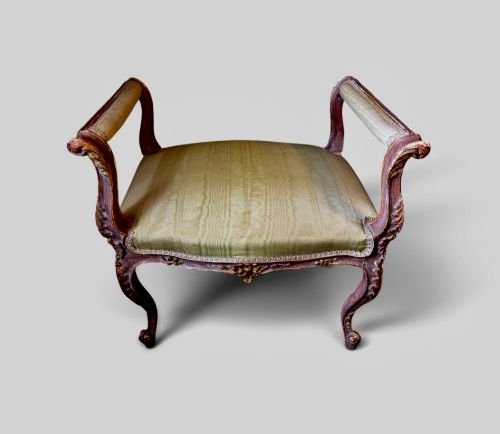
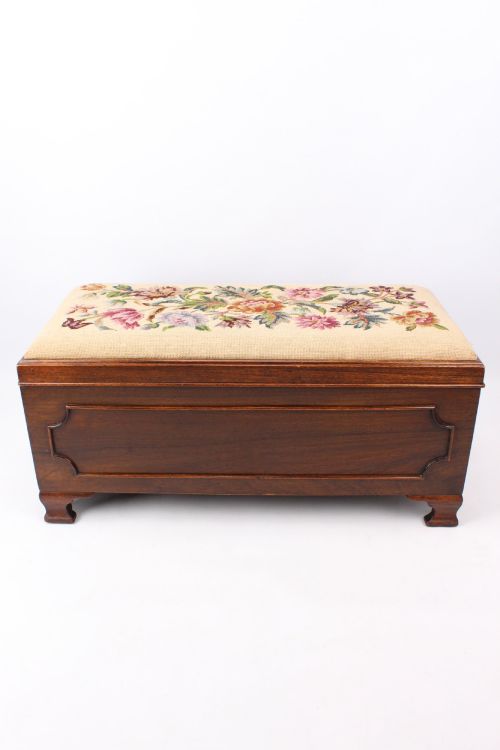
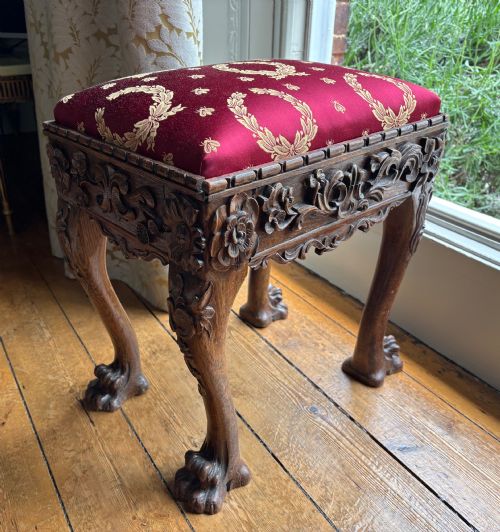
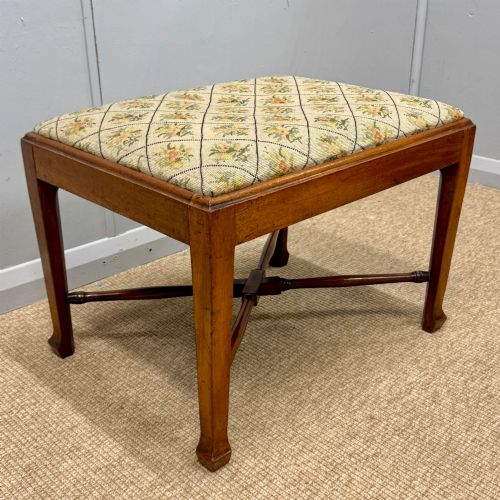

Edwardian Upholstered Stool
These edwardian upholstered stool designs bring refined domestic seating to dressing rooms and music rooms alike.

What an edwardian upholstered stool is
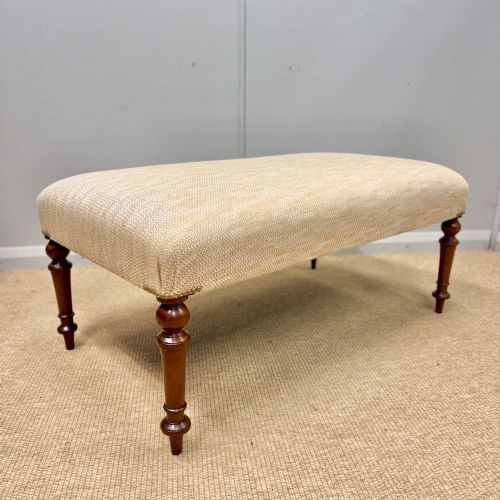
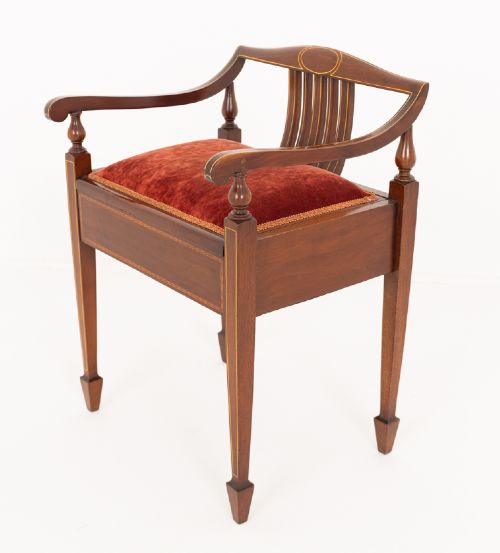
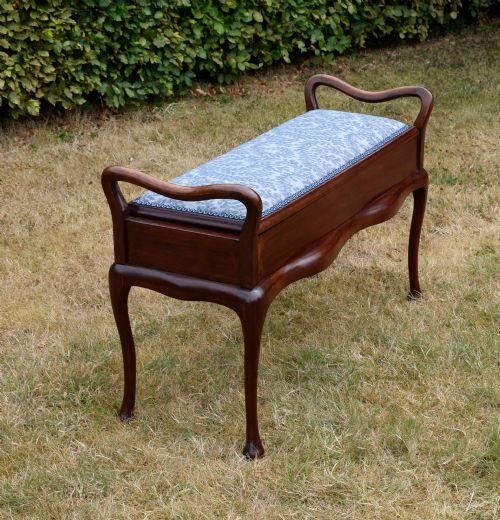
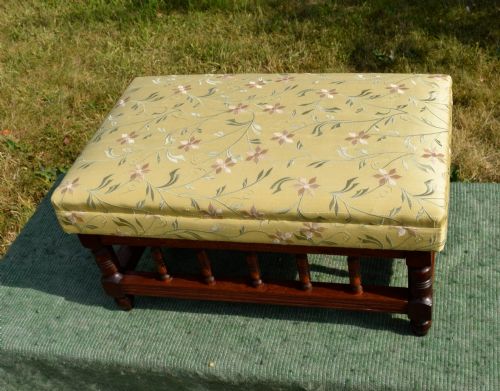
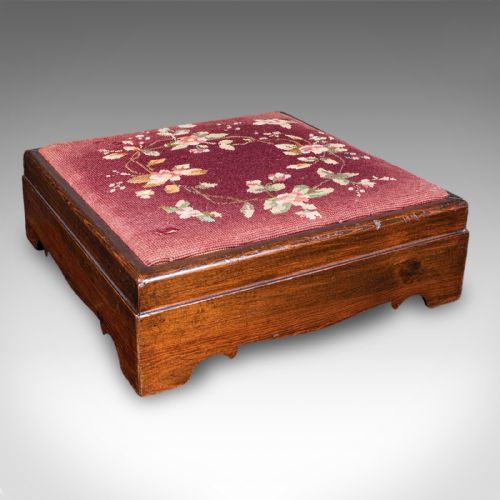
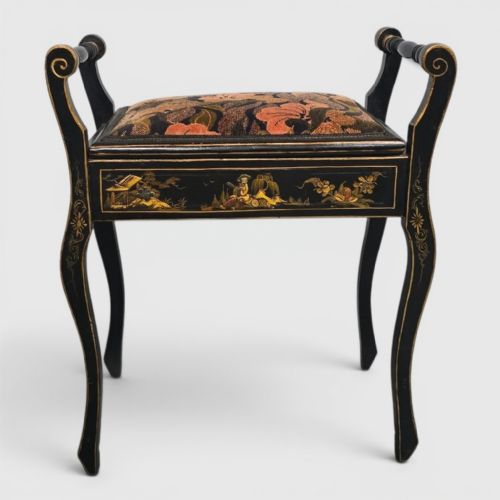
An edwardian upholstered stool serves various domestic functions, appearing most frequently on this page as piano stools, dressing table stools, window seats, and footstools. The forms range from compact single seats to longer duet benches designed for two players at a keyboard.
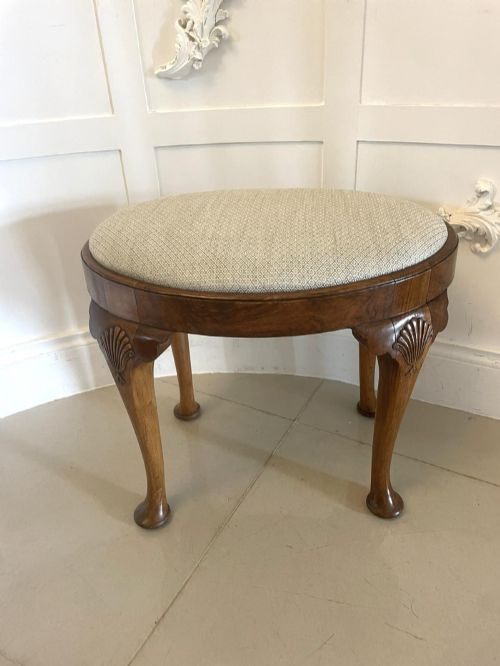
Makers of the period drew heavily on earlier aesthetics, producing pieces styled in Georgian Revival, Queen Anne design, and Arts & Crafts manners alongside contemporary Edwardian tastes. Mahogany and walnut form the primary timber frameworks supporting these varied seating types.
The inventory encompasses both simple footstools and complex music stools featuring adjustable height mechanisms or internal storage compartments for sheet music. These practical additions make them enduringly useful furniture items in modern homes.
Materials and construction
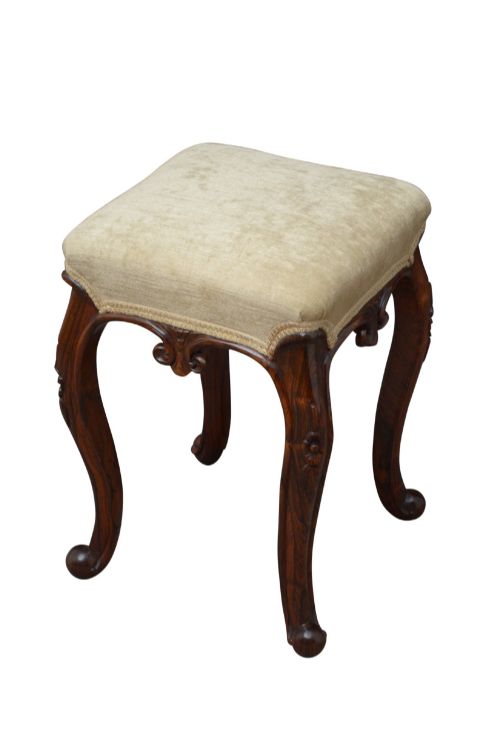
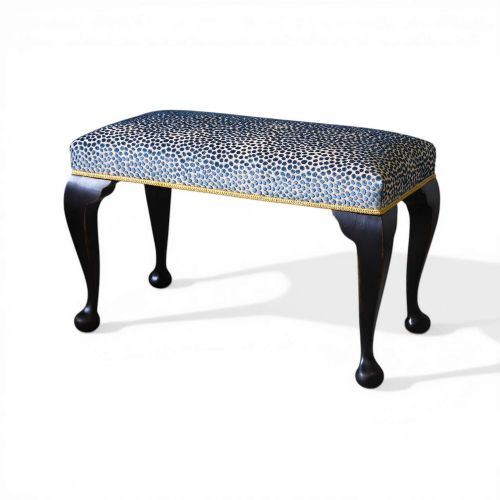
Joiners and cabinet makers constructed the frames primarily from solid mahogany, walnut, oak, beech, and bentwood, frequently employing rich dark polishes to finish the timber. Inlaid decoration and carved cabriole legs with ball and claw feet occasionally enrich the wooden structures.
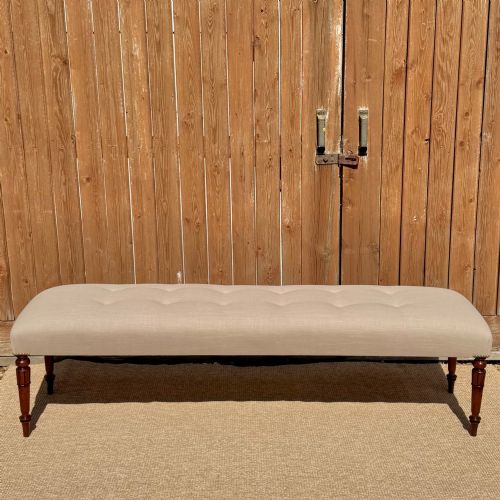
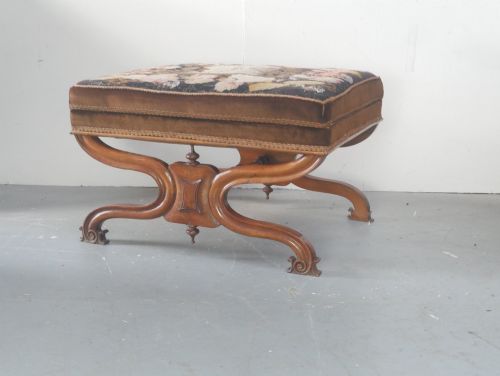
Upholstery techniques combined traditional stuffing with a wide variety of coverings including velvet, cotton, tapestry, tweed linen, button leather, leatherette, and tartan fabric. Brass fittings appear on adjustable seat mechanisms and internal storage hinges.
Retail Price Guide 2026
Typical UK retail prices for edwardian upholstered stool, calculated from the Sellingantiques database of over a million retail prices indexed since 2003. This retail price guide relies exclusively on Sellingantiques data; no external sources or auction records are used, so the figures do not describe the wider market.
Listings feature mahogany, walnut, oak, and beech frames paired with velvet, leather, tapestry, and cotton upholstery.
Judging the work
Quality rests heavily on the selection of timber and the crispness of any inlaid decoration or wood carving on the frame. Better examples utilise dense mahogany or walnut with substantial joinery rather than lighter secondary woods.
The refinement of the upholstery work and the mechanical reliability of adjustable piano stools distinguish finer workshops from standard production pieces. Original hardware, tight joints, and well-executed textile choices elevate the piece.
Howard and Sons·Warings·Shoolbred
The Edwardian Upholstered Stool Glossary
- Duet stool
- A wide piano stool designed to seat two musicians side by side during piano practice or performance. These longer benches often incorporate hinged seats concealing music storage compartments.
- Piano stool
- A specialised seat for keyboard players, frequently built with a mechanical screw action to raise or lower the upholstered top. They match the height requirements of the player.
- Window seat
- A long, narrow bench constructed to fit neatly into the recess of a bay window. These pieces provide low seating without obstructing natural light or views.
- Cabriole leg
- A furniture leg that curves out in a convex arc and tapers inward in a concave arc, terminating in a foot such as a ball and claw. This classical shape mimics animal limbs.
- Bentwood
- Wood that has been heated with steam and bent into curved structural forms without breaking. This technique created lightweight, flowing frames for specialised seating.
Frequently Asked Questions
How do I use a piano stool?
These pieces function primarily as seating at keyboards, with many models offering adjustable heights or internal storage for sheet music and books.
They also serve well in hallways and dressing rooms where low, compact seating is required.
What woods were used for frames?
Cabinet makers predominantly selected mahogany and walnut for finer seating, often finishing them with dark polished surfaces.
Oak, beech, and bentwood also appear frequently across the period styles represented.
How do I identify the period?
Look for characteristic Edwardian proportions combined with revival details such as Queen Anne cabriole legs or Georgian style inlays.
Construction methods and timber selection help distinguish these pieces from later reproductions.
What fabrics cover the seats?
Original and replacement coverings include velvet, cotton, tapestry, tweed linen, button leather, and tartan upholstery.
Brass studding and decorative braids often edge the textile panels.