



Edwardian Tray Top Table
An edwardian tray top table combines the mobility of a serving platter with the stability of a low stand, offering a practical surface for domestic service.
Edwardian Tray Top Table
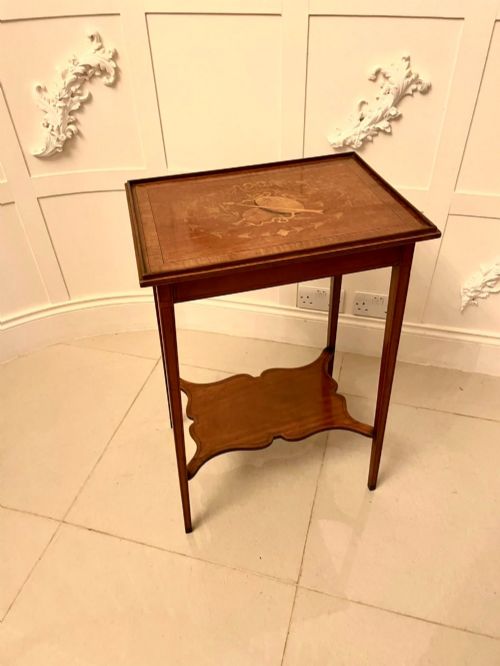
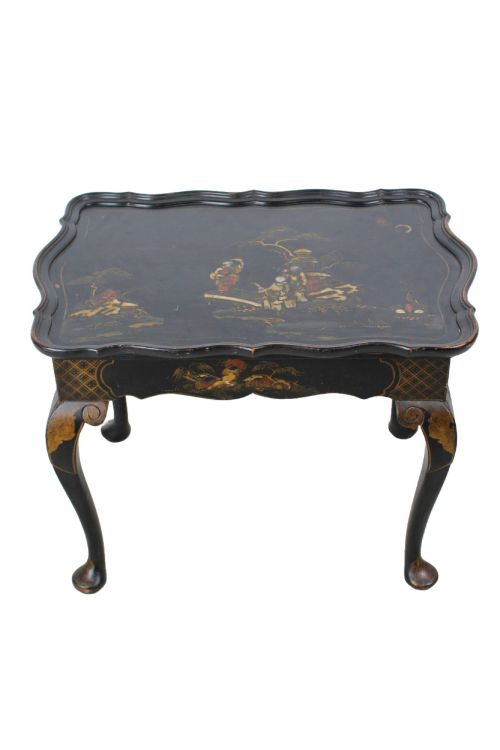
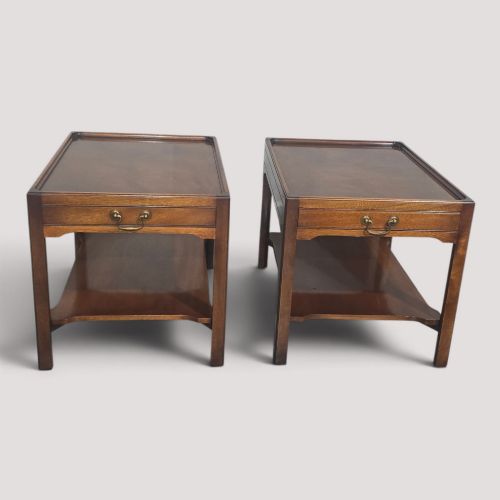
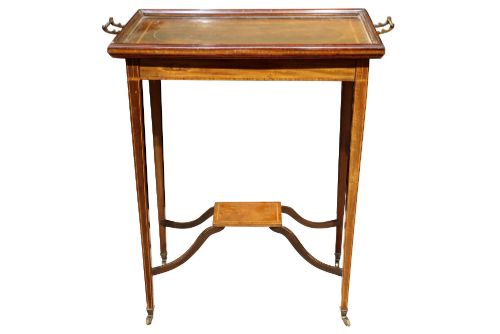
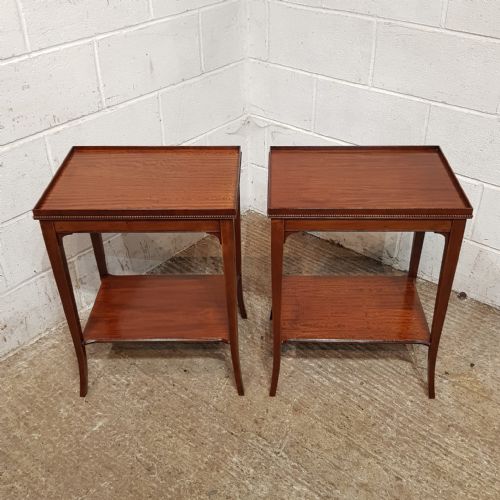
An edwardian tray top table serves primarily as an occasional or tea table, designed with a raised border to prevent objects from slipping off the surface. The majority of pieces on this page stem from the Edwardian period and early twentieth century, drawing heavily on Sheraton Revival and Georgian design influences.
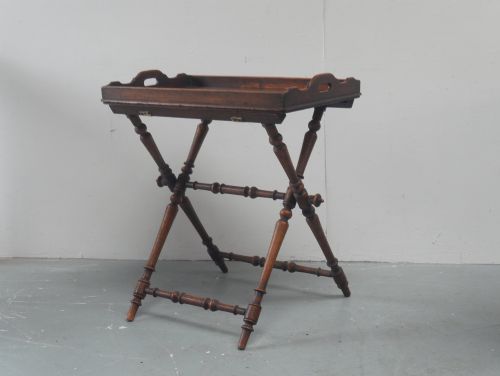
Makers of the era produced these forms in variations including coffee tables, side tables, and multi-tiered étagères. The removable tray version, often styled as a butler's tray on a folding stand, sits alongside fixed-top occasional tables featuring raised moulded edges.
Constructed predominantly for the drawing room or parlour, these items reflect a period of domestic entertaining where flexible furniture was both fashionable and necessary. Surviving examples demonstrate how cabinet makers adapted historical revival styles into lighter, more portable pieces for contemporary homes.
Materials and Construction
Mahogany remains the dominant timber across the inventory, frequently complemented by satinwood stringing, marquetry inlay, and walnut highlights. Cabinet makers selected these dense hardwoods for their ability to hold fine detail along the shaped and pierced edges of the tray margins.
Joinery methods of the period involved precise dovetailing for drawer components and secure tenon joints for folding or fixed stands. Surfaces were finished with traditional polishes that highlighted the natural grain and contrast between primary timbers and inlaid decoration.
The inventory records multiple variations including multi-tiered étagères, bedside cupboards, and folding campaign stands alongside standard occasional tables.
Evaluating Quality
Differentiation in these tables rests upon the crispness of the inlaid decoration and the execution of the shaped tray gallery. Superior examples display hand-cut stringing and tight mitres at the corners of the raised rim rather than stamped or printed substitutes.
The choice of timber grain and the integrity of the structural frame determine the upper tier of the range. Tables retain greater value when the original stand matches the tray proportionally and shows disciplined craftsmanship without loose joints or warped surfaces.
Whytock and Reid
The Edwardian Tray Top Table Glossary
- Tray top
- A table surface finished with a raised moulded or pierced rim designed to secure items placed upon it. This feature prevents cups and decanters from sliding off during movement.
- Sheraton Revival
- A late nineteenth and early twentieth century design style emulating the neoclassical furniture of George Sheraton. It relies on satinwood veneers, painted details, and slender proportions.
- Inlay
- A decorative technique where pieces of contrasting wood, shell, or brass are fitted into recesses flush with the surface. This method adds geometric patterns and floral motifs to table tops.
- Étagère
- A set of open shelves for displaying small objects or serving tea, tiered vertically to save floor space. Edwardian variants often incorporate a removable tray as the top tier.
- Butler's tray
- A rectangular wooden tray with hinged or fixed sides, traditionally paired with a folding X-frame stand. It allowed servants to carry provisions and set up temporary serving areas.
Edwardian Tray Top Table: Frequently Asked Questions
What is an edwardian tray top table used for?
These tables served primarily for serving afternoon tea or holding drinks and reading material in domestic drawing rooms. The raised edge ensured that cups and glassware remained secure when the surface was moved.
Today, they function well as compact coffee tables or side tables in living spaces. Their portable nature allows them to be repositioned easily according to the needs of the room.
How do I distinguish an original Edwardian piece from a later revival?
Original pieces display period construction methods, such as hand-cut dovetails, traditional timber shrinkage, and appropriate wear to the finish beneath the tray rim. The patination on the wood develops naturally over a century of use.
Revival pieces or later reproductions often reveal mechanical fixings, modern adhesives, or timber that lacks the depth of colour found in early twentieth-century mahogany and satinwood.
Are the trays on these tables removable?
Some models feature a completely detachable tray that lifts off a folding or rigid stand, echoing the traditional butler's tray format. These versatile pieces allowed servants to transport items between rooms easily.
Other examples have fixed tops where the raised gallery forms an integral part of the table structure. Both variants were common during the Edwardian period depending on the intended room and function.
How should I care for an antique wood tray top table?
Maintenance requires keeping the timber away from direct heat sources and strong sunlight to prevent the veneers from drying out or splitting. Gentle dusting with a dry, soft cloth preserves the polish without stripping the historic finish.
Applying a traditional beeswax polish occasionally helps nourish the hardwood and maintains a soft lustre. Avoid placing wet glasses directly on antique polishes to prevent water rings.