
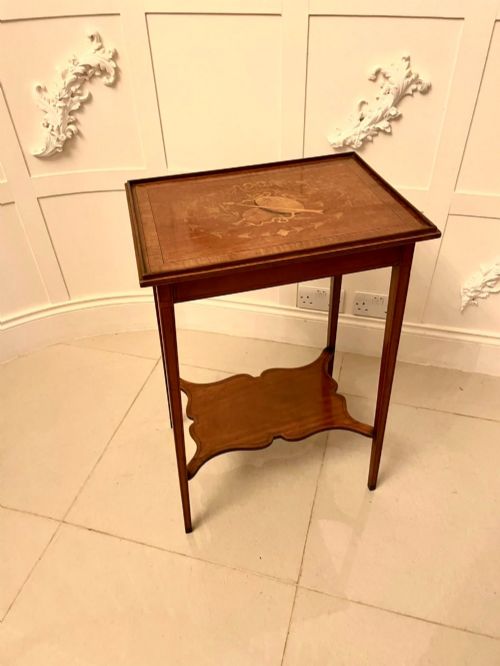
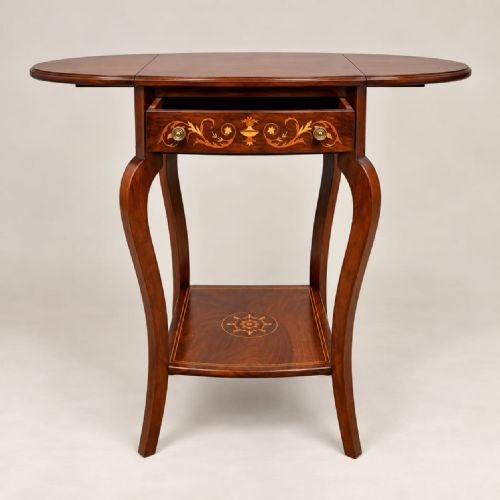
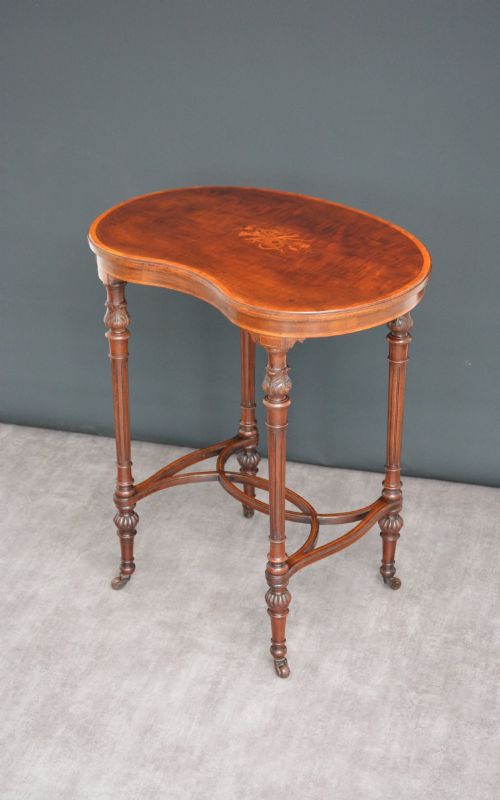
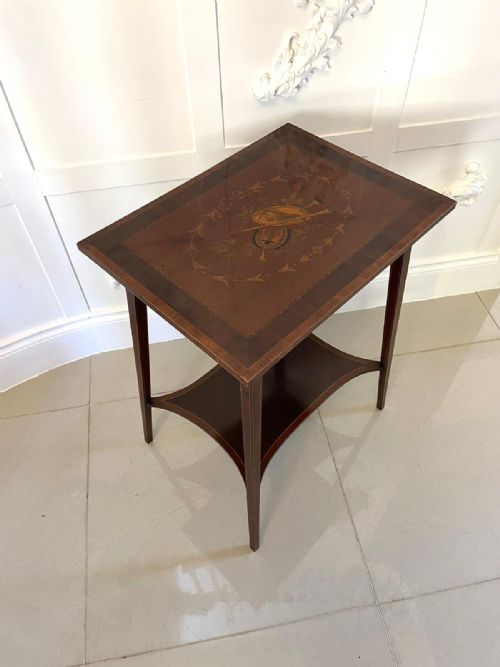


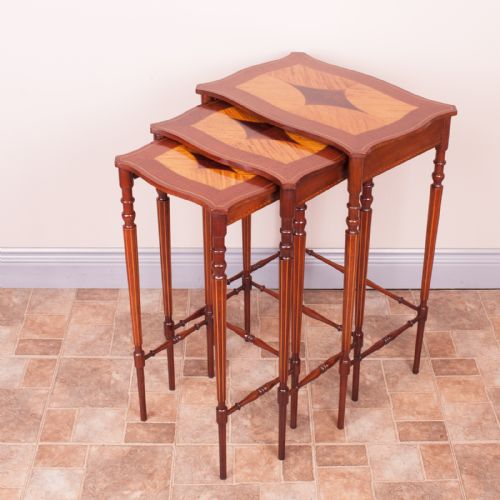
Edwardian Marquetry End Table
These edwardian marquetry end table pieces combine light wood framing with intricate floral or geometric inlays, offering a compact surface for lamps and ornaments.
Edwardian Marquetry End Table
An edwardian marquetry end table is primarily represented here by occasional tables, side tables, nests of tables, and bedside cabinets dating from the Edwardian era and the late nineteenth century. These forms appear in shapes including circular, oval, kidney, and rectangular formats.
The aesthetic leans heavily on Sheraton Revival and Sheraton style revivals alongside occasional Arts and Crafts, Art Nouveau, and Rococo Revival influences. Buyers frequently encounter mahogany and rosewood bodies embellished with contrasting wood inlays.
While the core inventory centres on Edwardian examples, pieces stretch chronologically from the Victorian period through the nineteen-thirties. Formats range from single lamp tables to nesting sets of three or four.
Materials and construction
Makers utilised primary timbers such as mahogany, satinwood, rosewood, and oak as the foundational structure for these tables. Surfaces then receive decorative treatments through intricate wood inlay, boxwood inlay, and satinwood inlay.
Craftsmen applied contrasting veneers and fine stringing to accentuate table tops and borders, sometimes incorporating painted decoration alongside the traditional marquetry motifs.
Object forms span occasional tables, side tables, nests of tables, and bedside cabinets featuring various inlays.
What separates the fine examples
Quality rests in the crispness of the marquetry and the selection of cabinet timbers like satinwood and rosewood versus plain walnut or oak. Finer pieces demonstrate precision in the fitted joints of nesting tables and the symmetry of kidney or oval tops.
The Edwardian Marquetry End Table Glossary
- Marquetry
- Decorative veneer work forming pictures or patterns by using different woods applied to a carcass. This technique defines the visual appeal of many Edwardian table tops.
- Satinwood
- A durable, lustrous timber with a yellow sheen imported from tropical regions. It frequently forms the contrasting background or primary face for high-end inlaid surfaces.
- Sheraton Revival
- A late nineteenth and early twentieth century design movement replicating the neoclassical grace of eighteenth-century designer Thomas Sheraton. Pieces in this style often feature delicate tapered legs and fine inlay.
- Kidney shaped
- A curved, kidney bean outline popular for side and occasional tables during the late Victorian and Edwardian periods. This shape allowed the furniture to sit snugly against upholstery or walls.
Edwardian Marquetry End Table: Frequently Asked Questions
Where should I place an edwardian marquetry end table?
These compact pieces suit positions beside armchairs or sofas where they can hold a small lamp or a book. Their decorative tops also make them effective as freestanding display surfaces in hallways or drawing rooms.
Because the surfaces feature delicate wood inlays, placing them away from direct sunlight preserves the natural colours of the satinwood and mahogany veneers.
How do I care for inlaid wooden tables?
Dust the surfaces regularly with a soft, dry cloth to prevent grit from scratching the polished wood and veneer. Avoid using modern silicone sprays or harsh chemical cleaners which can lift the old polishes.
Applying a traditional beeswax occasionally maintains the moisture in the timber and protects the boxwood stringing. Keep the tables away from direct heat sources to prevent the marquetry from drying and shrinking.
Can I use a nest of tables daily?
Nests of tables were built to be pulled out as needed for entertaining and stacked together to save floor space. The smaller tables slide neatly beneath the primary top when not in use.
When pulling them out, lift them slightly rather than dragging them across the floor to protect the joints and the feet of both tables.
How do I distinguish Edwardian pieces from Victorian ones?
Edwardian pieces generally exhibit a lighter, more delicate construction with satinwood highlights and brighter polished finishes. Victorian equivalents tend to use heavier timbers like dark mahogany or rosewood with denser, more sombre proportions.
Revival styles can blur these lines, but the overall feel of an Edwardian piece is typically airier and less ornate than mid-Victorian furniture.