
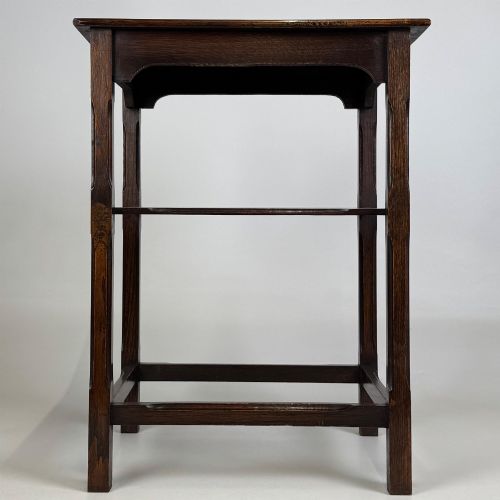

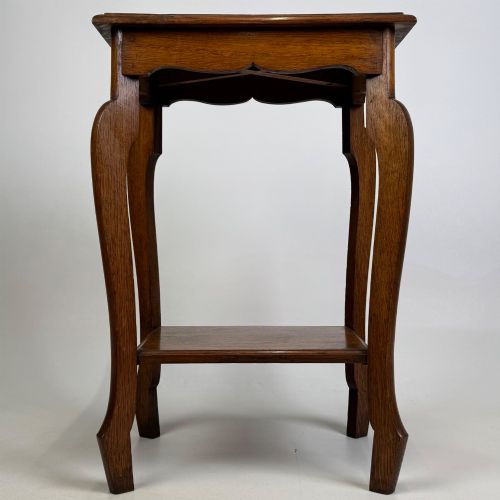
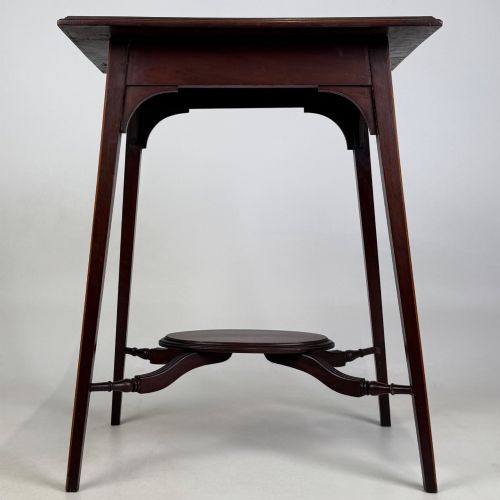
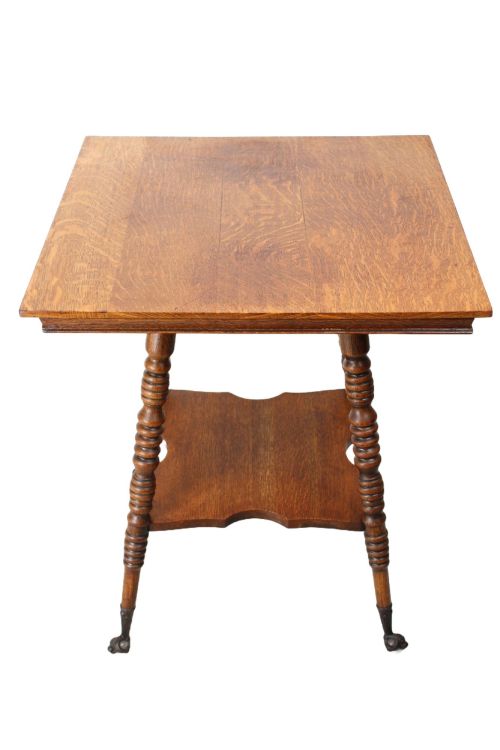
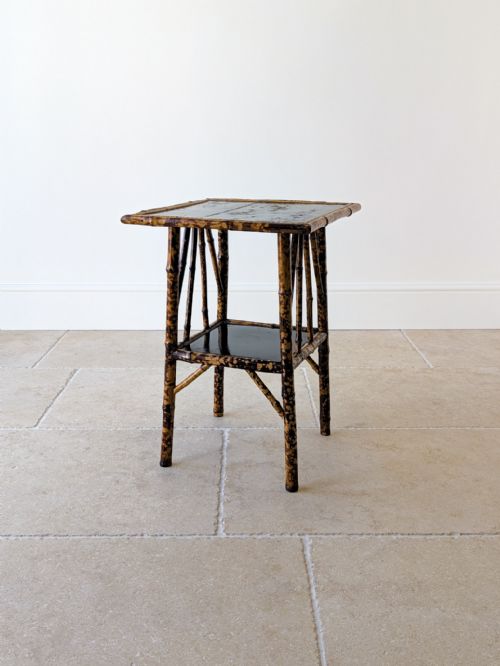
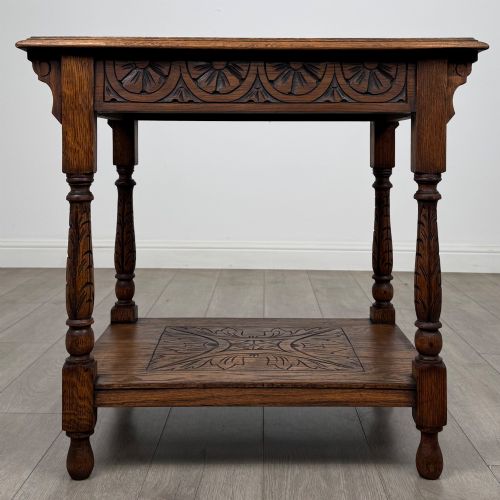
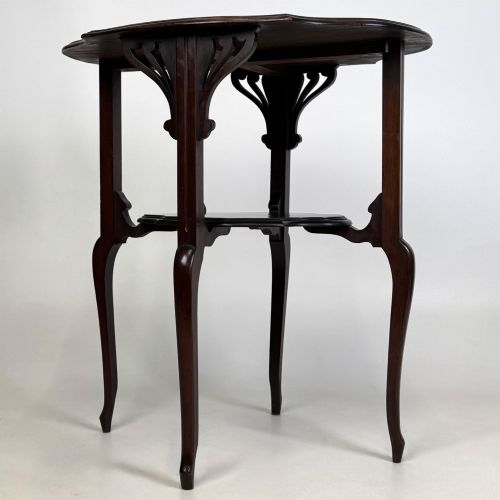
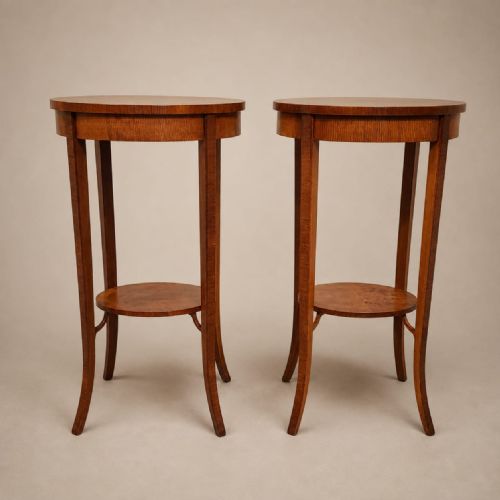
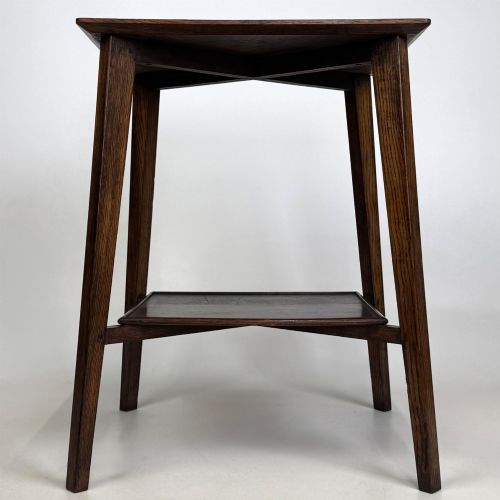
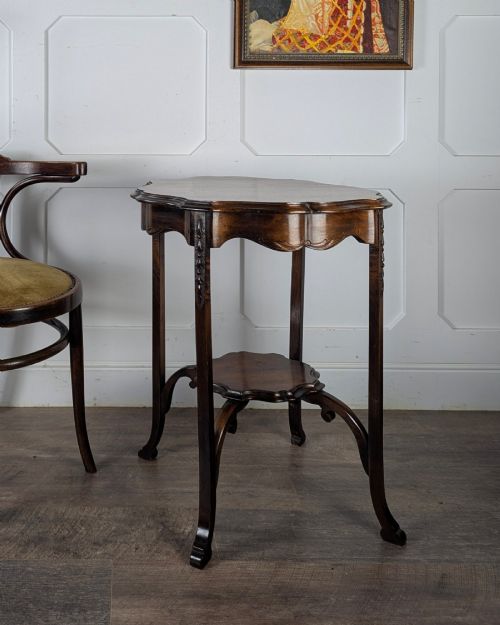
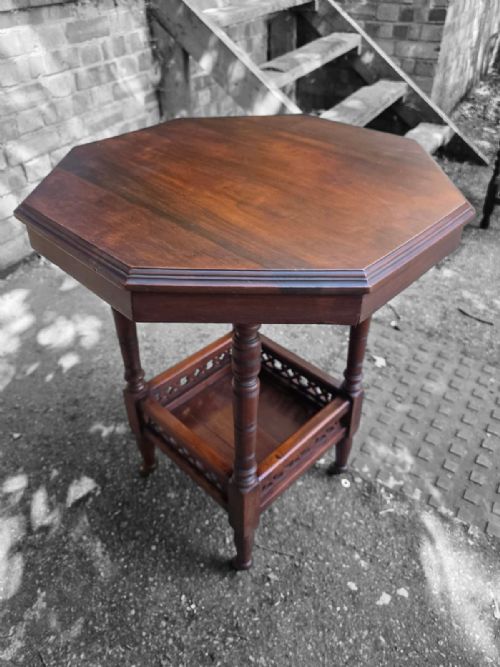
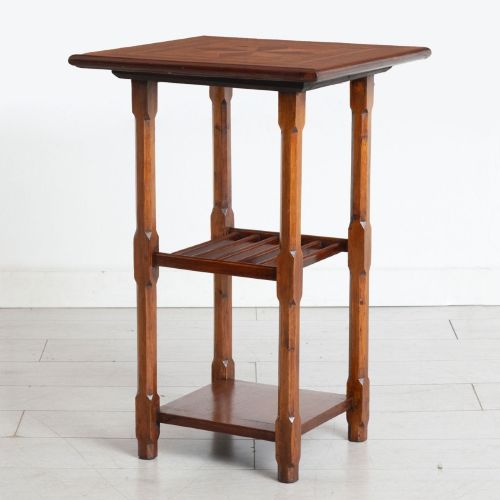
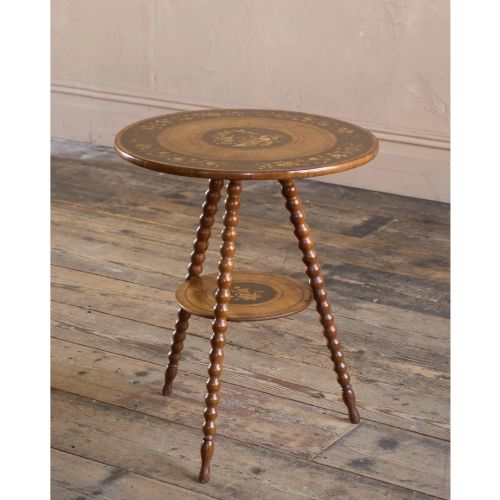
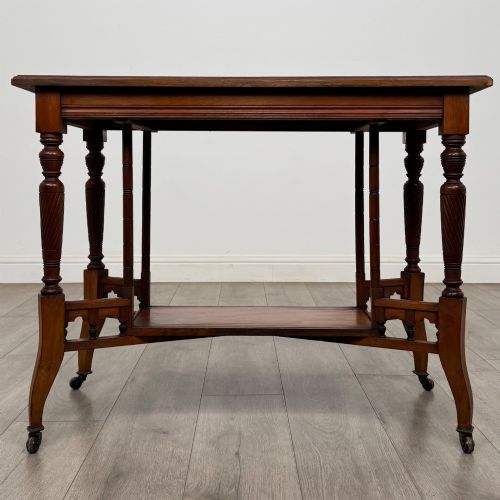

Edwardian Tiered Accent Table
An edwardian tiered accent table brings practical surface space and refined proportions to a room, drawing on the lighter timbers and decorative inlay favoured in the period.
Edwardian Tiered Accent Table
An edwardian tiered accent table sits in domestic spaces as a side, lamp or occasional table, offering multiple levels for display or everyday use. The examples seen span the Edwardian period alongside late Victorian and early twentieth-century designs, often taking compact forms suitable for corners or beside seating.
The construction typically relies on timber surfaces supported by slender legs, occasionally incorporating multiple tiers linked by turned or square uprights. While the primary forms function as side and occasional tables, variations include cricket tables and specialised lamp tables.
Most pieces date from the turn of the twentieth century, reflecting the prevailing taste for versatile furniture that could be moved easily about the home. Buyers encounter formats ranging from simple round or oval tops to architectural multi-tiered structures.
How They Were Made
Cabinet makers utilised a range of timbers, predominantly mahogany, oak and walnut, alongside decorative veneers like satinwood and boxwood for inlay work. Selected pieces employ alternative materials such as bamboo, beech, yew wood and brass details to achieve specific aesthetic effects.
Joinery techniques balance structural stability with visual lightness, using slender legs and sturdy stretchers to support multiple tiers without heavy bulk. Surface decoration often involves marquetry, painted finishes, or contrasting stringing to accentuate the edges of the tiers.
Listings feature pieces from the Victorian, Edwardian, and interwar periods, utilising mahogany, oak, walnut, satinwood, and brass.
What Varies in Quality
The standard of timber selection and inlay precision largely determines the distinction between ordinary utility items and finer workshop production. Crispness in carved details, tight joints at the tier junctions, and balanced proportions across multiple levels indicate careful execution.
Subtlety in design, such as harmonious wood grain matching on the top surface and refined turning on the supports, separates standard production from exceptional examples.
Collingson and Lock·Dryad Leicester·Liberty of London
The Edwardian Tiered Accent Table Glossary
- Marquetry
- Decorative veneer work forming pictures or geometric patterns by fitting together small pieces of different coloured wood. This technique adds ornamental detail to table tops and friezes.
- Tiered table
- A piece of furniture featuring multiple horizontal surfaces arranged vertically to provide extra display space. Such designs maximise utility within a compact footprint.
- Occasional table
- A small, portable table designed to be moved around a room as needed for lamps, drinks or books. These versatile pieces became popular in domestic interiors during the late nineteenth and early twentieth centuries.
- Cricket table
- A small, lightweight circular table traditionally supported by three legs connected by lower stretchers. This form offers inherent stability on uneven floors.
- Stringing
- A thin line of contrasting wood inlaid into the surface of a piece to create a delicate border. It frames the panels and edges of many Edwardian tables.
Edwardian Tiered Accent Table: Frequently Asked Questions
What is an edwardian tiered accent table?
It is a compact wooden surface featuring two or more levels, designed for holding small household objects or lamps.
Such tables reflect the domestic priorities of the early twentieth century, prioritising movable convenience and refined decorative accents.
Where were these tables placed in the home?
They typically stood beside seating areas, in hallways, or near windows to hold reading material, lighting or decorative items.
Their relatively lightweight construction allowed residents to reposition them easily as room layouts changed.
How do I identify an edwardian piece?
Look for lighter timbers such as mahogany and satinwood, slender proportions, and understated inlay work rather than heavy Victorian ornamentation.
Construction methods and timber selection from the period around nineteen hundred provide key physical indicators.
Are multiple tiers common?
Many occasional tables from this era incorporate a lower shelf or intermediate tier held by slender uprights.
This secondary level offered additional display space while maintaining an open, airy silhouette.