


Edwardian Stationery Desk
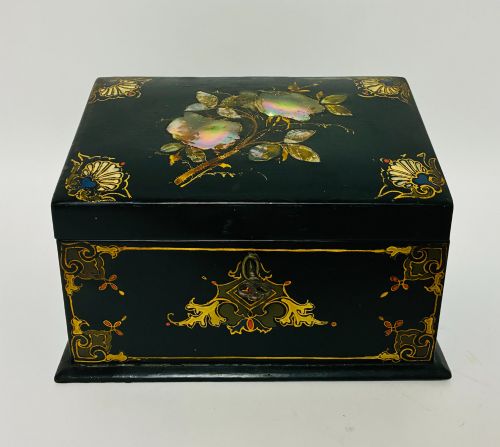
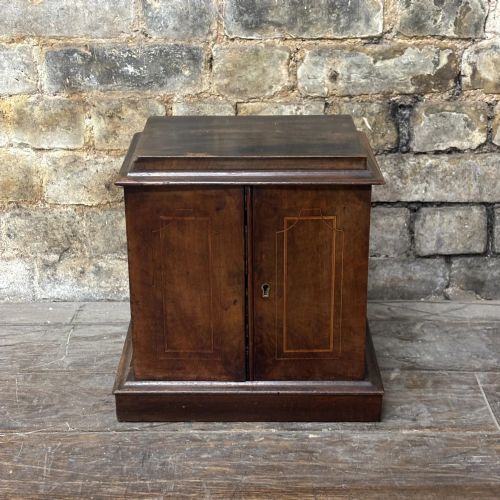
An edwardian stationery desk organises correspondence with fitted compartments, sloping lids and drop-front cabinets designed for period correspondence.
Edwardian Stationery Desk
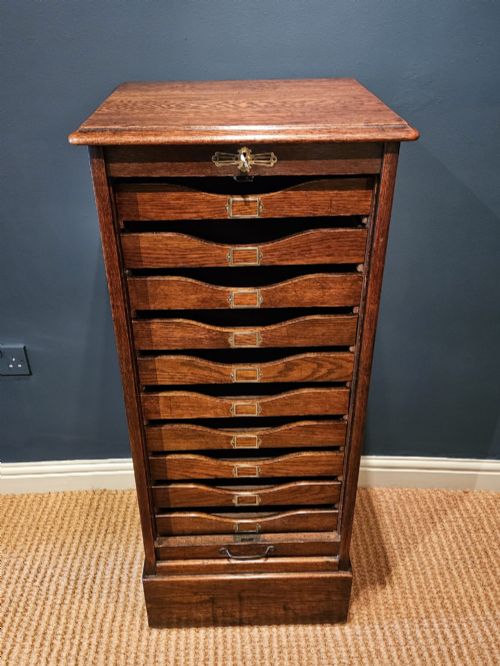
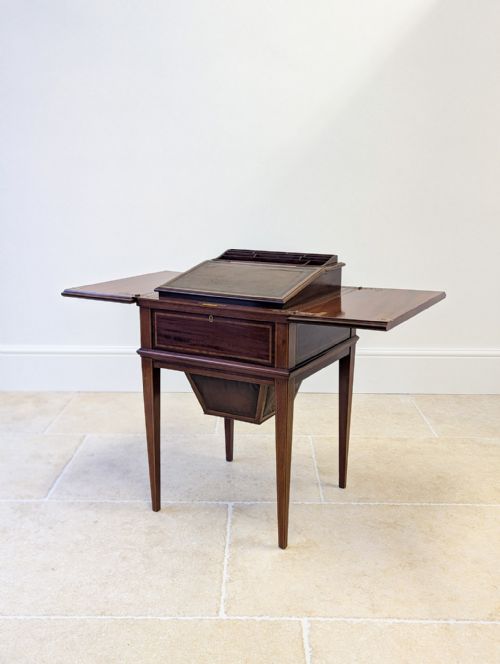
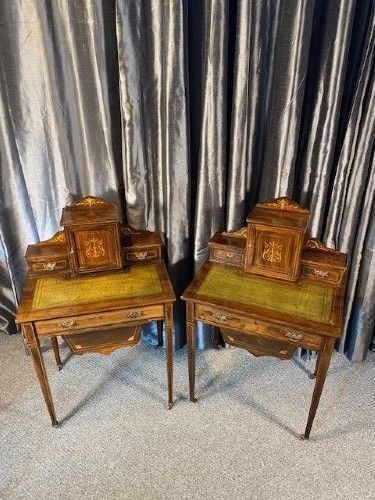
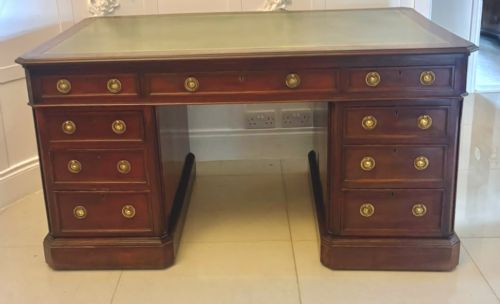
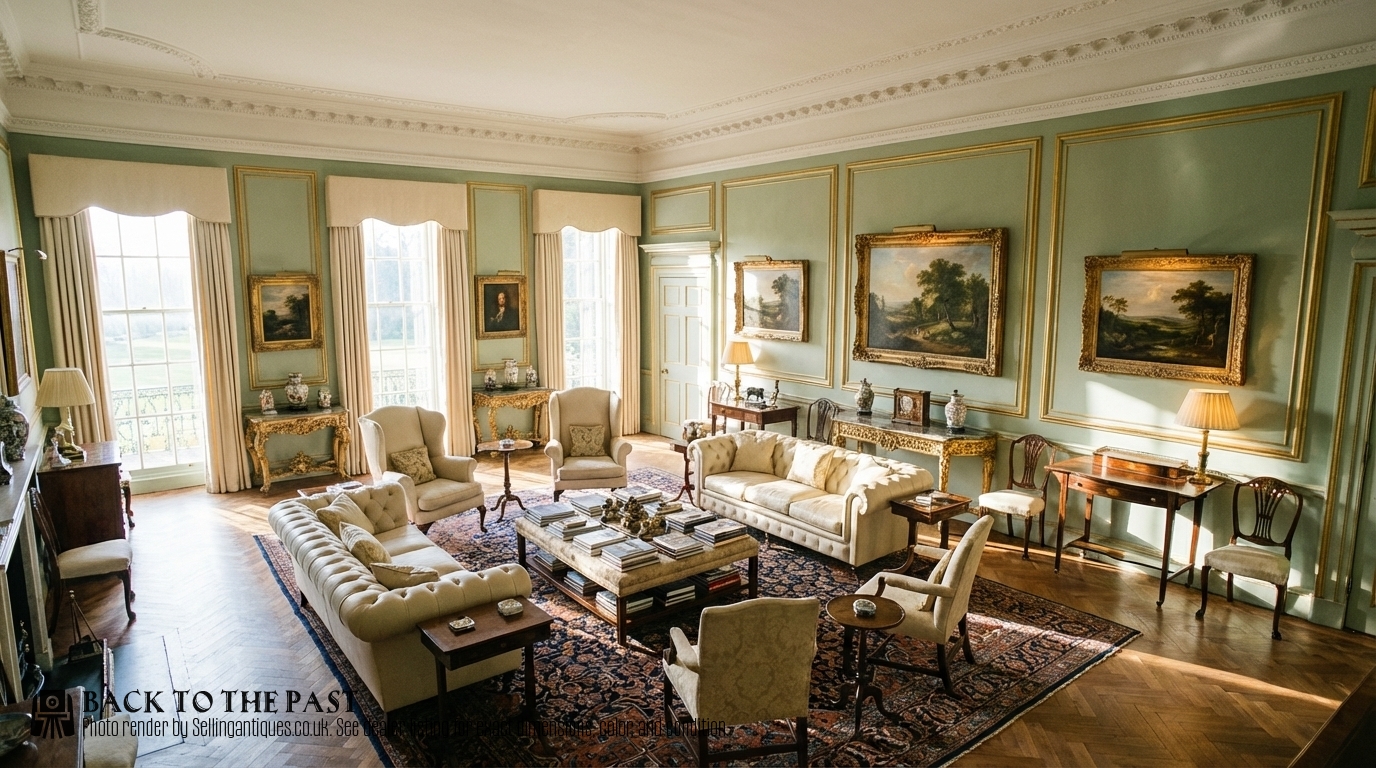
An edwardian stationery desk brings together writing furniture and tabletop organisers from the late nineteenth and early twentieth centuries. Pieces range from compact oak letter boxes and fall-front cabinets to full writing tables with fitted stationery compartments.
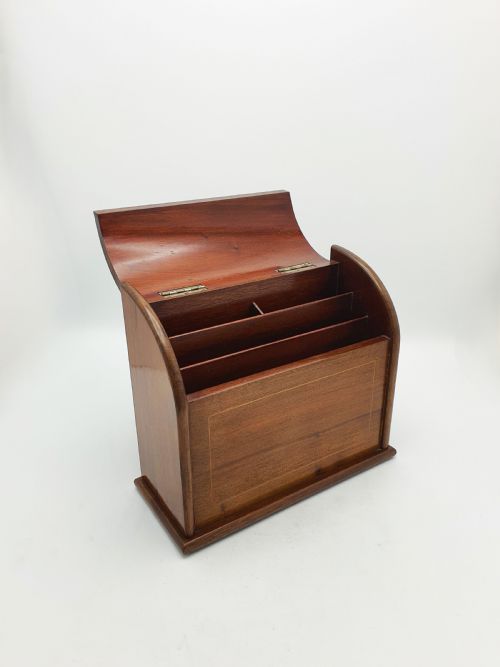
The most common examples on this page are desktop stationery cabinets and compact writing desks featuring dedicated slots for envelopes, stamps and pens. Oak and mahogany dominate, often fitted with tambour fronts or hinged lids.
Originating in domestic studies and country house libraries, these pieces reflect the heavy volume of daily letter writing in the period. They combine compartmentalised storage with functional writing surfaces for everyday correspondence.
How They Were Made
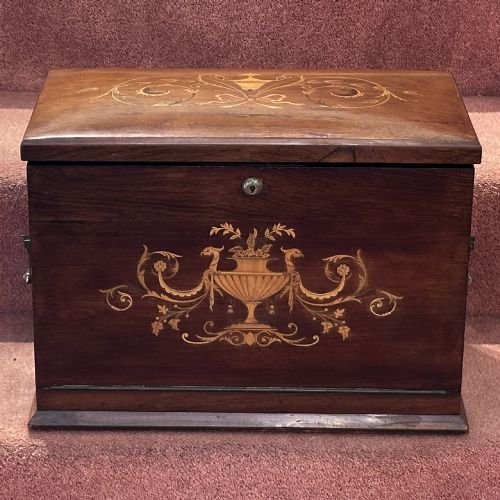
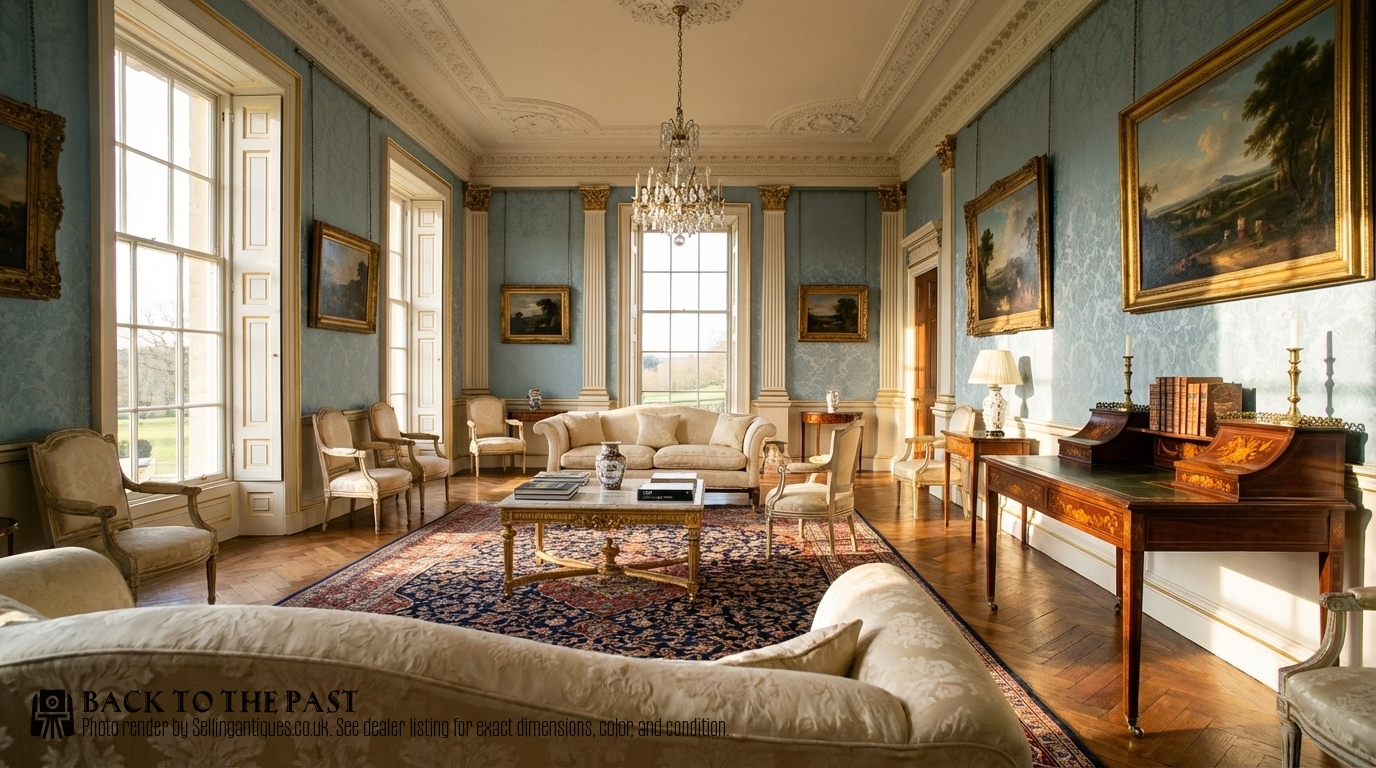
Cabinet makers utilised solid oak and mahogany alongside decorative veneers such as burr walnut, rosewood and satinwood. Inlays of lighter woods and brass mounts provided structural edging and ornamental contrast.
Functionality dictated construction methods, seen in slatted tambour fronts, hinged fall-fronts and metamorphic mechanisms. Interior fittings required intricate joinery to create pigeonholes, pen trays and stamp compartments.
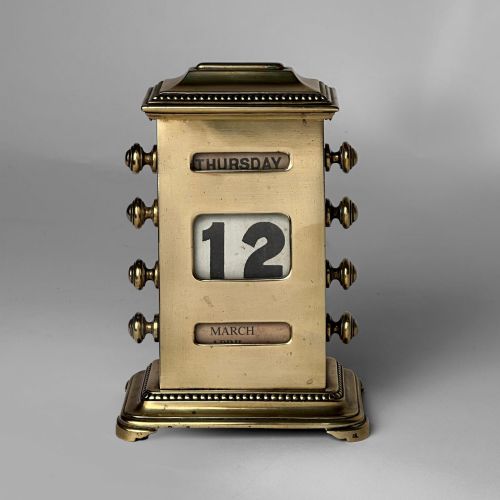
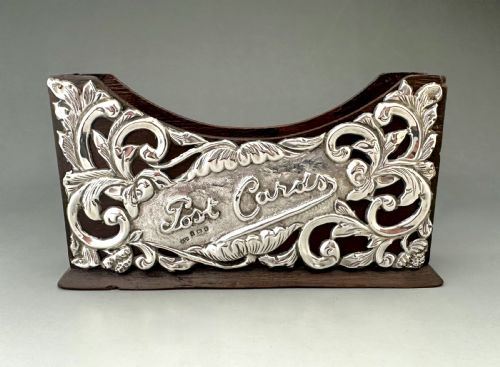
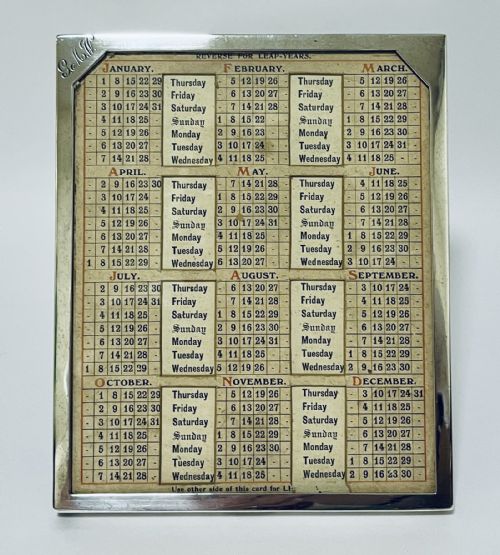
Metal components such as cast brass handles, perpetual calendars and sterling silver mounts added durability and finish. Leather inserts provided smooth writing surfaces on folding slopes and pull-out slides.
Butterflies and golf clubs found utility as novelty silver paper clips on Edwardian writing desks.
What Varies in Quality
The standard of craftsmanship shows in the selection of timbers and the precision of veneering. Finer pieces employ figured walnut or mahogany with crisp inlay work, while simpler items rely on plain oak.
Internal complexity separates standard boxes from superior examples. Elaborate pigeonhole arrangements, secret drawers and working locks with matching keys elevate a piece above basic storage.
Hardware quality dictates the longevity of the object. Heavy cast brass handles, solid silver mounts and smooth-running tambour slats distinguish higher grade items from factory-produced alternatives.
William Tonks of Birmingham·J.C Vickery of London·William Comyns
The Edwardian Stationery Desk Glossary
- Tambour
- A flexible shutter formed of narrow strips of wood glued to canvas, allowing curved sliding doors on cabinets and desks.
- Davenport
- A small compact desk featuring a sloped writing surface above a pedestal of drawers, popular during the Victorian and Edwardian eras.
- Writing Slope
- A portable or stationary box that opens to reveal a slanted writing surface and compartments for stationery.
- Metamorphic
- Describing furniture designed to transform its shape or function, such as a table converting into a desk.
- Letter Box
- A designated desk accessory or wall-mounted box featuring a slot for receiving mail.
- Stirrup Clip
- A spring-loaded metal desk clip shaped like a riding stirrup, used for holding papers.
Edwardian Stationery Desk: Frequently Asked Questions
What is an edwardian stationery desk?
An edwardian stationery desk encompasses compact writing tables, fall-front cabinets and desktop organisers designed to hold writing paper and envelopes.
These pieces combine functional storage compartments with dedicated writing surfaces suited for period correspondence.
How do I identify an edwardian piece?
Edwardian pieces date from roughly 1901 to 1910, often displaying lighter timbers like satinwood inlay, Sheraton Revival motifs and neat proportions.
Victorian predecessors tend to use heavier timbers like rosewood and walnut with more ornate carving and darker finishes.
Were these desks used in offices?
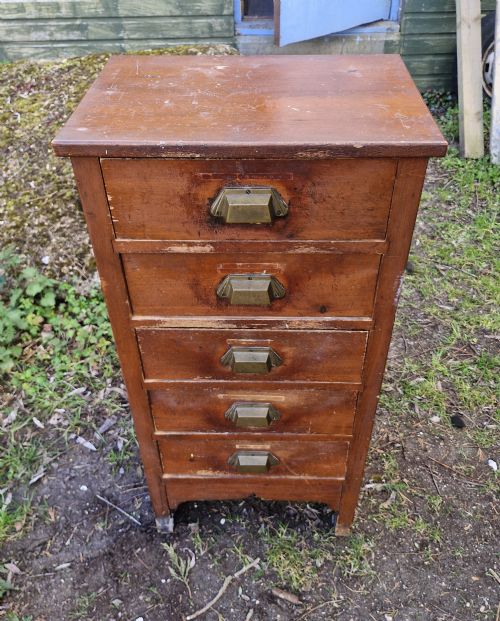
Many oak tambour-front cabinets and multi-drawer units served commercial environments and clerical offices rather than domestic studies.
Domestic versions prioritized decorative wood veneers and silver mounts for drawing rooms and libraries.
How should I clean wood and leather?
Dust wooden surfaces gently and apply a neutral beeswax paste occasionally to preserve the finish without buildup.
Tooled leather writing surfaces require minimal moisture; gentle dusting prevents abrasion while maintaining the original surface.