


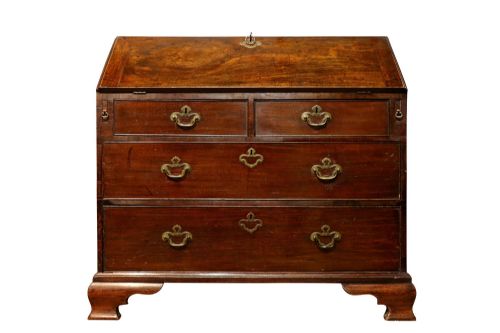


Mahogany Slope Front Desk
A mahogany slope front desk offers a traditional writing space, combining timber surfaces with concealed compartments designed for letters and documents.
Mahogany Slope Front Desk
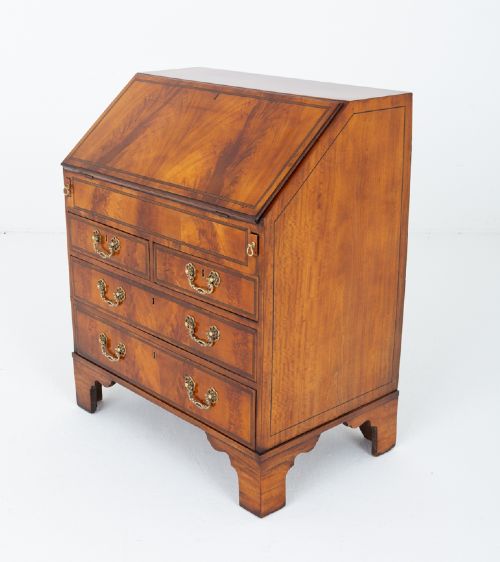
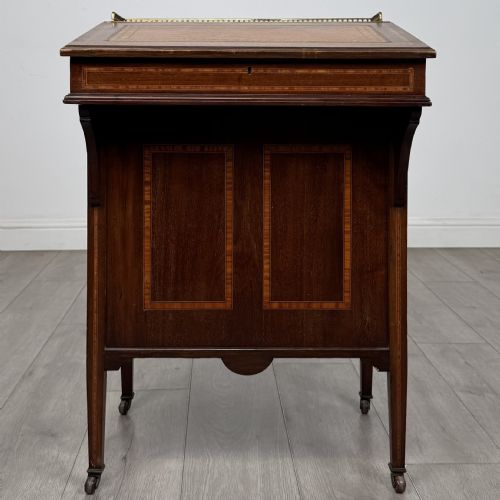
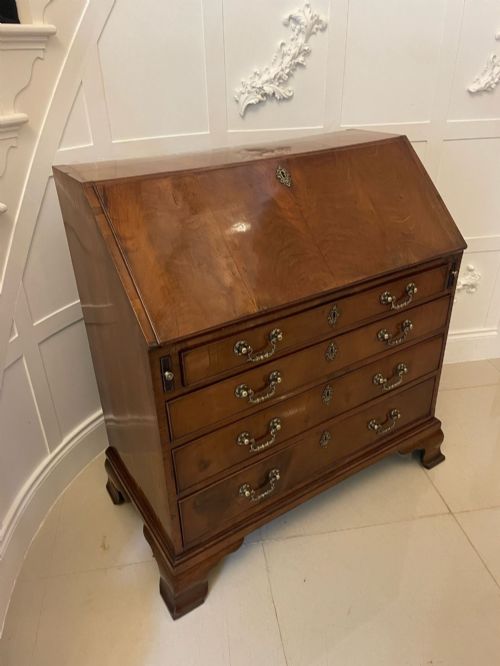
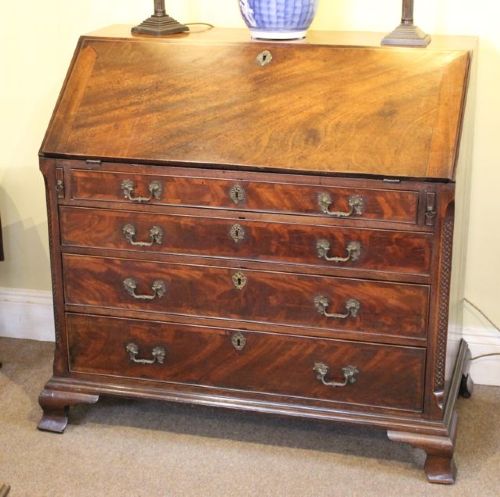
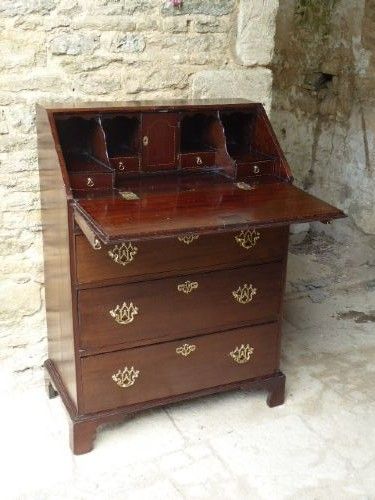
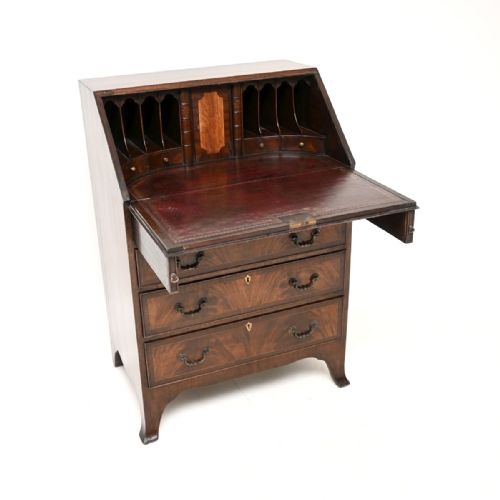
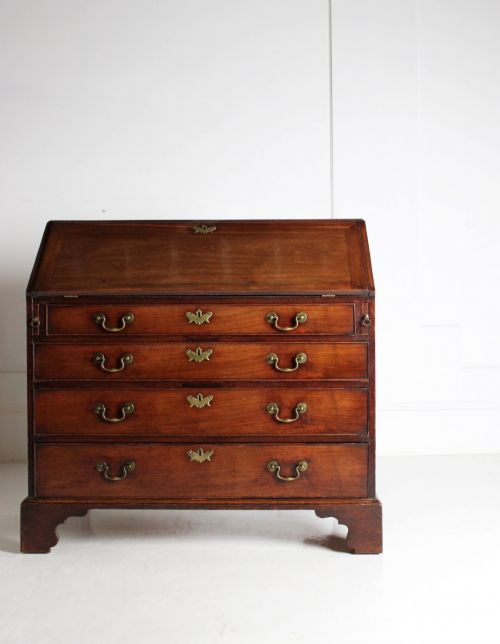
A mahogany slope front desk takes the form of a bureau, writing desk, or Davenport, with many pieces originating from the Georgian and Victorian periods. Buyers seeking this phrase encounter items built with hinged writing flaps that open to reveal fitted interiors of small drawers and pigeonholes.
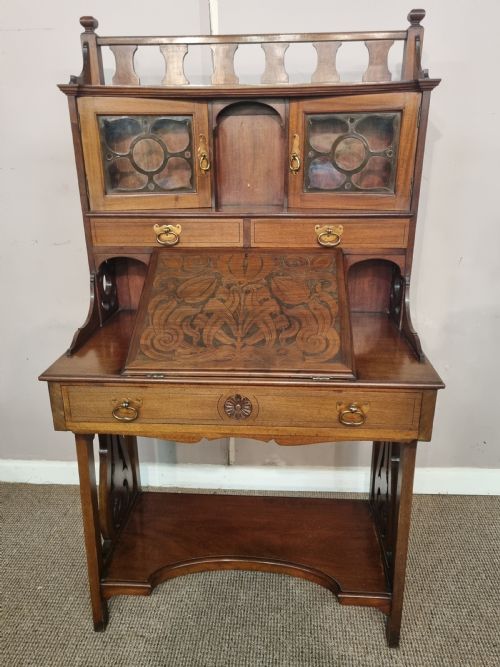
The selection ranges from compact 18th-century bureaux and George III fall front models to later Victorian Davenport desks and inlaid stationery cabinets. These pieces function primarily as writing furniture, offering enclosed storage for correspondence and paper goods.
Construction and materials
Makers utilised solid timber and veneers, frequently selecting mahogany combined with secondary woods like oak, alongside decorative additions such as satinwood inlay. Brass hardware, including handles, escutcheons, and hinges, provides functional detail across many examples.
Surface decoration involves marquetry, carving, and contrasting inlay work, while interiors often incorporate small pigeonholes and secret compartments constructed to house letters and ink.
Several pieces include fitted spaces explicitly designated for holding cutlery alongside stationery.
Assessing quality
Quality shows in the timber figure and colour, the neatness of dovetail joints on internal drawers, and the precision of inlaid details. Superior examples exhibit well-matched mahogany grains across the fall front and drawer facades.
The complexity of the fitted interior and the presence of original brass fittings distinguish finer pieces from simpler or later interpretations.
Gillows
The Mahogany Slope Front Desk Glossary
- Bureau
- A writing cabinet featuring a sloping hinged flap that opens to form a desk surface and conceals pigeonholes and small drawers.
- Davenport
- A compact form of small desk, typically featuring a sloping top and side drawers, popular during the Victorian and Regency periods.
- Fall front
- A hinged writing flap that drops down into a horizontal position for writing, then closes vertically to conceal the interior.
- Marquetry
- Decorative veneer patterns formed by fitting together thin pieces of wood, often producing floral or geometric designs.
- Satinwood
- A pale, lustrous timber frequently utilised for contrasting inlay work on darker mahogany surfaces.
Mahogany Slope Front Desk: Frequently Asked Questions
What is inside a slope front desk?
Opening the sloping flap reveals a fitted interior containing small drawers, pigeonholes, and sometimes hidden compartments intended for correspondence.
These internal sections vary in complexity, ranging from basic shelving to elaborate arrangements with miniature central doors.
How do I date a mahogany bureau?
Dating relies on observing construction methods, timber choices, and stylistic markers associated with periods like George III, Regency, or Victorian.
Examining internal drawer dovetailing and hardware types helps establish the likely decade of manufacture.
Where were Davenport desks placed?
Davenport desks were designed as compact writing tables suited for parlours, boudoirs, or smaller rooms where large furniture was impractical.
Their footprint allowed them to sit freestanding or against walls while providing integrated drawer storage.
What is the difference between a bureau and a Davenport?
A bureau typically provides a full-width drop-front writing surface above chest drawers, while a Davenport is a smaller pedestal desk with a slanted top.
Davenports usually open from the side rather than the front and often incorporate stationary boxes on top.