


Edwardian Silver Salt Pots
Edwardian silver salt pots are charming table accessories that bring refined period detail and character to any dining arrangement.
Edwardian Silver Salt Pots
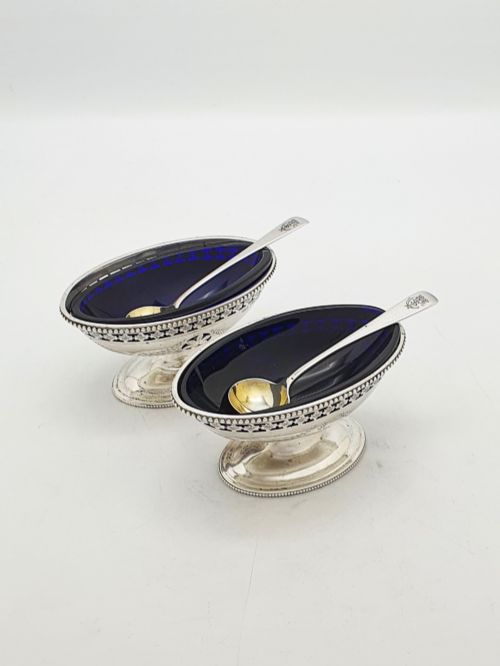
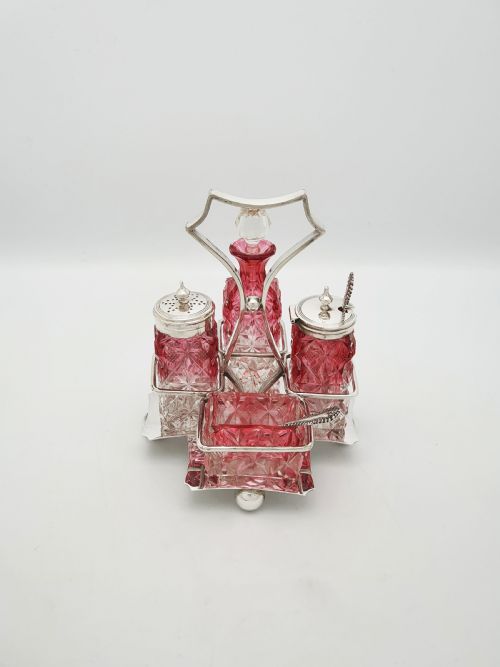
When you search for Edwardian silver salt pots, you encounter a variety of tabletop pieces ranging from open cellars with coloured glass liners to covered mustard pots and cruet sets. These items date primarily from the Edwardian period alongside pieces from the Victorian and later decades.
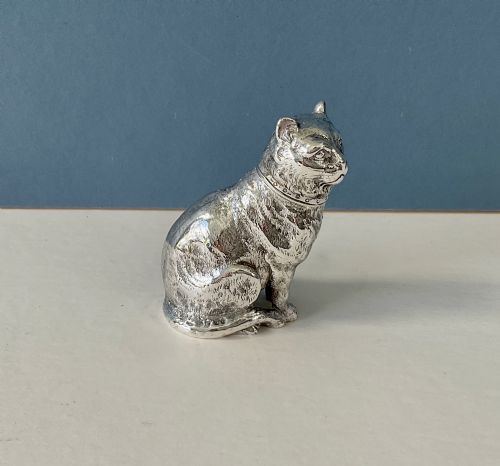
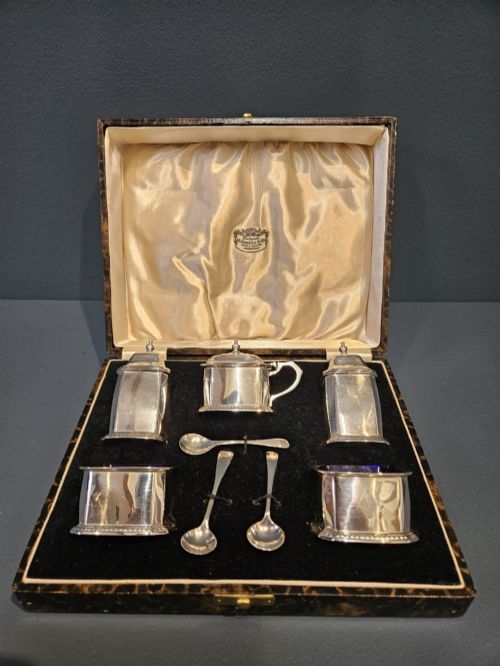
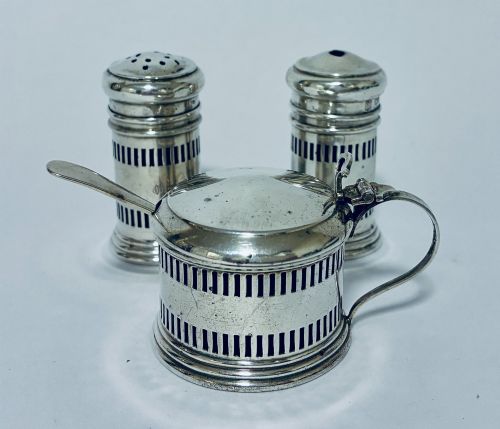
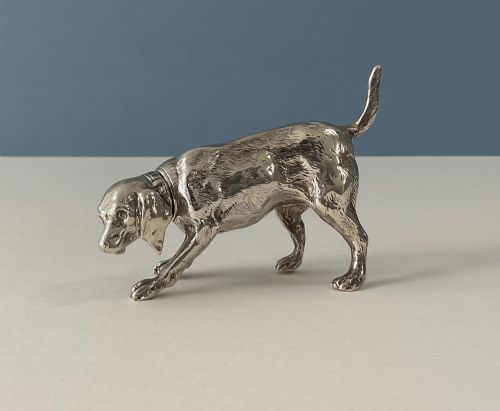
The selections span simple open salt tubs, wirework condiment tubs, and figural novelties shaped like animals or characters. Many appear alongside pepper pots and mustard containers as part of larger matched or cased cruet sets.
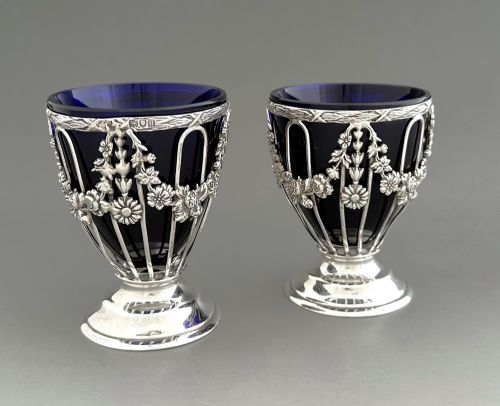
Most examples originate from the early twentieth century, utilising sterling silver or silver plate paired with cobalt, blue, cranberry, or clear cut glass inserts.
Materials and construction
Silversmiths employed solid sterling silver and silver plate to form the bodies, stands, and mounts of these salt pots. Casting and wirework techniques created both solid containers and open, airy frames.
Vessels frequently incorporated glass components, including cut glass and blown liners in cobalt, blue, or cranberry hues. Velvet linings also appear within cased condiment sets to cushion the individual pieces.
Table seasoning takes flight with novelty salt and pepper pots modelled as wide-eyed owls, fluffy chicks, and Mr Punch's dog Toby.
Assessing the craftsmanship
Quality rests in the crispness of casting detail, particularly on figural novelties shaped as cats, dogs, owls, chicks, and characters like Mr Punch's dog Toby. Heavier gauge metal and clear hallmarks indicate superior manufacture.
The integration of fitted glass liners also dictates standard, where undamaged cobalt or cranberry cut glass securely matches the contours of the silver mount without excess movement.
Goldsmith & Silversmith's·Bricks & Sons·Sampson Mordan·Heath and Middleton
The Edwardian Silver Salt Pots Glossary
- Cruet set
- A matched collection of condiment containers, typically holding salt, pepper, and mustard, often fitted within a shared stand or frame.
- Open salt
- A small open bowl designed to hold loose salt, into which diners dip a salt spoon rather than shaking grains from above.
- Liner
- A removable insert made of cobalt, blue, or cranberry glass placed inside an open silver salt cellar to protect the metal from corrosion by the salt.
- Novelty pepper
- A condiment pot modelled in a playful shape, such as an animal, bird, or literary figure, rather than traditional domestic forms.
- Wirework
- Openwork construction formed from intertwined or soldered silver wires, creating a cage or basket effect for condiment tubs.
Edwardian Silver Salt Pots: Frequently Asked Questions
How were salt pots used on the table?
Open salt pots received individual portions of salt served alongside meals, requiring diners to use small salt spoons to season their food.
Enclosed shaker pots and pepperettes allowed guests to sprinkle seasonings directly onto their plates during dinner service.
How do I clean silver salt pots?
Gentle washing with warm soapy water removes dust and residues, while specialised silver polish restores the lustre of sterling surfaces without damaging details.
Removable glass liners should be cleaned separately to prevent moisture from trapping against the interior metal mounts.
How can I tell an Edwardian salt pot from a Victorian one?
Hallmarks stamped on the silver provide official date letters and assay office symbols that pinpoint the exact year of manufacture.
Stylistic cues also help distinguish the heavier ornamentation of Victorian pieces from the lighter, often neoclassical or revival designs of the Edwardian period.