


Edwardian Silver Mirror
An edwardian silver mirror brings quiet elegance to a dressing table, reflecting the fine craftsmanship of the early twentieth century.
Edwardian Silver Mirrors
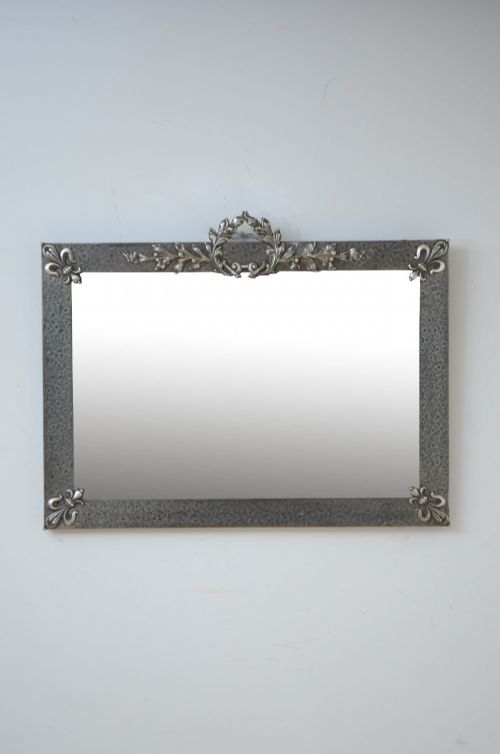
When searching for an edwardian silver mirror, collectors encounter a variety of forms designed for both personal grooming and interior display. The selection ranges from substantial dressing table mirrors with easel backs to portable hand mirrors and small chatelaine pieces.
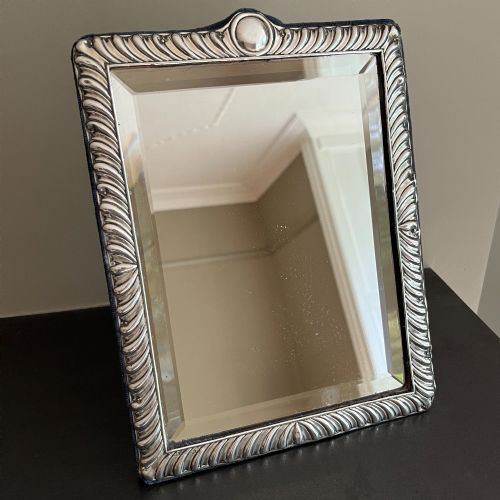
The pieces on this page primarily date from the Edwardian era and the early years of the twentieth century, with occasional nineteenth century precedents. Makers produced these items in sterling silver and silver plate, frequently incorporating bevelled mirror glass and velvet backing panels.
Materials and Construction
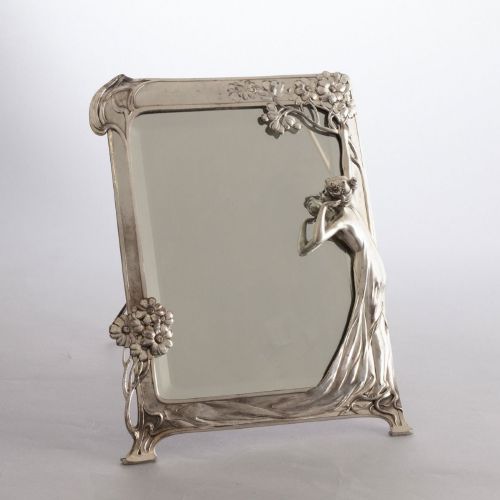
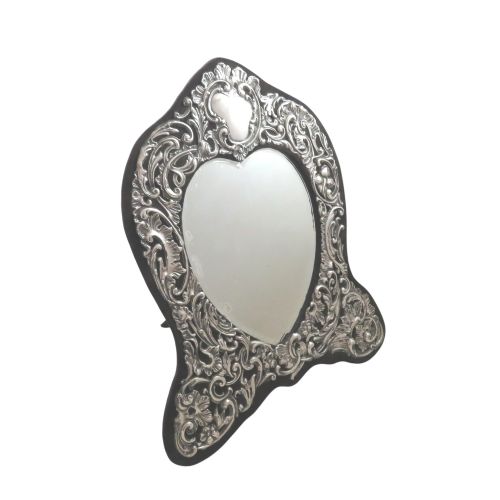
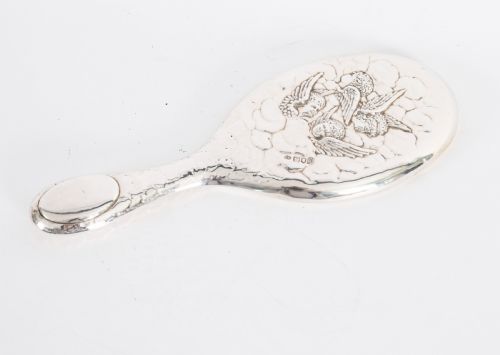
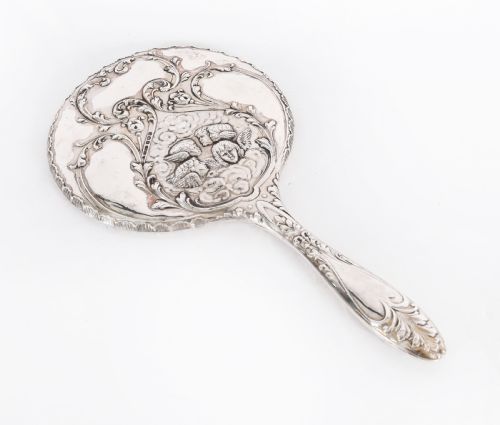
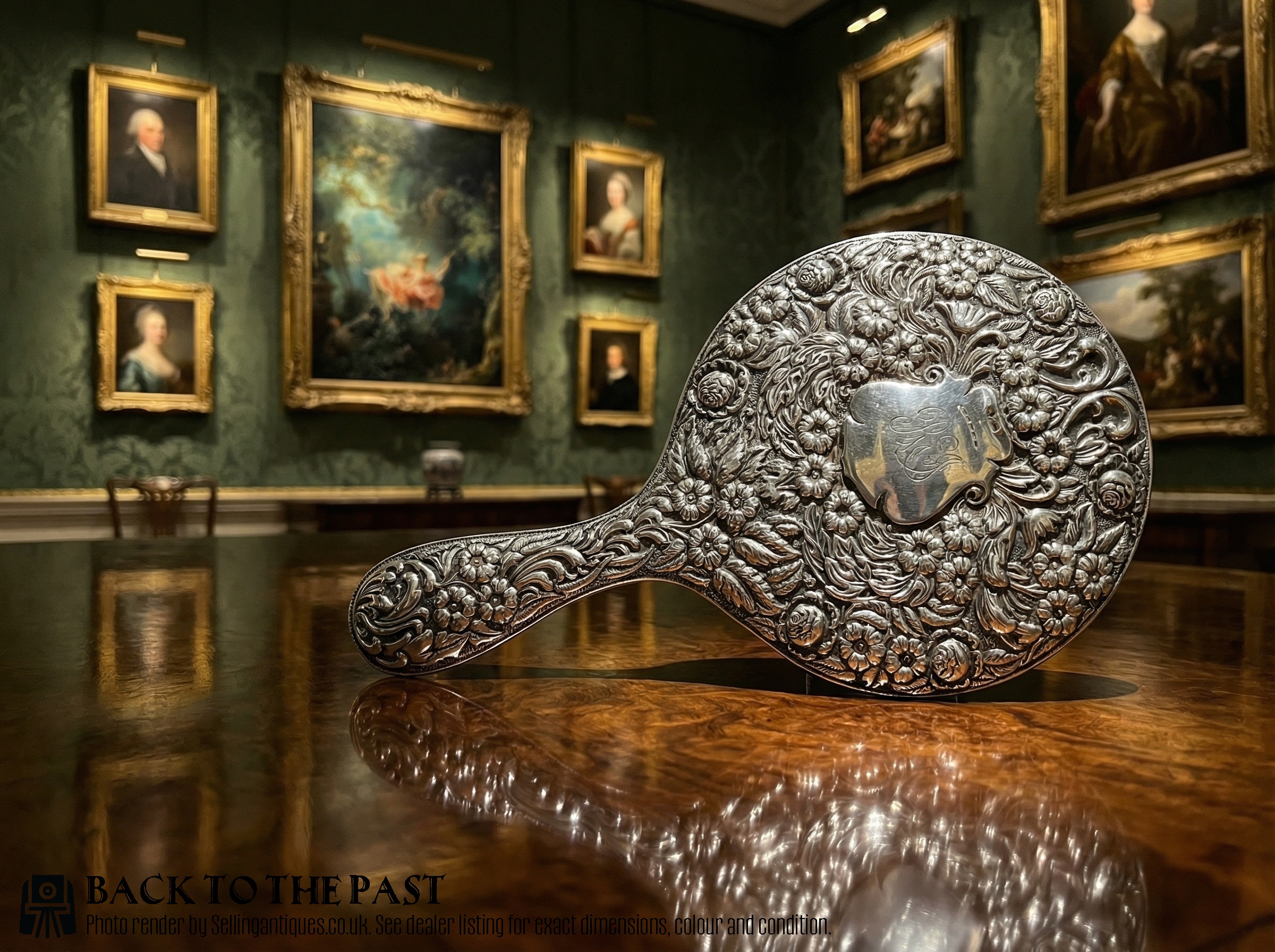
Silversmiths utilised sterling silver and silver plate to shape the frames and handles, often employing embossing and repoussé techniques to create detailed surface decoration. Iconic motifs such as Reynolds angels and Art Nouveau floral lines appear across the metalwork.
Makers set reflective glass into sturdy wooden or metal armatures, securing the reverse with materials like velvet and supporting the larger items with folding easel stands.
Retail Price Guide 2026
Typical UK retail prices for edwardian silver mirror, calculated from the Sellingantiques database of over a million retail prices indexed since 2003. This retail price guide relies exclusively on Sellingantiques data; no external sources or auction records are used, so the figures do not describe the wider market.
Some Edwardian hand mirrors feature the plump faces of Reynolds angels peering back at you from the silver frame.
Assessing Quality
The distinction between standard items and superior examples lies in the crispness of the embossed detail and the thickness of the silver sheet used in the frame. Heavier gauge silver provides greater durability and a more substantial feel in the hand.
Makers' marks and clear hallmarks stamped into the silver add historical context and confirm the origin and date of the piece. The quality of the original glass and the preservation of the velvet backing also influence the overall standard.
William Comyns·H. Matthews·Crisford and Norris Ltd·WMF
The Edwardian Silver Mirror Glossary
- Easel back
- A hinged support on the reverse of a mirror allowing it to stand upright on a table. This feature is common on dressing table and desk mirrors.
- Chatelaine mirror
- A small portable mirror suspended from a belt hook or chatelaine clip. These miniature accessories were popular for quick checks during the Edwardian period.
- Repoussé
- A metalworking technique where the smith hammers the silver from the reverse side to create a raised design on the front. This method produced the prominent angel and floral motifs seen on many frames.
- Silver gilt
- Silver that has been coated with a thin layer of gold on the surface. This treatment provides a warm tone and protects the underlying metal.
- Sterling silver
- An alloy containing a high proportion of pure silver combined with other metals for strength. British pieces typically bear hallmarks verifying this standard.
Frequently Asked Questions
How do I clean an edwardian silver mirror?
Use a soft microfibre cloth and a reputable silver polish, taking care to avoid abrasive materials that might scratch the soft metal or damage the embossed decoration.
Keep polish away from the mirror glass edges and the velvet backing to prevent staining and moisture damage.
What is the difference between a hand mirror and a dressing table mirror?
Hand mirrors feature an integrated handle for personal use during grooming. Dressing table mirrors are larger and typically incorporate an easel stand or wooden strut for display.
Both forms share the decorative silver frames and stylistic motifs characteristic of the period.
How can I date my silver mirror?
British hallmarked items feature date letters alongside the maker's mark and assay office symbol. Comparing these stamped symbols against standard assay reference tables reveals the exact year of manufacture.
Stylistic indicators such as Art Nouveau curves or Victorian revival flourishes also help narrow down the production period.