


Art Nouveau Dressing Mirror
An art nouveau dressing mirror brings organic curves and flowing botanical motifs straight to your vanity.
Art Nouveau Dressing Mirror
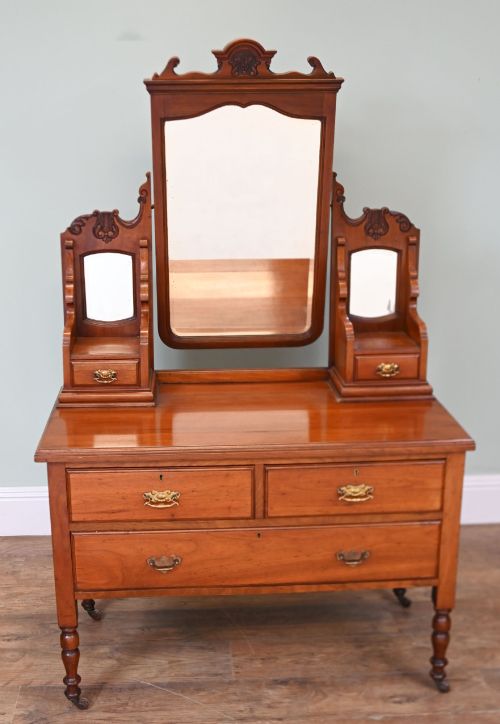
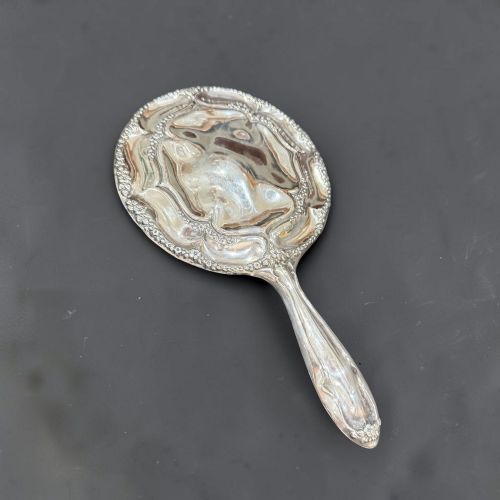
When searching for an art nouveau dressing mirror, you are looking at vanity and table mirrors, easel backs, and larger dressing tables produced during the late nineteenth and early twentieth centuries.
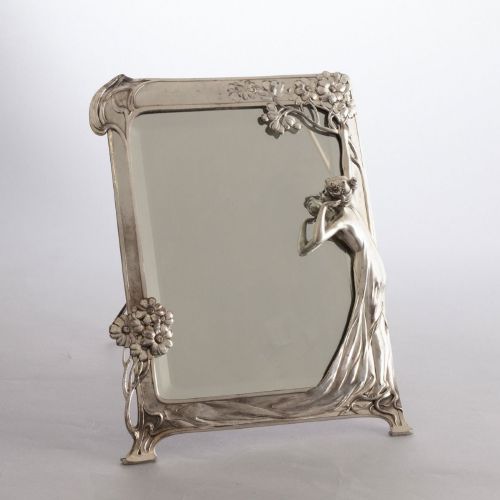
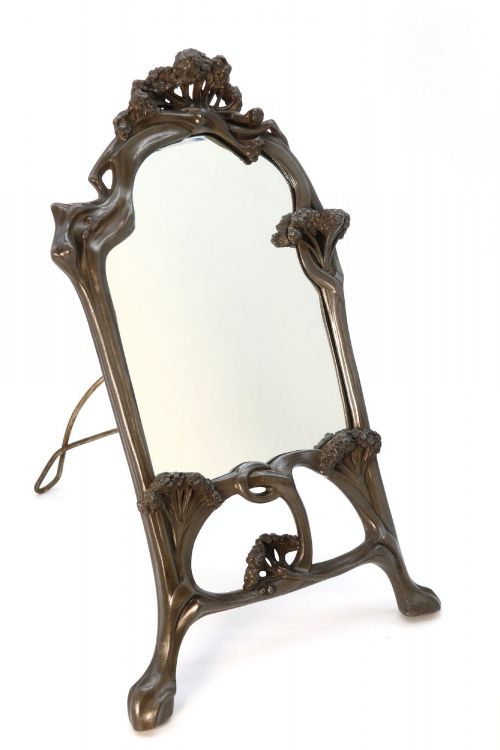
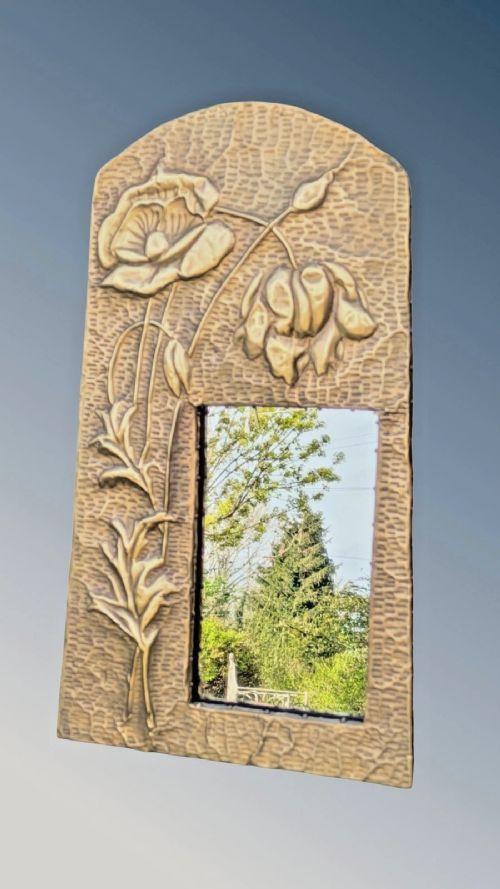
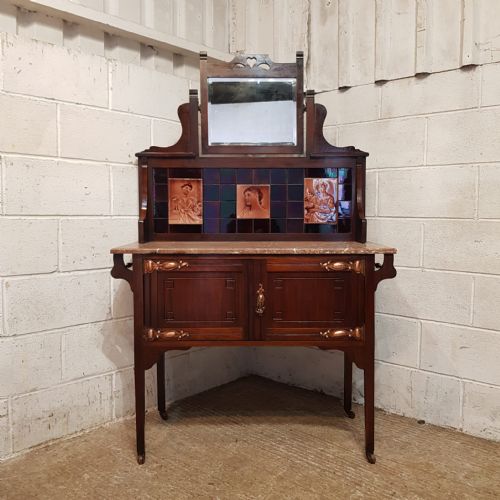
The versions you are most likely to meet on this page range from compact pewter and brass table mirrors to substantial mahogany or satinwood dressing chests featuring integrated glass.
These pieces cross several periods including Victorian, Edwardian, and Art Deco, reflecting the stylistic shift towards natural forms around nineteen hundred.
How They Were Made
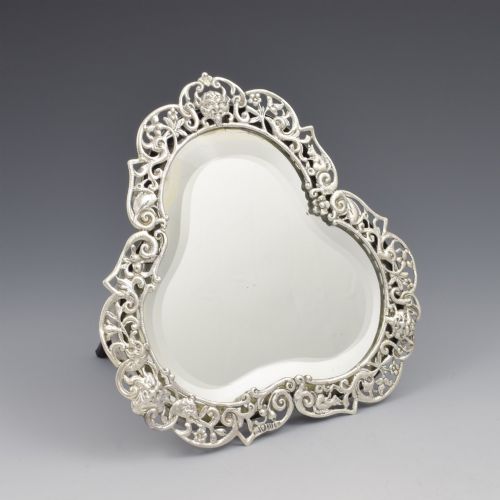
Makers utilised metals such as brass, pewter, silver, and silver-plated copper, often casting them with relief designs of animals, birds, and stylised honesty seed pods.
Woodworking construction relies on solid timbers like mahogany, satinwood, and satin walnut, frequently incorporating carved details and tilting glass frames.
What Varies in Quality
The distinction rests on the crispness of the cast metalwork or the depth of the hand-carved wooden foliage framing the glass.
Maker attribution and original hallmarks on sterling silver or stamped pewter elevate certain examples above standard unmarked production pieces.
WMF·Louis Auguste Moreau·Saunders & Shepherd·Henry Matthews
The Art Nouveau Dressing Mirror Glossary
- Easel mirror
- A portable mirror supported by a hinged prop at the back. It is designed to stand upright on a dressing table or chest.
- Spelter
- An alloy of zinc used as a cheaper alternative to bronze or brass. It takes surface plating well to mimic more expensive metals.
- Secessionist
- A stylistic branch of the movement originating in central Europe. It favours geometric linearity alongside organic motifs.
- Washstand
- A piece of furniture holding a basin and washing equipment, sometimes incorporating a mirror. It forms part of a bedroom suite.
Art Nouveau Dressing Mirror: Frequently Asked Questions
What is an easel mirror?
An easel mirror is a portable looking glass with a hinged prop attached to the rear. This allows the piece to tilt and stand securely on a flat surface.
Such mirrors were common accessories on Edwardian and Victorian dressing tables where wall mounting was impractical.
How do I clean antique brass?
Antique brass requires gentle dusting and occasional cleaning with a non-abrasive cloth to preserve the aged patina. Avoid harsh chemical polishes that strip historical surface character.
Many period pieces retain their original lacquered or unpolished finishes which collectors prefer to keep intact.
What is pewter?
Pewter is a durable metal alloy historically composed of tin mixed with copper and antimony. It was frequently cast into fluid organic shapes by continental manufacturers.
In this period, pewter objects often feature soft grey tones and stamped maker marks on the reverse.
Are these mirrors original?
The pieces span the late nineteenth century through to the nineteen twenties, encompassing Victorian and Edwardian production. Materials and construction methods align with their stated periods.
Some silver items bear official hallmarks and maker stamps confirming their exact date and origin.