
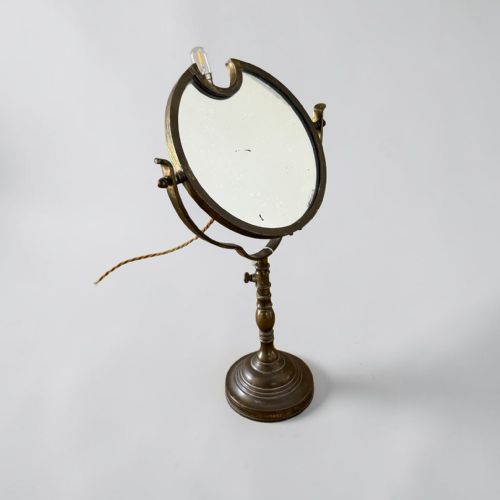
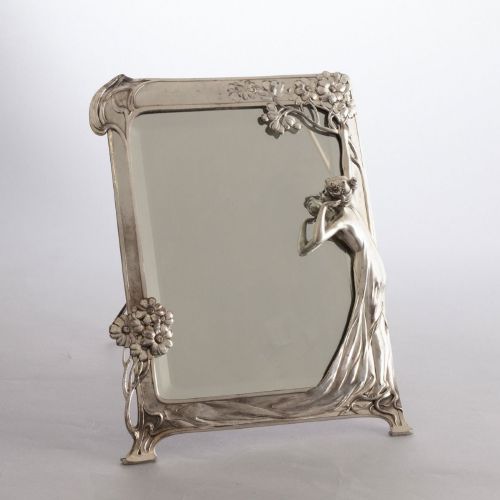
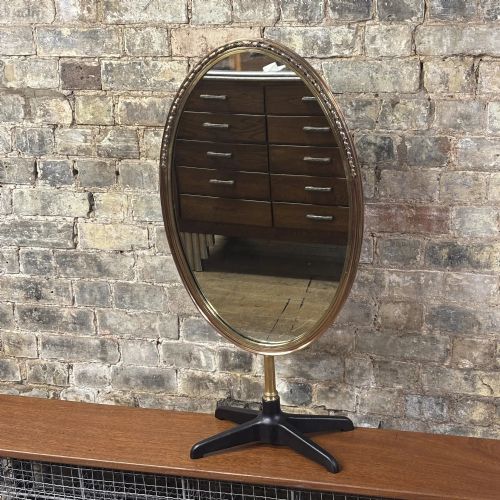


Antique Counter Mirror
These antique counter mirror examples bring practical display and functional reflection together for everyday retail or home use.
Antique Counter Mirror
An antique counter mirror serves a functional purpose for retail trade or domestic dressing, appearing in various Victorian, Edwardian, and early twentieth-century forms.
The pieces on this page include tabletop mirrors, dressing mirrors, and mirrored cabinets designed to sit directly on shop counters or furniture tops.
Makers utilised sturdy woods, metals, and glass to construct these items, balancing visibility with the practical demands of commercial and domestic interiors.
How they were made
Craftsmen built these pieces using solid timbers like mahogany alongside metals such as brass, pewter, and nickel-plated metal.
Surfaces frequently feature ebonised wood or silvered copper treatments, sometimes incorporating decorative motifs like stylised honesty seed pods.
Mirrored glass is integrated directly into frames or paired with cabinetry to create reflective interiors and display spaces.
Sweet shop cabinets double as mirrors, proving that Victorians liked to check their teeth after sampling the wares.
What varies in quality
Quality rests upon the selection of materials, from solid mahogany framing to specialised metalwork by known firms.
The complexity of the design, such as Arts and Crafts metal detailing or Art Deco cabinet lines, distinguishes standard utilitarian items from finer examples.
WMF·John Stow Ltd of Bradford·Cadbury
The Antique Counter Mirror Glossary
- Ebonised wood
- Timber treated to imitate ebony. This dark finish appears frequently on nineteenth and twentieth-century frames.
- Pewter
- A malleable metal alloy used for decorative objects. It provides a durable, soft-lustre frame for table mirrors.
- Silvered copper
- Copper treated with a silver coating. This technique creates a reflective, metallic surface seen on decorative pieces.
- Dressing mirror
- A small mirror designed for placement on a table or chest. These pieces often feature adjustable tilt mechanisms.
Antique Counter Mirror: Frequently Asked Questions
What is an antique counter mirror?
An antique counter mirror is a small reflective glass piece designed to sit on a retail counter or tabletop for display and use.
These items date from the nineteenth and early twentieth centuries, reflecting the domestic and commercial habits of the period.
Where were they placed?
These mirrors sat on shop counters, bars, and dressing tables to assist customers and staff.
Their compact size allowed them to occupy minimal space while offering practical reflection.
What materials are used?
Constructed from materials like mahogany, brass, pewter, and ebonised wood, they combine sturdy frames with glass.
Some examples also incorporate silvered copper or nickel-plated metal elements.
How do I date them?
Dating relies on stylistic clues such as Victorian joinery, Edwardian proportions, or Art Deco geometric lines.
Makers' marks and stamps also help pinpoint the exact period of manufacture.
Are they fragile?
While built to withstand commercial use, the combination of glass and older wood requires careful handling.
Placement should avoid areas subject to high moisture or extreme temperature shifts.