
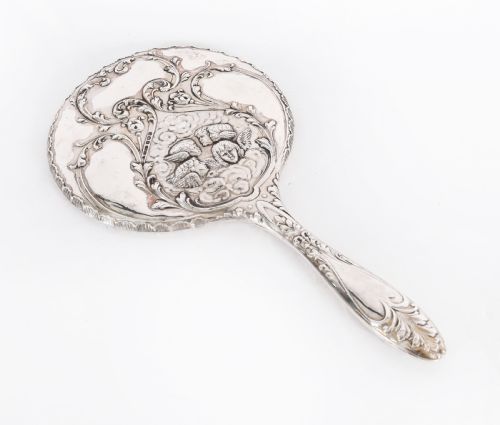
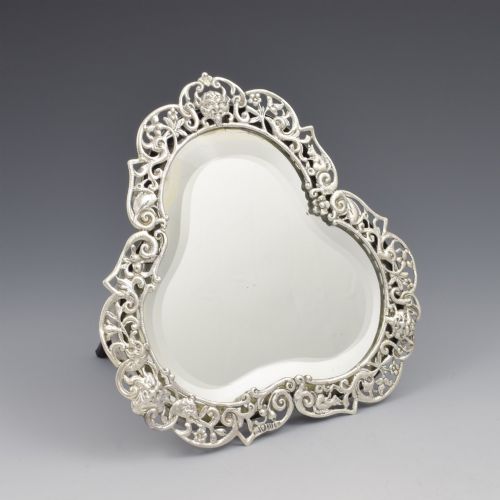


Repousse Silvered Mirror
A repousse silvered mirror brings hand-wrought metalwork and reflective glass into a room, catching the light through raised ornamentation shaped by the maker's hammer.
Repousse Silvered Mirror
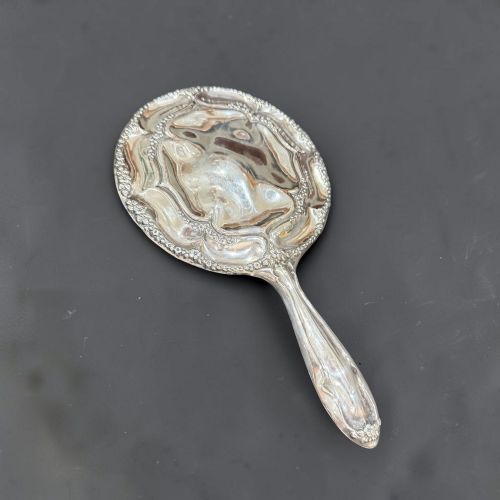
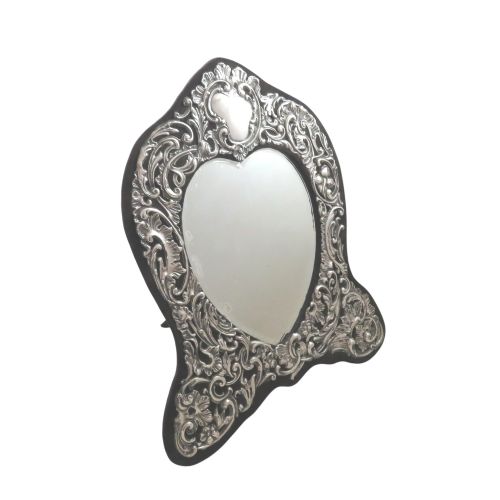
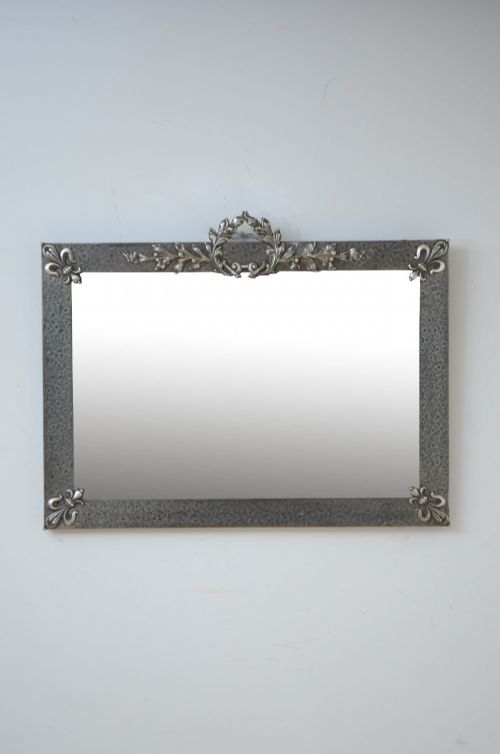
A repousse silvered mirror encompasses a variety of forms designed for walls, dressing tables, and hands, uniting reflective glass with worked metal frames. Buyers exploring this category encounter pieces originating from the nineteenth and twentieth centuries, spanning Victorian, Edwardian, and Arts and Crafts aesthetics.
The selection ranges from large sterling silver dressing table mirrors and easel backs to smaller hand-held vanities and wall-hanging pieces. Materials extend beyond solid silver to include silvered copper, brass, and pewter, often mounted on wooden backs or supported by velvet stands.
Geographic influences vary widely within the selection, featuring English hallmarked pieces alongside Chinese export items, Peruvian colonial revival designs, and Dutch baroque interpretations. This mix provides distinct decorative borders, from floral motifs and animal figures to stylised seed pods and plain hammered surfaces.
Evaluating craftsmanship and condition
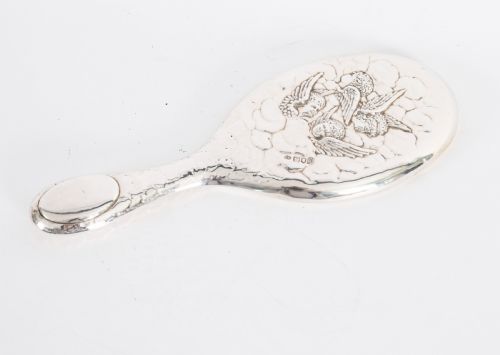
The distinction between standard and superior examples lies in the depth and crispness of the hammered relief work. Skilled artisans achieved intricate details such as animals, birds, and cherubs that remain sharp and well-defined.
Heavier gauge metals and robust structural elements like wooden backs and secure easel hinges elevate the integrity of a piece. The clarity of the mirror glass and the preservation of original silvering also contribute significantly to the overall execution.
Tiny raised cherubs and stylised seed pods stare out from the frames, proving that past makers refused to let a simple looking-glass stay boring.
Charles Boyton·S Blanckensee & Son·William Comyns·Henry Matthews
The Repousse Silvered Mirror Glossary
- Repousse
- A metalworking technique where the design is hammered into relief from the reverse side. This method creates tactile, three-dimensional decorative patterns on the frame.
- Sterling silver
- An alloy consisting of silver and other metals, typically copper, standardly containing a specific high purity proportion. It provides durability while maintaining a bright metallic lustre.
- Easel mirror
- A freestanding mirror supported by a hinged prop on the back, allowing it to tilt on a tabletop or dressing table. These typically feature velvet or wooden backing panels.
- Hallmark
- An official stamp or marks struck on precious metal items in various countries to certify the purity of the metal and trace the maker and year. English pieces often include assay office symbols and date letters.
Repousse Silvered Mirror: Frequently Asked Questions
How do I clean a silver mirror frame?
Maintenance requires gentle dusting with a soft cloth to prevent the accumulation of debris in the recessed areas of the hammered metal. Chemical dips should be avoided to protect any underlying wooden structures or original mirror glass.
Specialist silver polish applied sparingly with a cotton bud helps preserve the raised details of the repousse work without damaging adjacent surfaces. Regular, light care maintains the metallic sheen far better than aggressive cleaning.
Where should I place a table mirror?
Table mirrors and dressing table mirrors suit surfaces where they can reflect natural light from a nearby window, effectively brightening darker corners of a room. Positioning them on chest of drawers or sideboards adds functional depth to domestic spaces.
Easel backs require stable surfaces away from high-traffic edges to prevent accidental tipping. Ensuring the supporting strut remains secure protects both the glass and the decorative frame from strain.
Are these mirrors heavy to hang?
Wall-hanging examples vary in weight depending on whether the frame utilises solid sterling silver, brass, or silvered copper mounted on wood. Larger pieces require appropriate wall fixings secured into studs or solid masonry to support the combined weight of the metal and glass.
Checking the hanging loops or wire on the reverse ensures structural safety before installation. Smaller vanity and hand mirrors are designed for portability rather than wall suspension.
How can I tell the period of a mirror?
Dating often relies on stamped hallmarks that record the specific year of assay for English silver pieces. Stylistic indicators, such as the naturalistic motifs of the Arts and Crafts movement or the ornate scrolls of Victorian revival styles, offer further chronological clues.
Examining the construction methods of the wooden backing and the bevelling or flatness of the mirror glass helps distinguish nineteenth-century production from later twentieth-century examples.