


Edwardian Satinwood Drawers
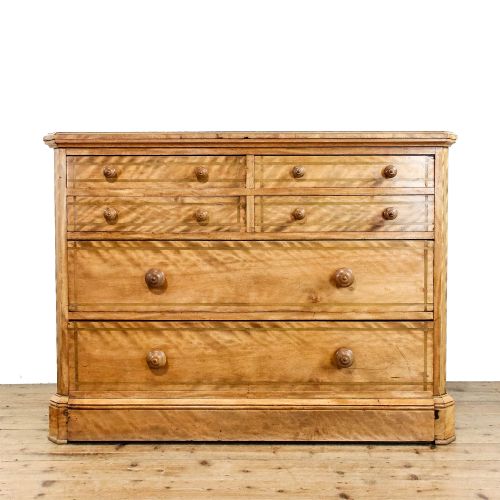
Edwardian satinwood drawers bring pale, figured timbers and delicate inlay together in pieces made to brighten period bedrooms and drawing rooms.
Edwardian Satinwood Drawers
When you search for edwardian satinwood drawers, you encounter bedroom and study furniture built around the turn of the twentieth century. The period favoured lighter, more reflective timbers than the heavy Victorian dark woods that preceded it.
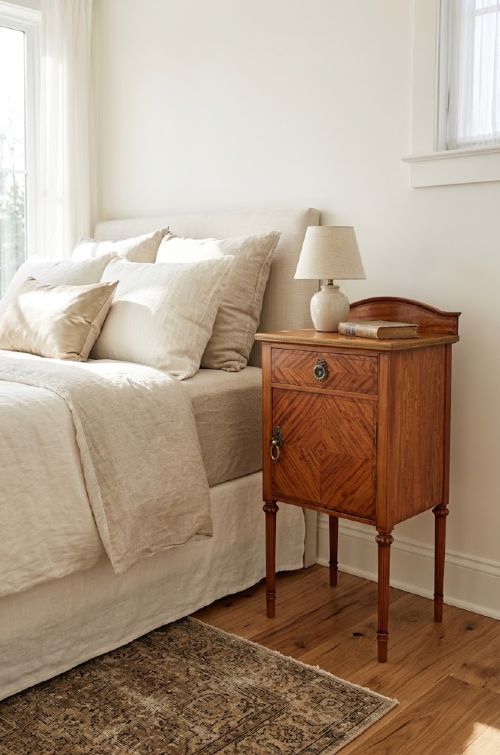
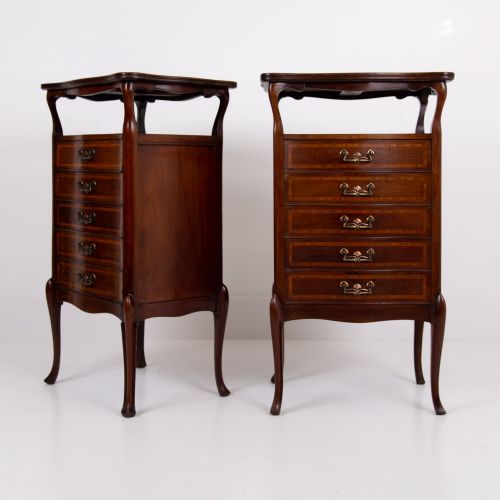
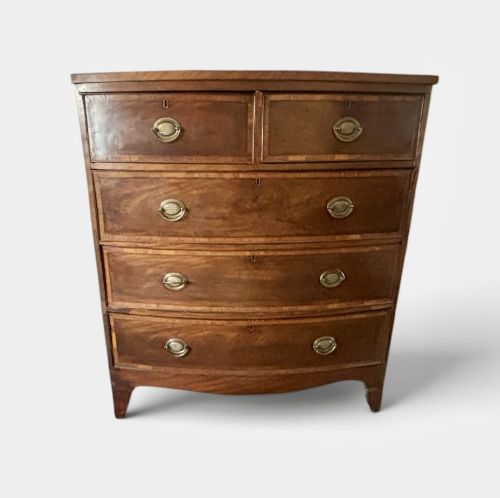
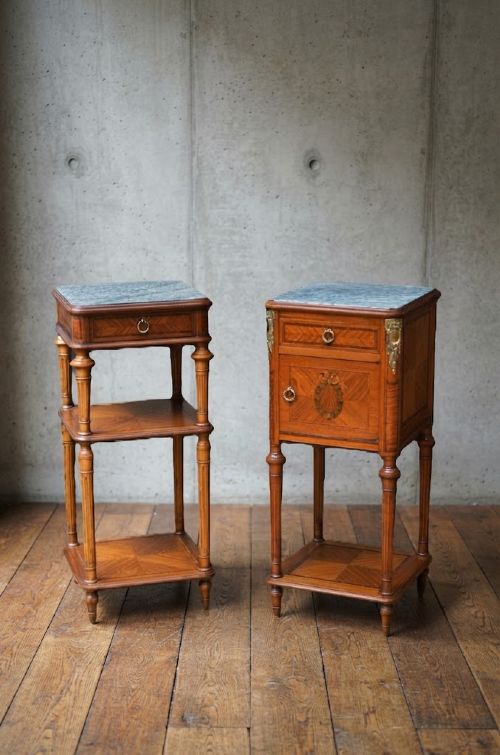
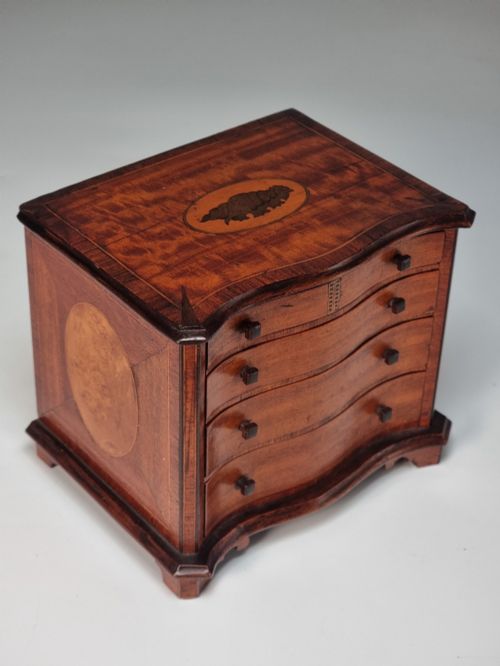
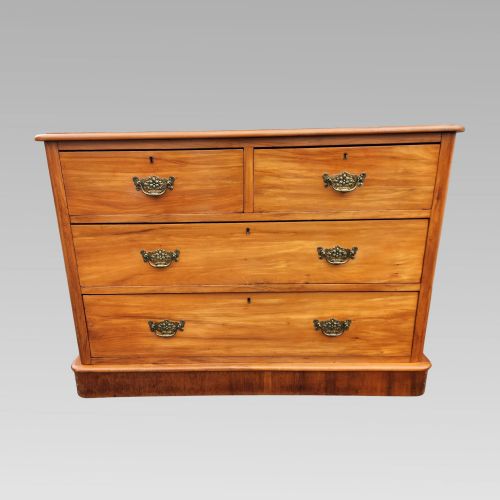
Chest of drawers forms dominate the selection, ranging from compact bedside cabinets and tallboys to large serpentine and bow-front chests. Many examples blend mahogany carcasses with satinwood banding, crossbanding, or full veneers.
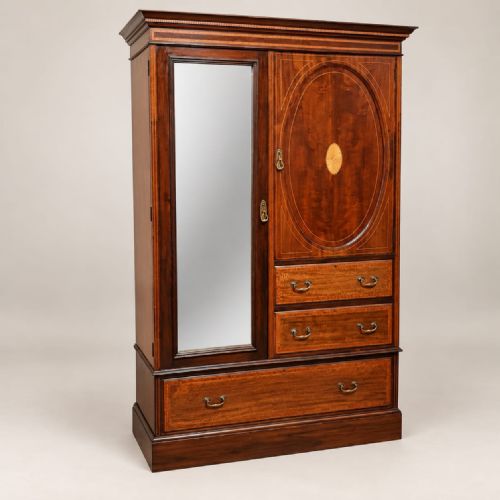
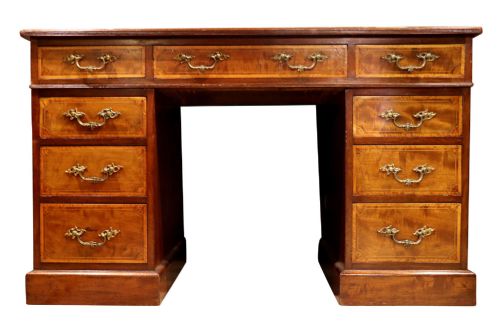
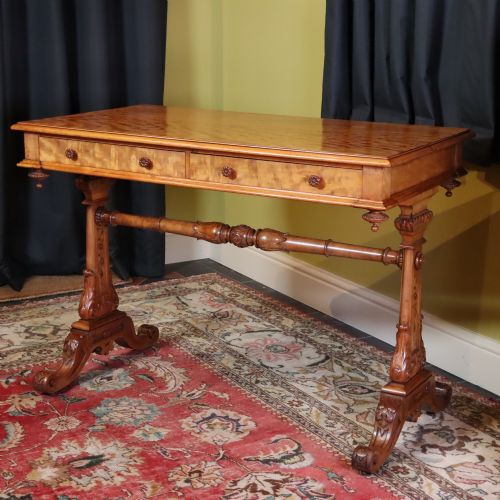
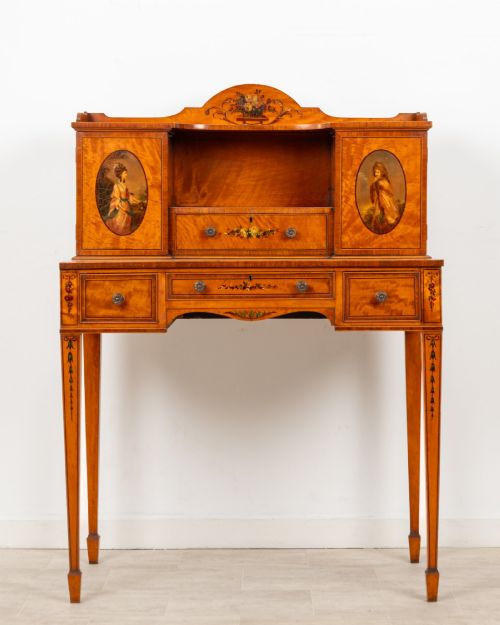
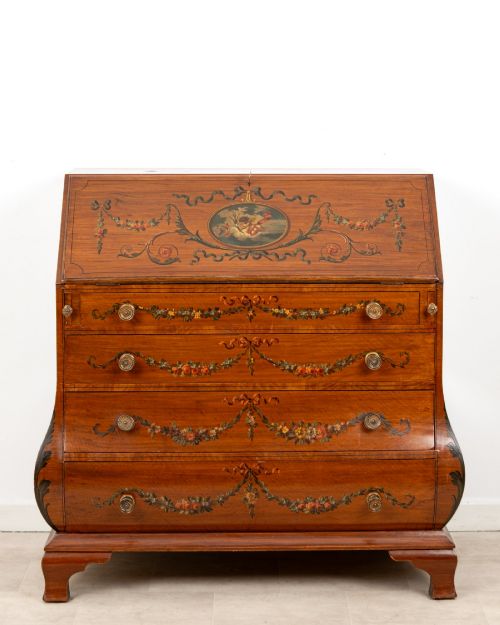
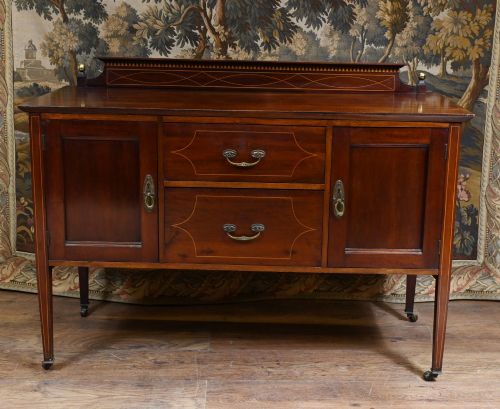
Alongside standard chests, the grouping incorporates writing desks, Carlton house desks, dressing tables, and side tables fitted with multiple small drawers. These pieces often draw on Sheraton Revival design motifs, echoing eighteenth-century elegance through painted decoration and marquetry.
How they were made
Cabinetmakers constructed the structural carcasses of these pieces using sturdy timbers like mahogany, oak, and red walnut, which provided stable framing for the drawers. Fine satinwood veneers and contrasting crossbanding were then applied to the primary visible surfaces.
Inlay work relied on precise hand-cut stringing in dark woods, ebony, or fruitwoods to create geometric borders and neoclassical urn or floral motifs. Selected writing desks and chests also feature hand-painted floral panels or classical scenes executed directly onto the pale wood.
Drawer construction typically involved solid oak or mahogany linings joined with hand-cut dovetails, paired with original brass ring drop handles or cast brass hardware.
Chest of drawers forms range from compact bedside cabinets and tallboys to serpentine and bow-front designs.
What varies in quality
The distinction between standard commercial output and superior craftsmanship rests on the choice of timber figure and the precision of the marquetry. Highly figured satinwood with a deep, natural chatoyancy commands attention over plain, flat-grained veneer.
Makers known for exceptional joinery and design, such as Edwards & Roberts or Maple & Co., executed proportions and inlay with rigorous crispness. Secondary details, including original hardware, well-fitted oak drawer linings, and intact hand-painted decoration, elevate the standing of an individual piece.
Edwards & Roberts·Maple & Co.·A. F. Lloyd·Harris Lebus
The Edwardian Satinwood Drawers Glossary
- Satinwood
- A dense, lustrous tropical timber with a golden-yellow sheen and distinct chatoyancy. It forms the primary visual surface or veneer on late nineteenth and early twentieth-century revival furniture.
- Crossbanding
- A narrow strip of veneer laid across the grain of the primary panel to form a contrasting border around the drawer fronts or top. This technique frames the satinwood face and adds linear definition.
- Sheraton Revival
- A design movement popular during the Edwardian era that reinterpreted the neoclassical furniture of late eighteenth-century designer Thomas Sheraton. It incorporates slender proportions, satinwood veneer, and painted floral details.
- Serpentine
- A furniture front or top curved with a convex centre flanked by concave ends. This undulating shape requires skilled carpentry to fit drawers smoothly within the curved frame.
- Carlton House Desk
- A refined writing table featuring a curved superstructure of small drawers and compartments arranged around the rear and sides of the writing surface. The design originated in the eighteenth century and saw renewed production in the Edwardian period.
Edwardian Satinwood Drawers: Frequently Asked Questions
How do I identify Edwardian satinwood furniture?
Edwardian satinwood pieces typically combine pale, highly figured tropical veneers with Sheraton Revival styling, featuring delicate stringing, crossbanding, and sometimes hand-painted decoration. The construction often employs oak or mahogany for interior drawer linings rather than modern sheet materials.
Examining the hardware, carcass depth, and interior timber helps confirm the date. Maker stamps or labels inside drawer boxes offer definitive attribution to firms operating around nineteen hundred.
Are these drawers suitable for daily use?
These chests and desks were built for domestic service and remain robust enough for contemporary living when handled with care. Solid dovetail joints and sturdy timber carcasses ensure the drawers slide properly after a century of use.
Placing them away from direct heat sources and strong sunlight protects the delicate satinwood veneer and polished finish from drying out or fading over time.
What is the difference between satinwood and mahogany?
Satinwood is a hard, pale yellow timber valued for its shimmering grain and reflective quality, whereas mahogany is a reddish-brown hardwood known for deep colour and stable working properties. Many Edwardian pieces combine both woods by pairing a mahogany structure with satinwood drawer fronts and banding.
This combination provided structural strength while presenting a bright, fashionable decorative surface to the room.
How should I clean satinwood furniture?
Maintenance requires a soft, dry cloth to remove dust without abrasive cleaners that might damage the polished surface. Traditional wax polish applied sparingly helps nourish the wood and preserve the lustre of the vintage finish.
Avoiding silicone-based sprays prevents a buildup of residue that can cloud the delicate grain and veneer over the years.