

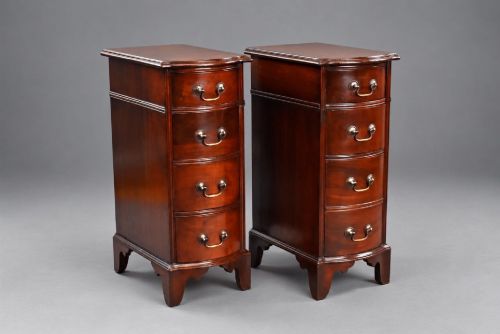
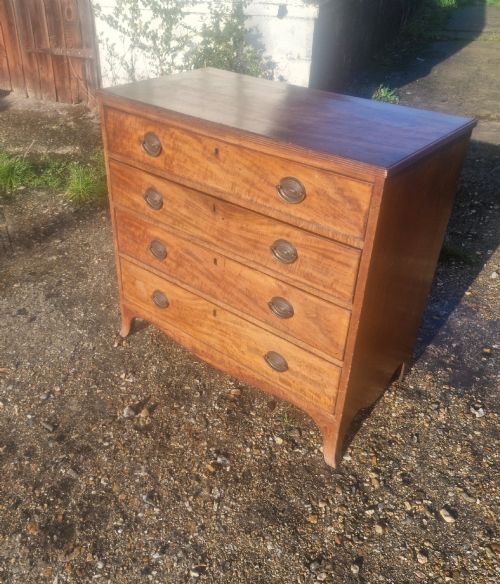
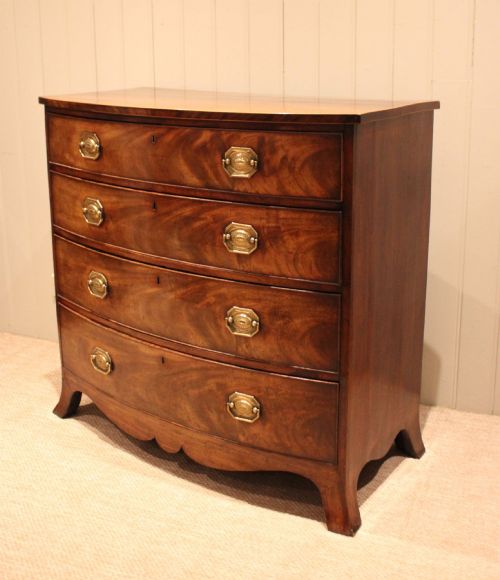
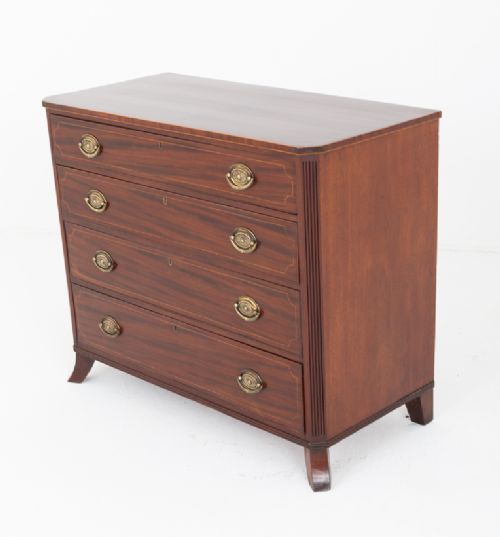

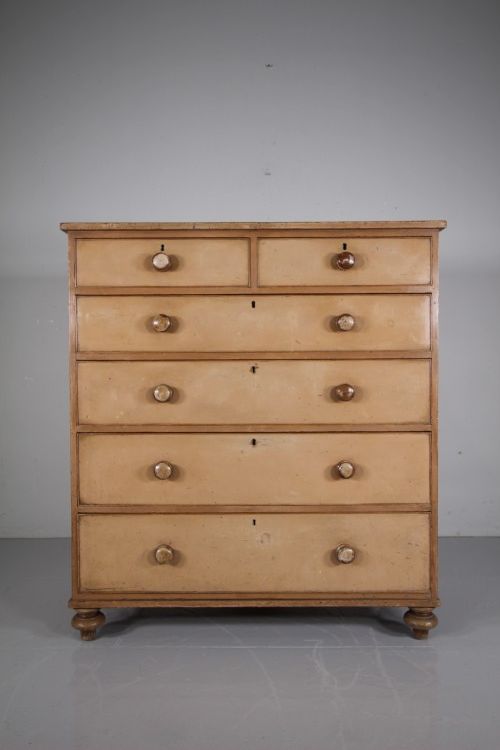


Regency Four Drawer Chest
A regency four drawer chest brings undeniable proportion and architectural presence to a room, offering practical storage through beautifully figured timbers.
Regency Four Drawer Chest
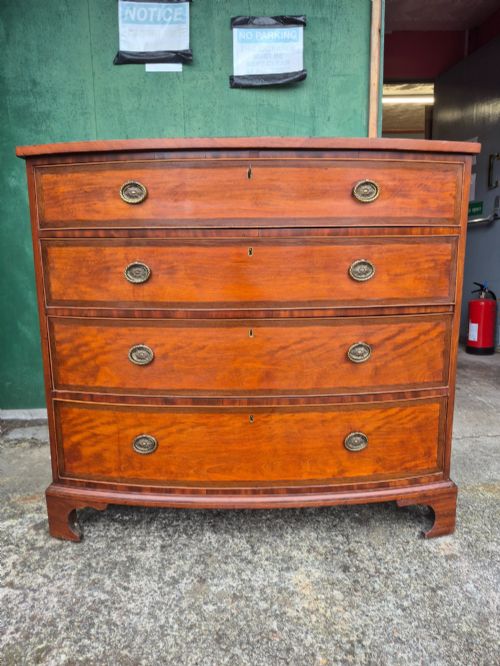
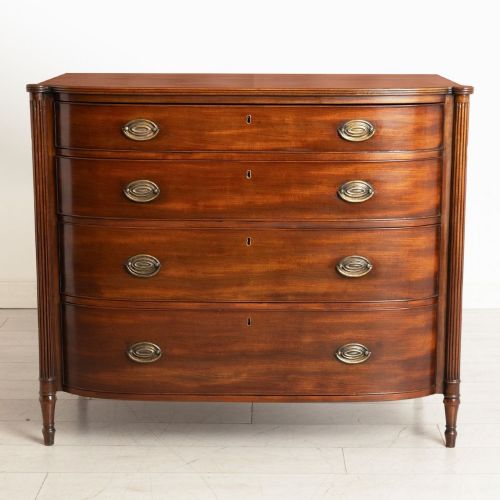
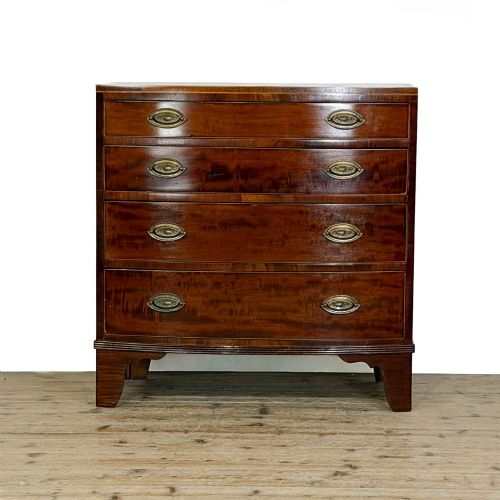
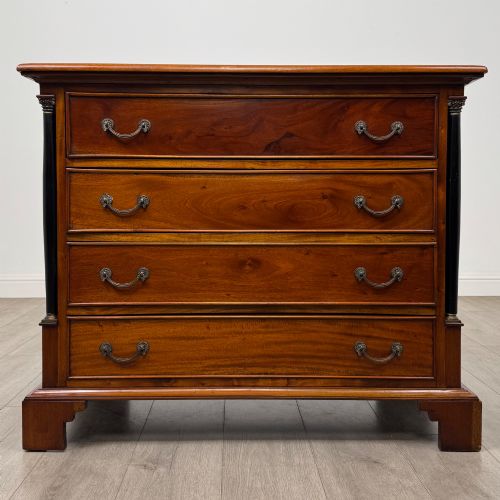
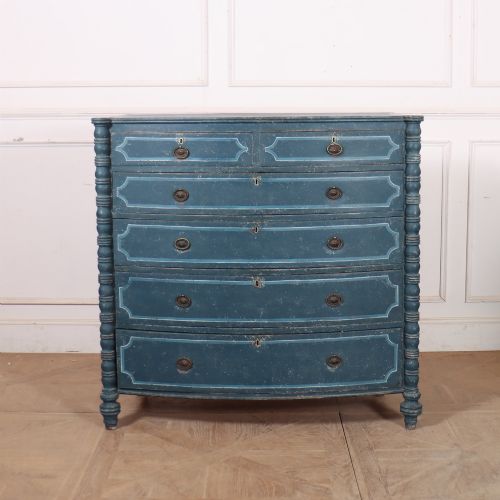
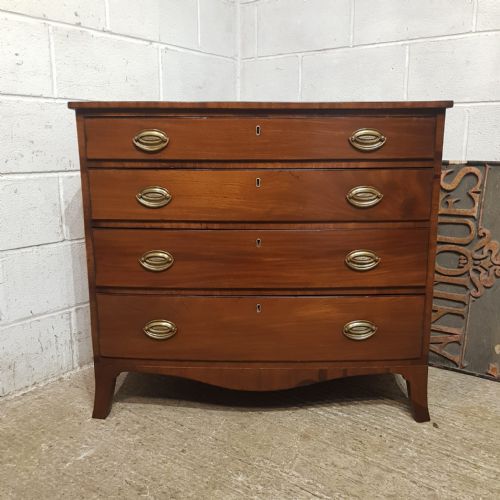
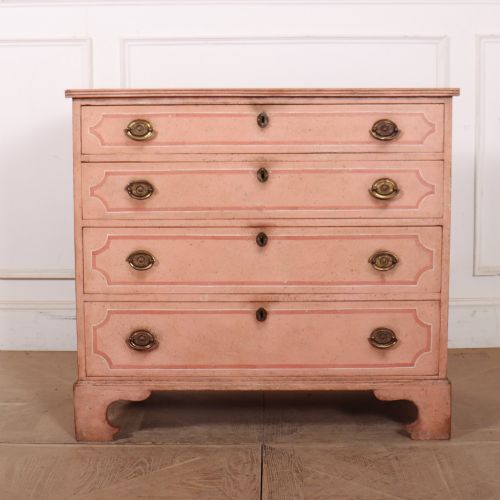
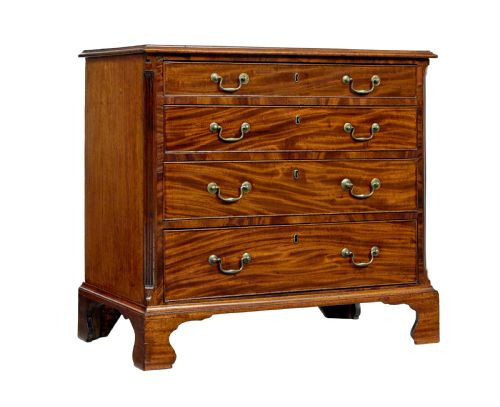
When you search for a regency four drawer chest, you find pieces primarily rooted in the nineteenth century, including Georgian and Regency periods alongside later Edwardian interpretations. These examples encompass straight fronts, bow fronts, and distinctive 'D' fronts built as chest of drawers configurations.
The version most commonly met on this page relies on mahogany timber, frequently enhanced with flame mahogany veneer, satinwood, or wood inlay, and typically supported by brass hardware.
Beyond standard forms, related variations occasionally appear such as bedside cabinets or bachelor's chests equipped with a brushing slide, demonstrating the versatility of domestic furniture from these eras.
What varies in quality
The standard of timber selection largely dictates the grade of a piece, separating straightforward utilitarian builds from those utilising highly figured flame mahogany veneer and intricate satinwood line inlay.
Refinement in proportions and secondary detailing, such as carefully fitted brushing slides and well-executed curved bow or 'D' front framing, distinguishes superior cabinet work.
Regency Four Drawer Chest Retail Price Guide 2026
Typical asking prices for regency four drawer chest among the pieces listed under this phrase on Sellingantiques today, from the lower quarter to the upper quarter. They describe what is for sale here now, not the wider market.
Cabinet makers occasionally concealed extra sliding shelves inside, proving that secret compartments were not just for grand desks.
The Regency Four Drawer Chest Glossary
- Bow front
- A convex curved cabinet front that projects outward in the centre. This curved facade became particularly popular during the Georgian and Regency eras.
- Brushing slide
- A pull-out shelf located just beneath the top surface. It provided a temporary writing or clothes-brushing surface in smaller bedchambers.
- Flame mahogany
- A veneer cut from the branch junction of the mahogany tree. It creates a distinctive, flickering flame-like pattern across the drawer fronts.
- Inlay
- A technique where contrasting woods or materials are set into the primary timber surface to form decorative lines or geometric motifs.
- Regency
- An English design period spanning the early nineteenth century. It is characterised by classical restraint, clean architectural lines, and fine timber work.
Regency Four Drawer Chest: Frequently Asked Questions
How do I identify a genuine period chest?
Examine the timber selection, construction methods, and hardware integration. Period pieces often display characteristic hand-cut dovetails and timber movement consistent with nineteenth-century cabinet making.
Look closely at the secondary woods used inside the drawer linings, as these can confirm the age and regional origin of the workshop.
Where should I place a bow front chest?
These pieces suit reception rooms, hallways, or spacious bedrooms where their curved profile can be appreciated without obstructing walkways.
Ensure the placement avoids direct heat sources and strong sunlight to protect delicate mahogany veneers and polished finishes.
What is the purpose of a brushing slide?
A brushing slide offered a clean horizontal surface for folding garments or dusting clothes before dressing. In smaller rooms, it doubled as a compact writing desk.
Drawers equipped with this feature indicate a more versatile piece intended for principal bedchambers rather than secondary rooms.
How do I care for antique mahogany surfaces?
Maintain the timber by dusting regularly with a dry, soft cloth and occasionally applying traditional beeswax to nourish the wood. Avoid modern silicone sprays that can damage antique polishes.
Keep indoor humidity stable to prevent the solid timbers and delicate wood inlays from warping or cracking over time.