
Edwardian Revolving Table
When you search for an edwardian revolving table, you find pieces designed for practical storage that turn with a gentle spin.
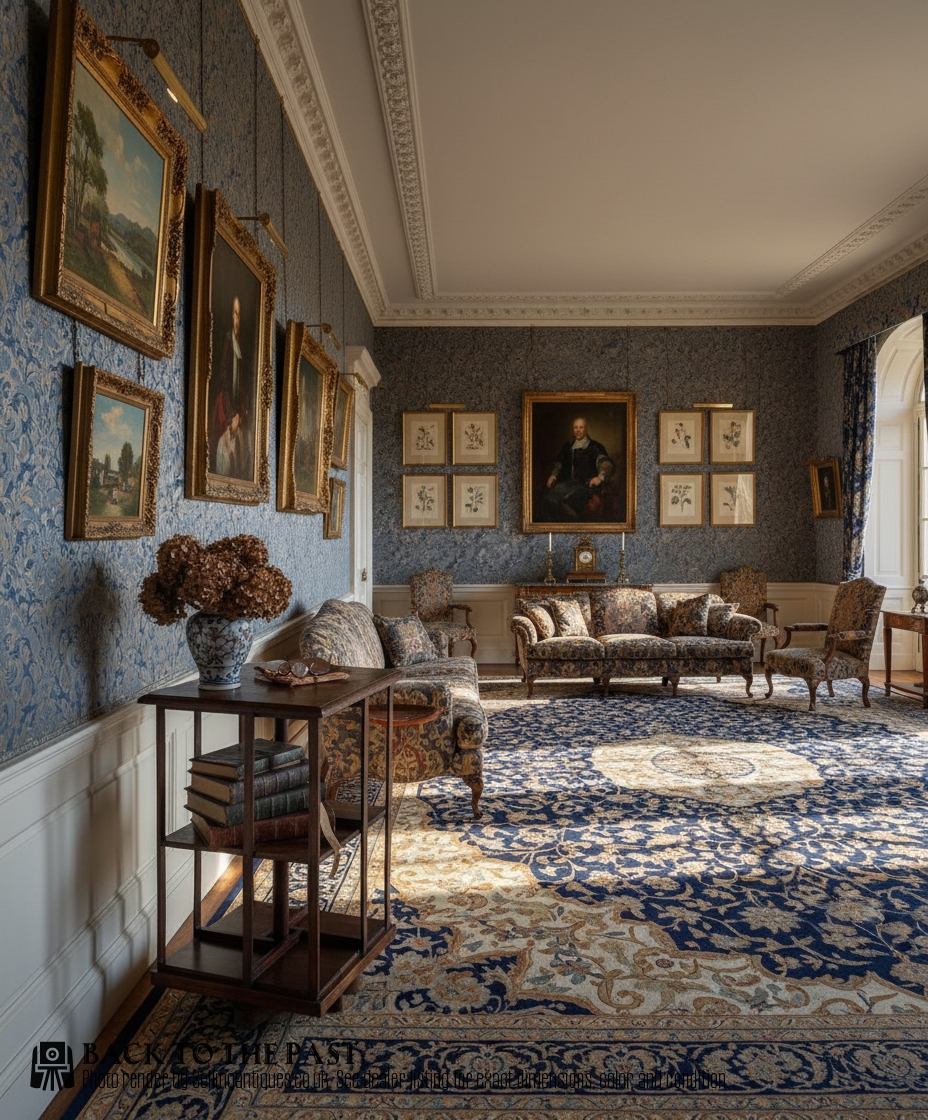
Edwardian Revolving Table
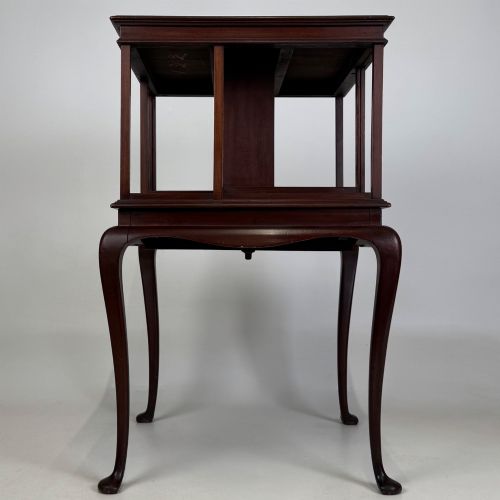
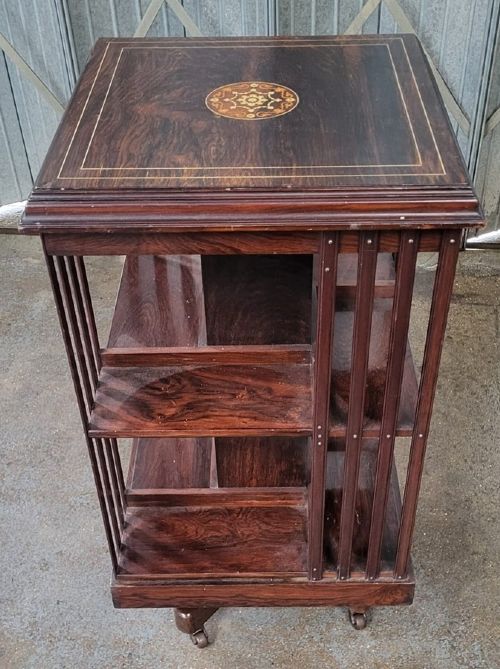
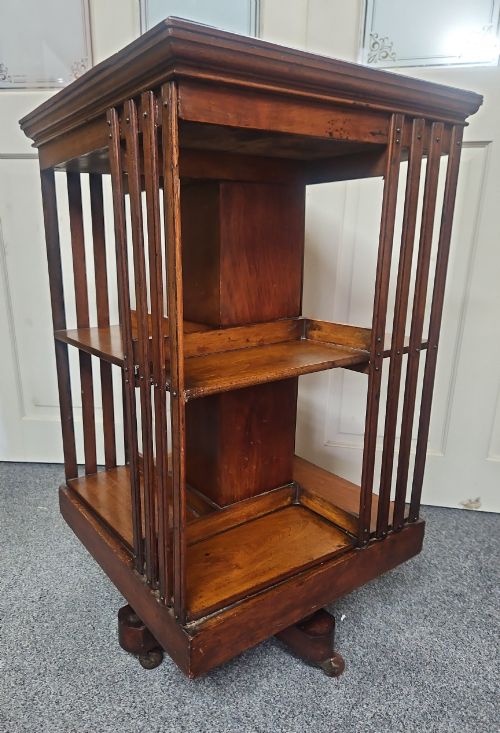
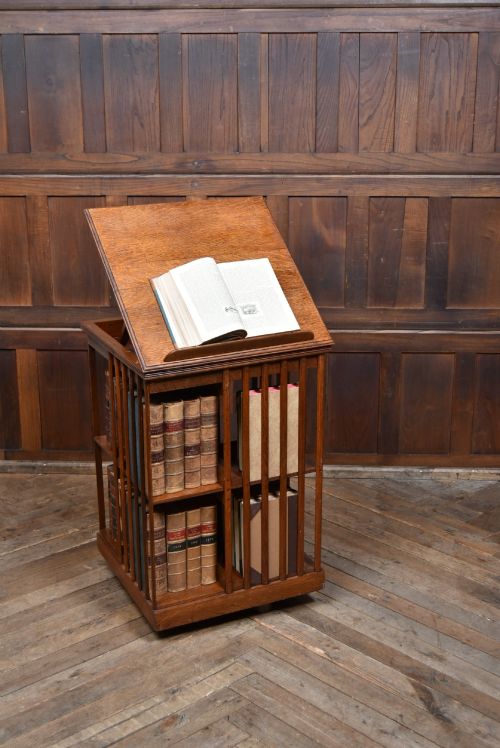
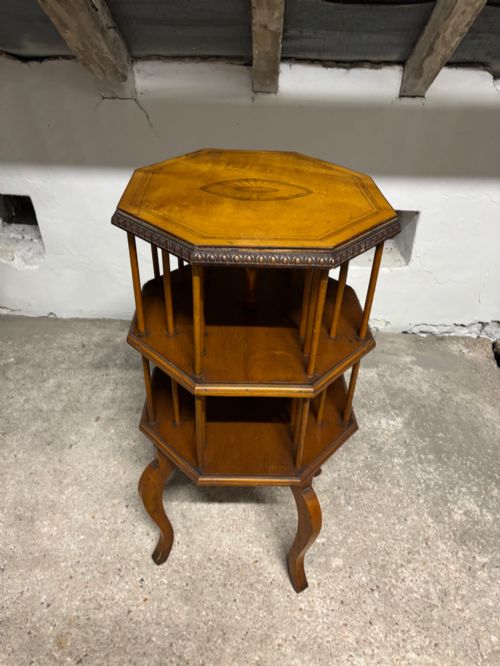
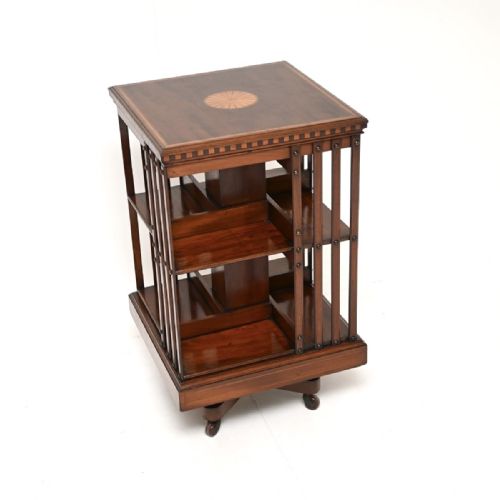
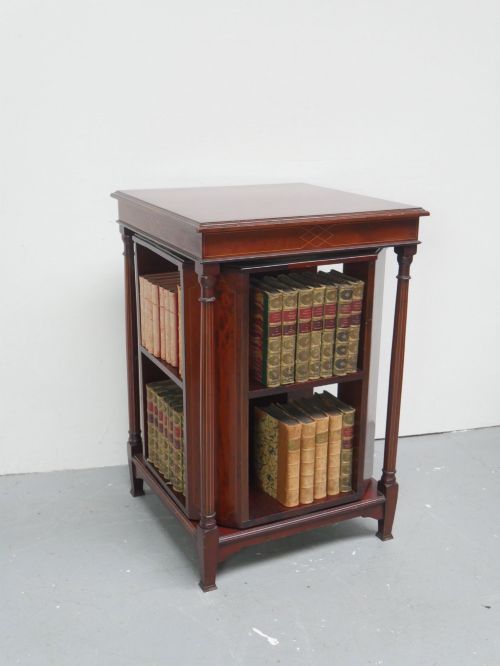
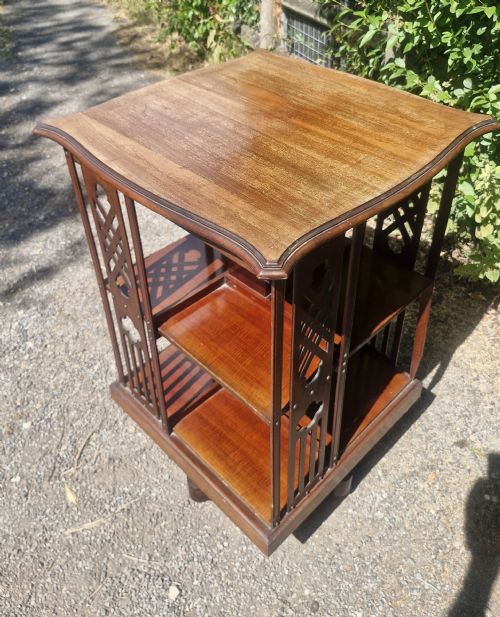
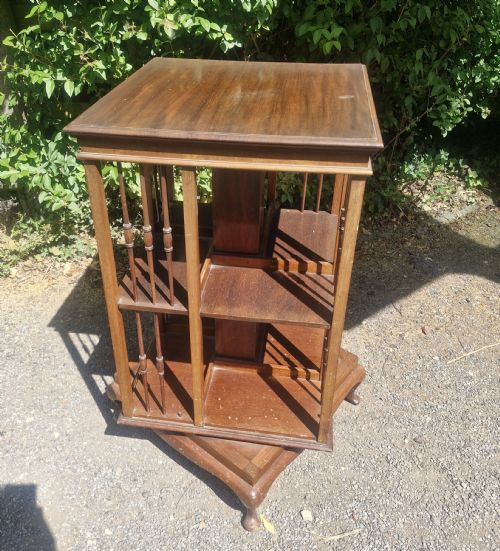
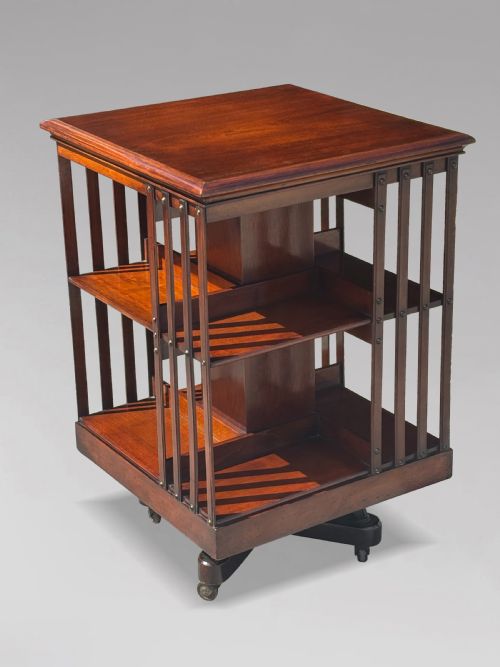
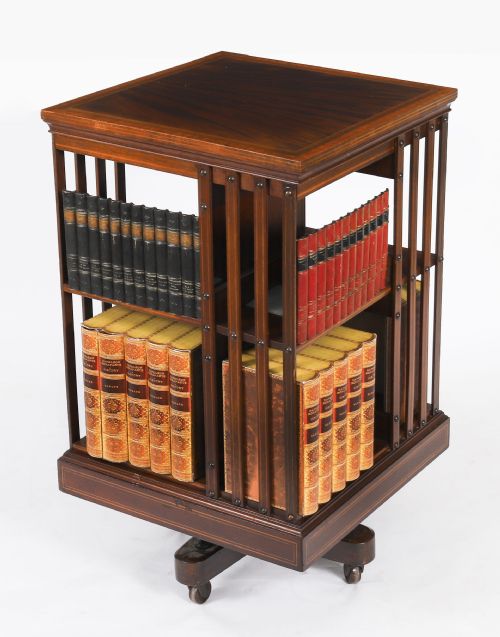
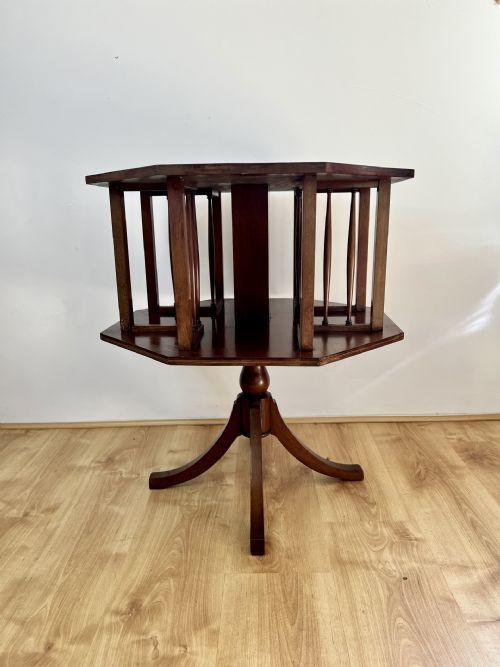
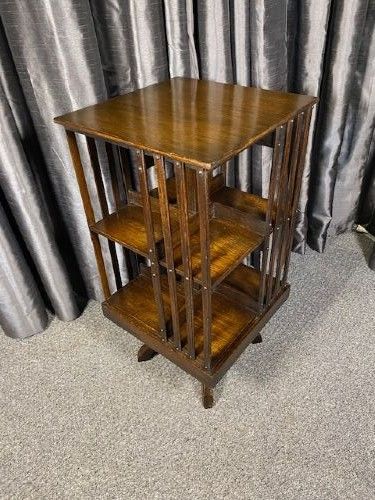
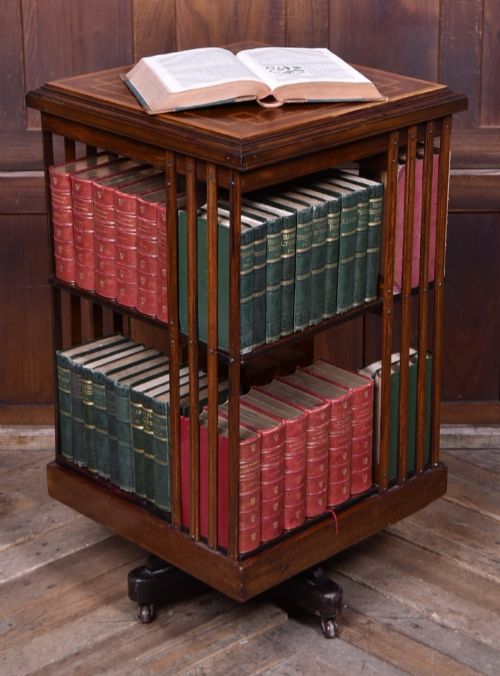
An edwardian revolving table most commonly takes the form of a rotating bookcase designed to sit on the floor or a tabletop, keeping volumes within easy reach. These pieces often feature square or round tiers, sometimes incorporating adjustable reading slopes or gallery bases.
The selections span from floor-standing models to miniature tabletop versions, alongside related spinning forms like drum tables and lazy susans. While the Edwardian period dominates, the listings also draw on late Victorian and early twentieth-century examples.
Materials and Construction
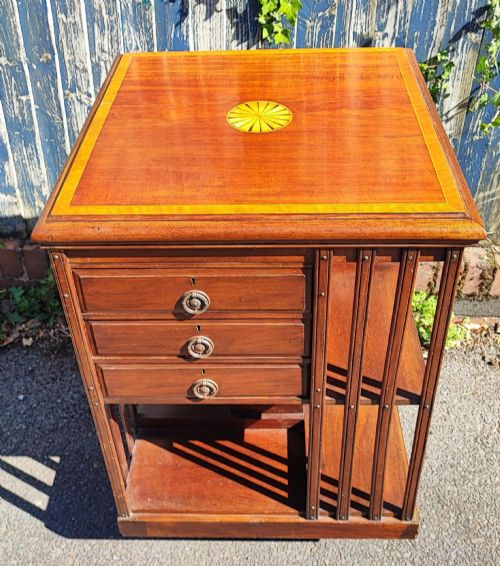
Makers relied heavily on timber, with mahogany forming the core of the construction, alongside oak, satinwood, and walnut. Decorative touches often include brass hardware, inlaid banding, and leather inserts.
The underlying mechanism requires sturdy internal framing to support the weight of books or serving items while maintaining a smooth, silent turn. Cabinetmakers utilised traditional joinery to build tiers that withstand regular rotation.
The inventory ranges from floor-standing multi-tier bookcases to miniature tabletop versions.
Assessing Quality and Execution
Quality rests in the smoothness of the internal rotating mechanism and the precision of the timber selection, such as flame mahogany or figured grain. Finer examples display crisp inlay work and solid brass fittings rather than stamped metal.
Proportion and scale also separate standard production pieces from finer items, particularly in diminutive tabletop versions or those featuring complex tiers and integrated reading shelves.
Shapland & Petter
The Edwardian Revolving Table Glossary
- Revolving bookcase
- A tiered wooden stand mounted on a concealed pivot mechanism allowing it to spin 360 degrees. This design permits access to multiple rows of books from a stationary seat.
- Inlay
- A technique where contrasting woods or metals are fitted into recessed pockets in the surface timber. Edwardian pieces frequently use satinwood or rosewood lines for geometric and floral motifs.
- Drum table
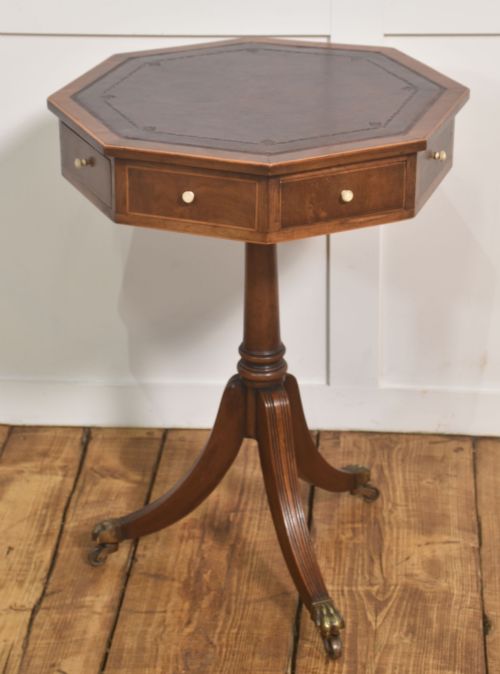
- A circular table with a deep frieze resembling a drum, often containing drawers and sometimes fitted to revolve. These pieces serve as library or centre tables.
- Dumb waiter
- A tiered serving stand, sometimes revolving, used for holding dishes or books without the need for attendants. They appear in both floor-standing and tabletop formats.
- Gallery
- A low raised border around the edge of a shelf or tabletop to prevent items from sliding off. They are frequently pierced or turned in brass or wood.
Edwardian Revolving Table: Frequently Asked Questions
What is an edwardian revolving table used for?
These pieces function primarily as accessible storage for books, reference volumes, or display items within a study or library. Their rotating design allows a seated reader to browse multiple shelves without moving.
Smaller tabletop versions serve the same practical purpose where floor space is limited, while related drum tables and serving pieces hold desktop accessories or dining items.
How do I identify an Edwardian piece?
Edwardian pieces generally date from the period between 1901 and 1910, showing lighter proportions than their heavy Victorian predecessors. They often feature mahogany or satinwood with delicate string inlay and classical revival motifs.
Construction methods also help, as these items combine machine-assisted precision with traditional hand-finishing, unlike older Georgian or strictly handmade items.
Do these tables require special care?
Maintenance involves keeping the timber nourished with appropriate wax and protecting the polish from direct sunlight and moisture. The revolving mechanism benefits from occasional gentle cleaning to remove dust.
Avoid overloading the shelves beyond the structural capacity of the central pivot, which ensures the turning action remains smooth over time.
Where did revolving bookcases originate?
While rotating book stands appeared earlier in the nineteenth century, the mass-produced domestic revolving bookcase became popular during the late Victorian and Edwardian eras. Makers adapted the pivot mechanism for middle-class libraries and studies.
Demand for space-saving multi-tiered furniture drove manufacturers to refine the internal bearing systems during the early twentieth century.