


Victorian Revolving Table
When you search for a victorian revolving table, you enter a world of ingenious nineteenth-century engineering designed to bring books, wine or dining accessories within arm's reach.
Victorian Revolving Table
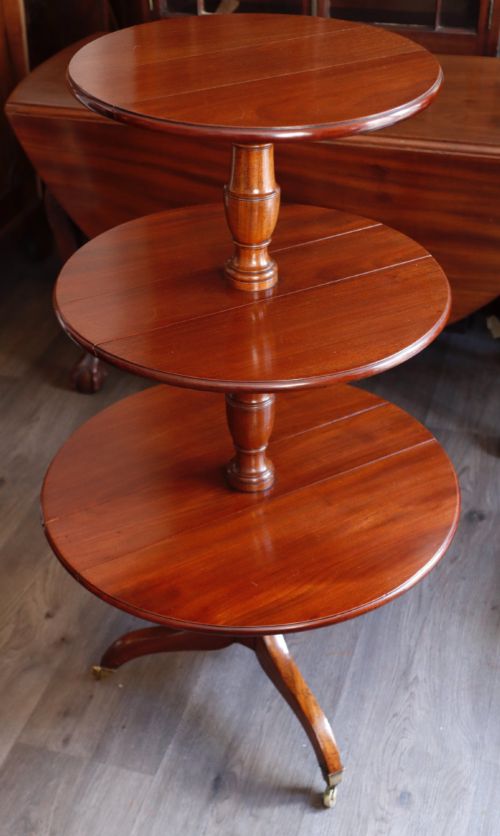
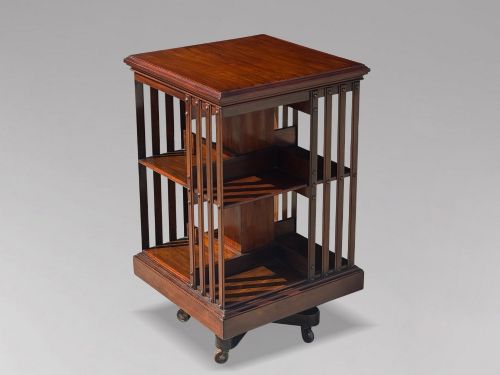
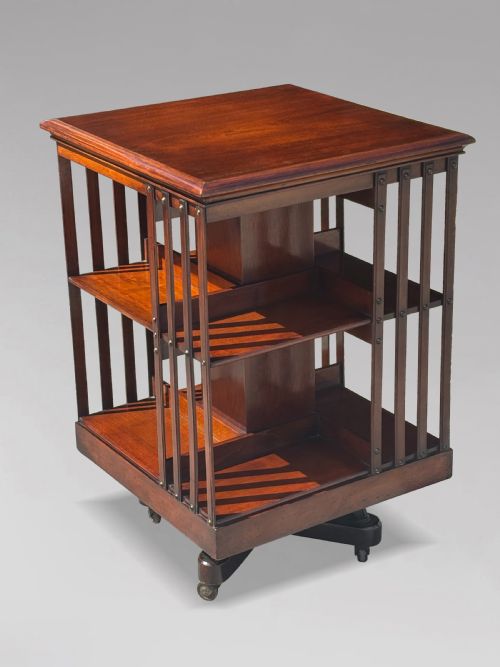
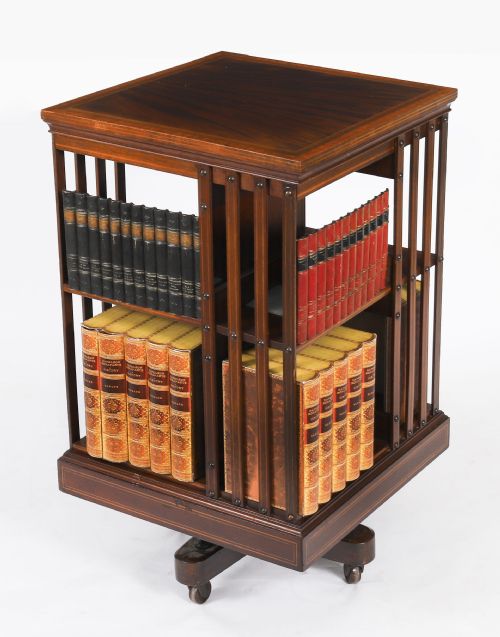
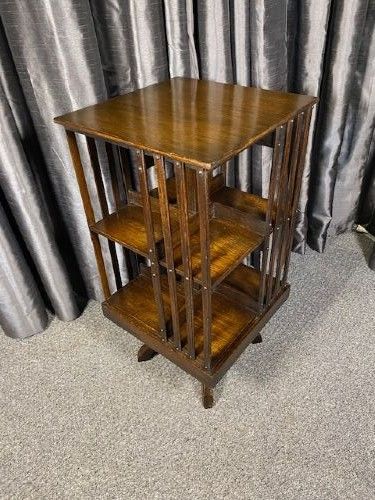
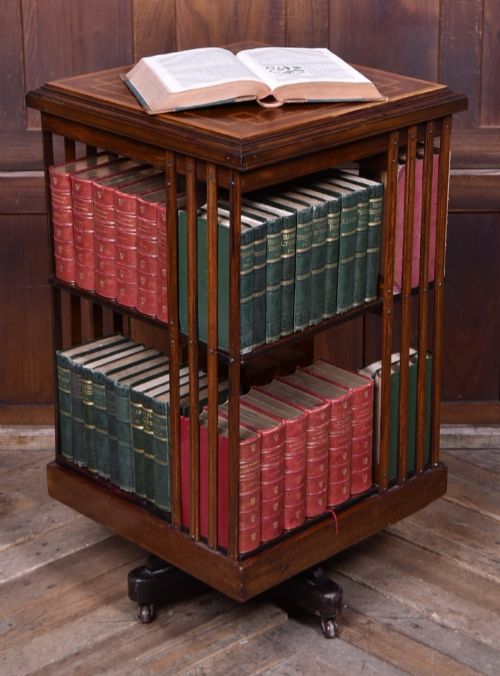
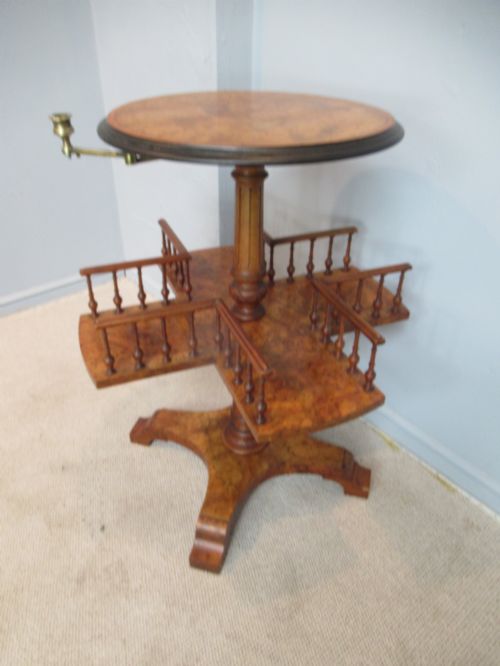
A victorian revolving table encompasses a diverse group of rotating furniture forms that emerged during the nineteenth century to serve practical domestic and library needs. The selection spans compact tabletop bookstands and multi-tiered bookcases to larger library drum tables, wine tables and serving dumb waiters.
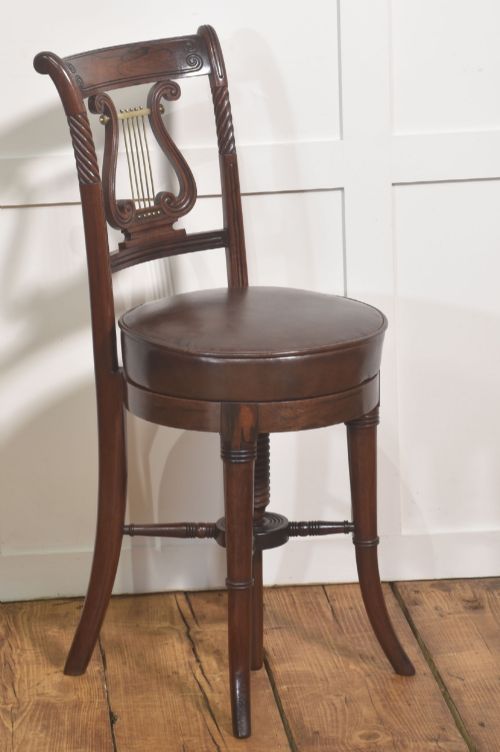
Function dictated form in the Victorian interior, meaning these rotating designs allowed users to access entire collections of volumes or service items from a single seated position. Makers adapted the revolving mechanism across various domestic contexts, including music stools, occasional tables and dining room lazy susans.
How they were made
Cabinet makers relied heavily on rich, dense timbers such as mahogany, walnut and rosewood, often selecting figured veneers like flame mahogany or burr walnut for primary surfaces. Secondary woods provided structural stability to the internal framework while brass mechanisms facilitated the smooth rotational movement.
The engineering of the turning action typically involved a concealed system of metal ball bearings or wooden pivots housed beneath the top tier. Joinery required precise alignment so that the rotating upper section cleared the stationary base or lower shelves without binding during use.
The archive records pieces spanning the Georgian era through to the Edwardian period, dominated by Victorian examples.
What varies in quality
The distinction between standard utility items and superior examples lies in the choice of timber and the complexity of the internal mechanism. Finely figured veneers, intricate brass inlay and carved detailing separate workshop pieces made for elite libraries from mass-produced commercial items.
Stability and balance define a well-executed revolving piece, ensuring the top turns silently and evenly without listing to one side under weight. The integrity of the original turning mechanism and the crispness of any applied carvings dictate the overall standing of the object.
Maple & Co
The Victorian Revolving Table Glossary
- Drum table
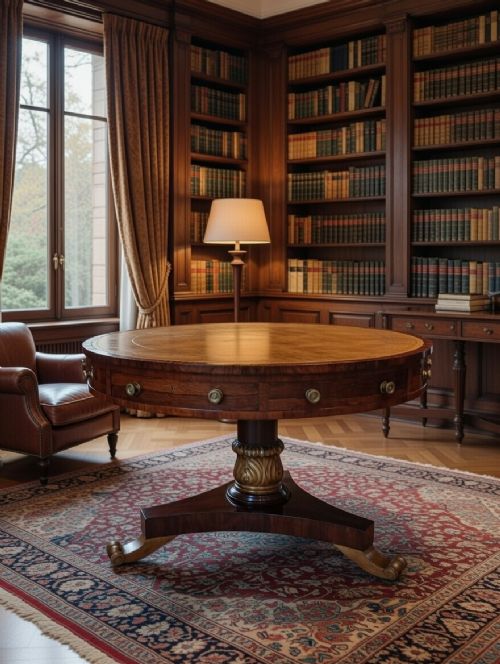
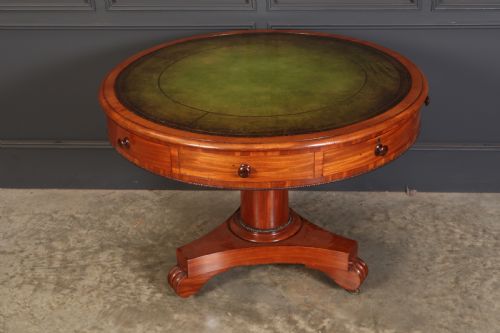
- A circular library table with a deep frieze containing drawers, usually supported on a central pillar with tripod legs. Many feature inset leather writing surfaces on the rotating top.
- Dumb waiter
- A tiered serving stand, often fitted with revolving trays, designed to hold dishes or wine bottles beside a dining table. Examples range from simple two-tier mahogany models to elaborate carved structures.
- Lazy susan
- A revolving tray placed on a table or integrated into furniture to assist in moving food or condiments easily between diners. These appear in both tabletop formats and larger freestanding serving units.
- Frieze
- The horizontal band situated directly beneath the tabletop, frequently utilised by cabinet makers to incorporate drawers or decorative marquetry inlay in library tables.
- Marquetry
- The art of applying decorative pieces of veneer to a structure to form intricate geometrical patterns or pictorial designs. This technique frequently enhances the top surfaces of walnut and rosewood library tables.
Victorian Revolving Table: Frequently Asked Questions
What is a victorian revolving table used for?
These pieces served multiple functions across the Victorian home, acting as accessible library storage, music stands or serving furniture. Users turned the rotating tops to select books, hold writing materials or serve meals without leaving their seats.
Smaller tabletop versions held dictionaries or Bibles for easy reference, while larger drum tables anchored the centre of gentleman's studies and drawing rooms.
How do the revolving mechanisms work?
Most revolving items utilise a central metal spindle paired with a race of ball bearings concealed between the rotating surface and the stable base. This hidden engineering allows heavy loads of books or dishes to spin smoothly with minimal friction.
Maintenance usually involves gentle cleaning and lubrication of the internal pivot to preserve the effortless movement intended by the original cabinet maker.
How do I date a revolving table?
Dating relies on observing timber choices, construction methods and stylistic markers associated with specific decades of the nineteenth century. Earlier pieces from the Regency and early Victorian periods often feature solid rosewood or flame mahogany, while later nineteenth-century examples frequently showcase burr walnut and applied inlay.
Hardware styles, such as brass casters or internal bearing types, also provide concrete clues to the manufacturing window between 1840 and 1900.
Where should I place one in my home?
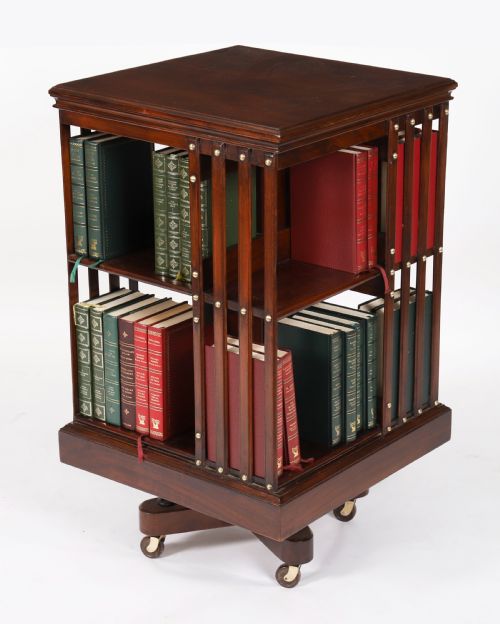
A revolving bookcase functions exceptionally well beside an armchair or sofa, keeping reading material immediately accessible in a compact footprint. Library drum tables work best as freestanding centrepieces in a study or living area where people can walk entirely around them.
Tabletop versions sit comfortably on sideboards or desks, offering a portable storage solution that honours nineteenth-century domestic design.