

Edwardian Pocket Matchbox
An edwardian pocket matchbox offers a tactile glimpse into daily life through miniature silver and enamel engineering.
Edwardian Pocket Matchbox
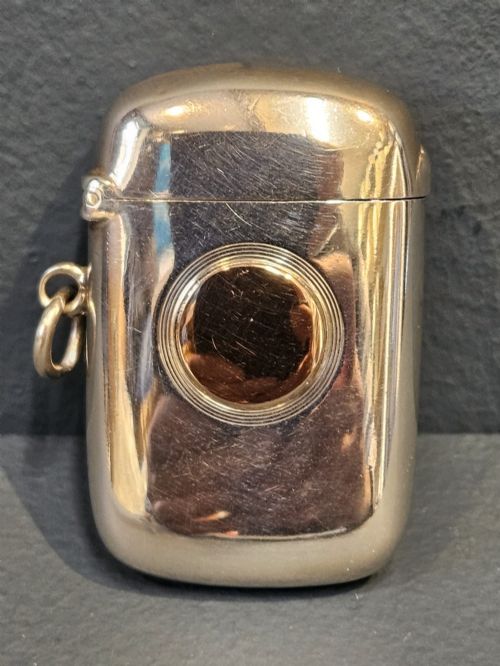
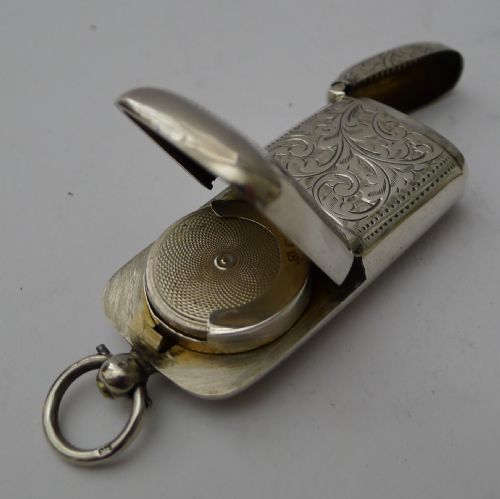
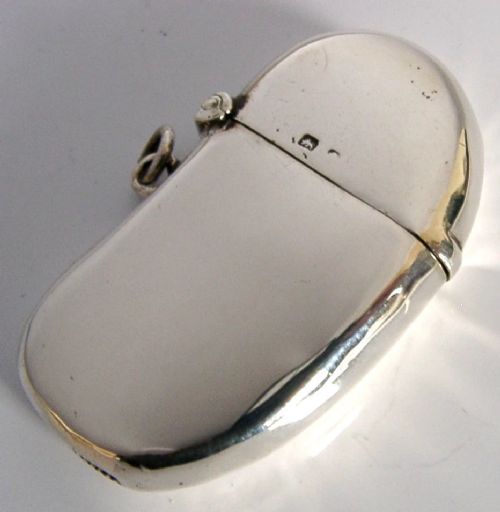
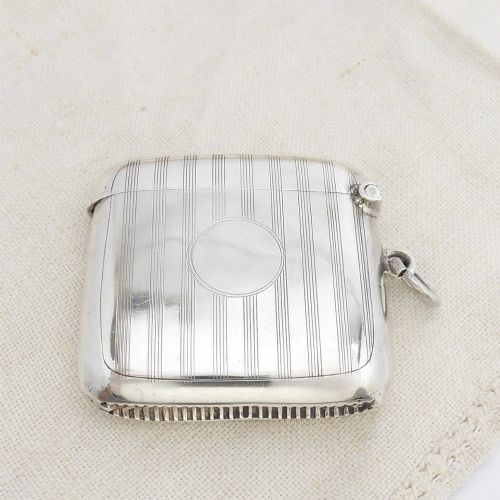
An edwardian pocket matchbox, commonly known as a vesta case, functions as a portable container for holding matches and striking them safely on the go. The pieces on this page span the Edwardian and Victorian eras, alongside George V examples, reflecting a period when carrying vestas was a daily necessity.
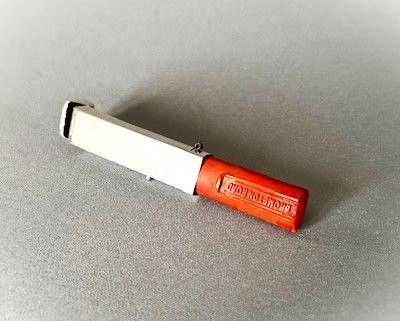
Most items appear in sterling silver or 800 silver, often taking standard rectangular, kidney-bean, or curved forms designed to fit comfortably in a waistcoat pocket. Alongside plain boxes, collectors encounter combined sovereign cases, sealing wax combinations, and novelty shapes.
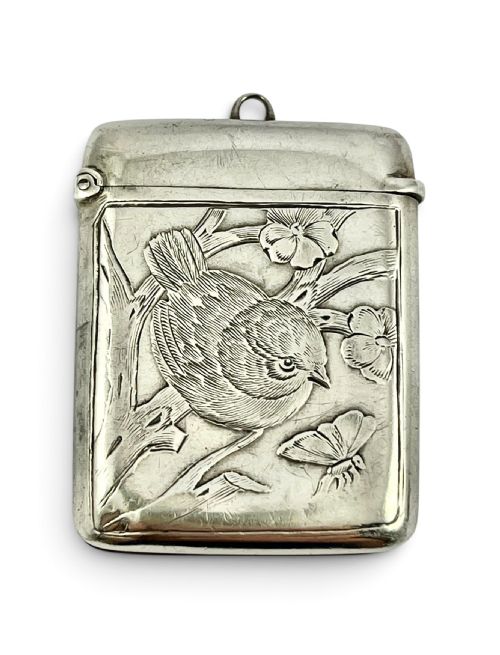
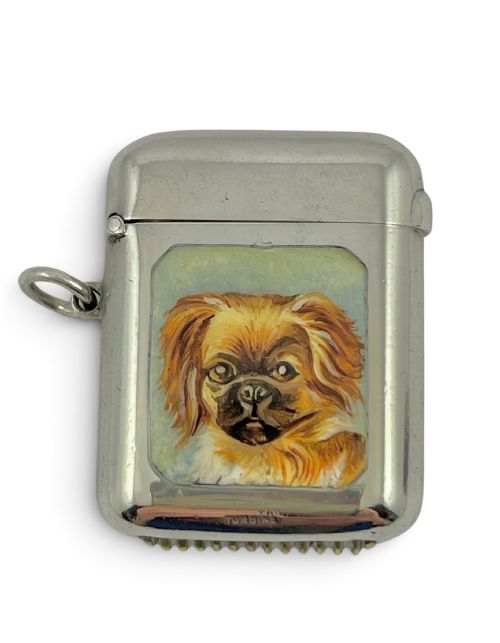
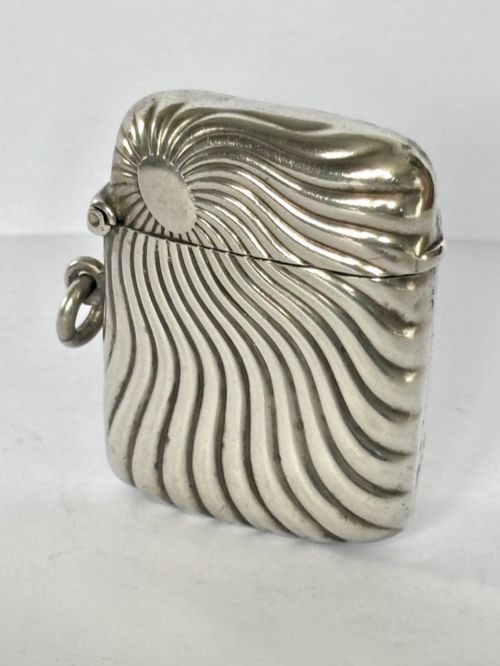
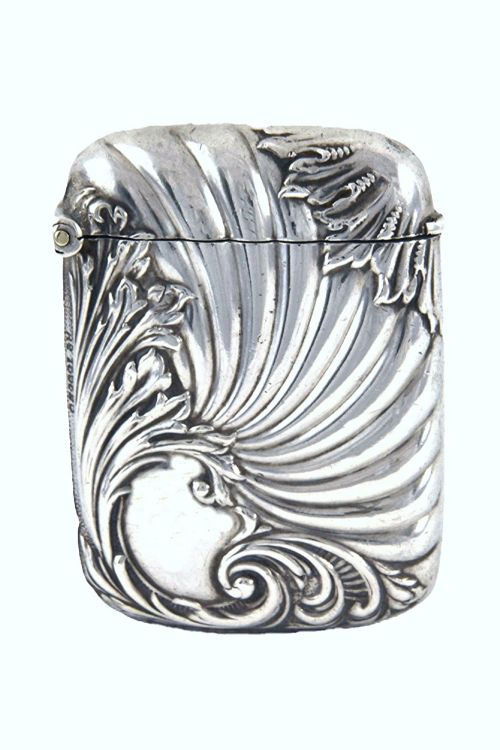
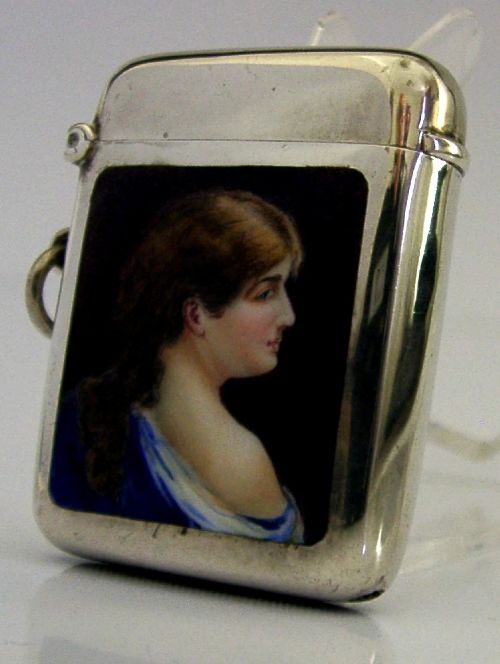
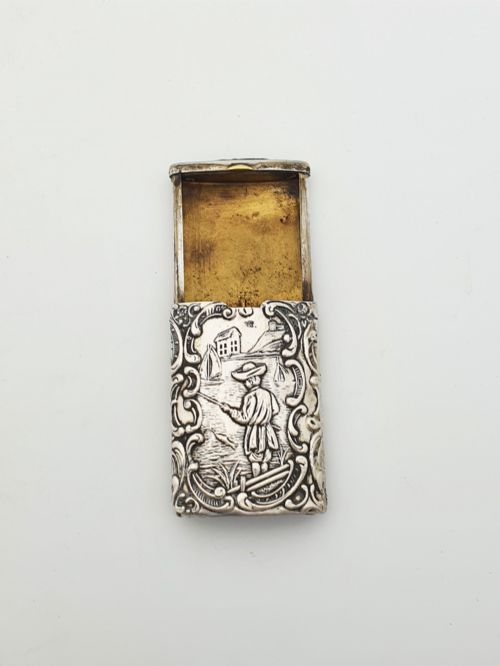
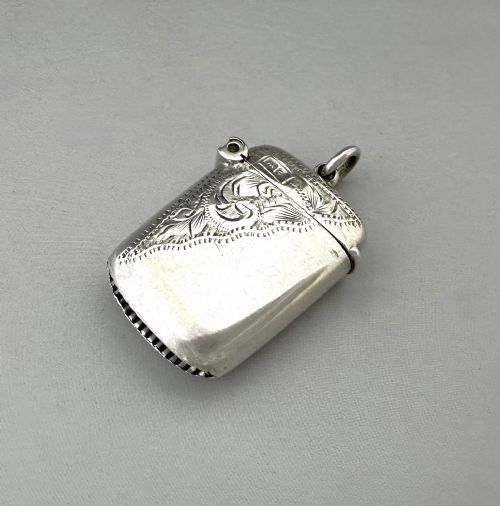
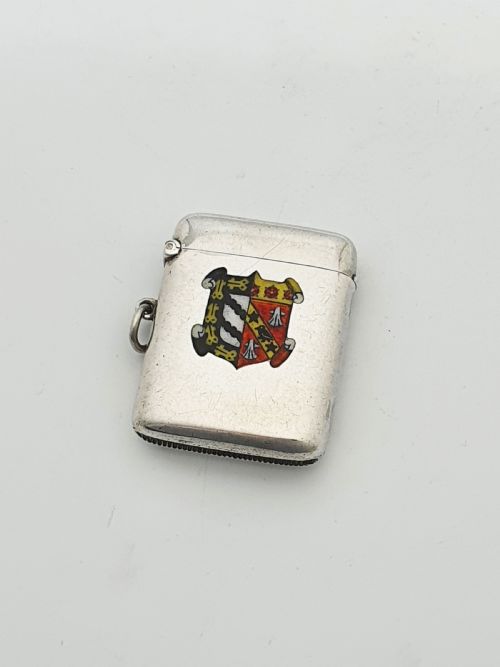
Makers utilised various techniques to decorate these small objects, incorporating enamel crests, portraits, hand-painted scenes, and repoussé motifs like mermaids, sunbursts, or leaves. While the core function remains uniform, the variety in surface decoration defines the selection available here.
How they were made
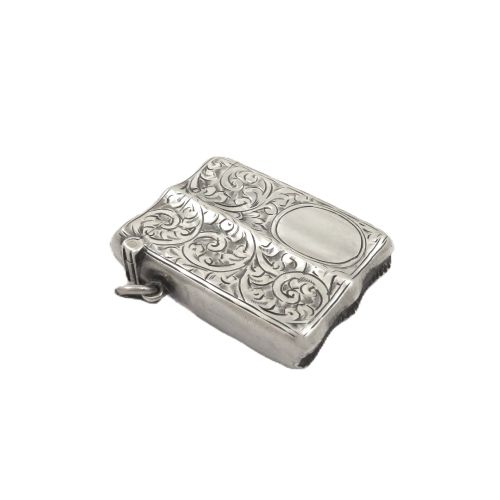
Silversmiths constructed these matchboxes primarily from sterling silver or 800 silver sheet metal, shaping them through stamping, pressing, and hand-engraving scrollwork or leaf patterns. Hinged lids and integrated striker grooves on the base required precise mechanical assembly to ensure a secure closure.
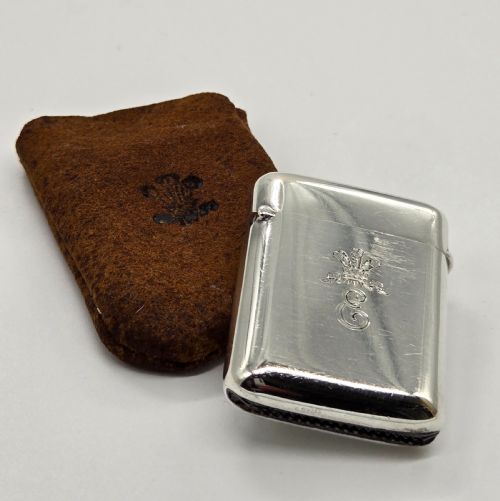
Decoration often involved vitreous enamel, hand-painted details, or applied vermeil, while some examples incorporated secondary materials like suede, sealing wax, or jewels. Nickel-plated brass appears in specific novelty productions, broadening the range of metals utilised by period makers.
A portrait face of Joseph Chamberlain peers out from one brass novelty box, keeping watch over a miniature supply of striking matches.
What varies in quality
The degree of artistic ambition separates standard matchboxes from exceptional pieces, particularly where hand-painted enamel, portrait work, or sculptural repoussé reliefs are concerned. Crispness in the chased leaf and scroll engraving determines the visual success of the surface.
Mechanical precision also dictates quality, seen in the tight snap of the hinged lid and the flush alignment of combined sovereign compartments or sealing wax holders. Maker attribution to notable workshops adds another layer of distinction to the craftsmanship.
Robert Chandler·Alfred Clark·Sampson Mordan·William Hair Haseler
The Edwardian Pocket Matchbox Glossary
- Vesta case
- A small pocket container designed to hold wax matches and provide a striking surface. These boxes gained popularity in the nineteenth century as safety matches became common.
- Sovereign case
- A compact circular container made to hold gold sovereign coins, frequently combined with a vesta compartment in a single dual-purpose accessory.
- Vitreous enamel
- Glass fused to a metal surface through high-temperature firing, creating durable and colourful decorative designs on silver bodies.
- Repoussé
- A metalworking technique where the artisan hammers the design from the reverse side to form a raised relief on the front.
- Vermeil
- Sterling silver plated with a thin layer of gold, adding a warm dual-tone appearance to the interior or exterior of the piece.
Edwardian Pocket Matchbox: Frequently Asked Questions
How do I use an edwardian pocket matchbox?
You open the spring-loaded or friction-fit lid to access the matches stored inside the chamber. Striking a match against the ridged section on the bottom of the case ignites it.
While functional, antique silver matchboxes are frequently collected as cabinet pieces or carried for display rather than heavy daily use. Care should be taken to preserve the original hinge alignment and enamel work.
How do I date an edwardian pocket matchbox?
Dating relies heavily on hallmarks stamped into the silver, which indicate the assay office, year letter, and maker's mark. Birmingham and Chester are common assay locations found on these pieces.
Stylistic cues such as Art Nouveau curves, Edwardian crests, or George V motifs also help narrow down the period of manufacture. Comparing the form and decorative technique provides further context when hallmarks are rubbed.
Are all matchboxes made of silver?
Not all pocket matchboxes are solid silver, though sterling silver and 800 silver predominate in this category. Some novelty or specialty pieces utilise nickel-plated brass or incorporate materials like enamel, suede, and sealing wax.
Assay marks and purity stamps such as sterling or 925 help identify the specific metal content of each individual box. Variations in material often reflect the intended function, whether standard utility or novelty display.