


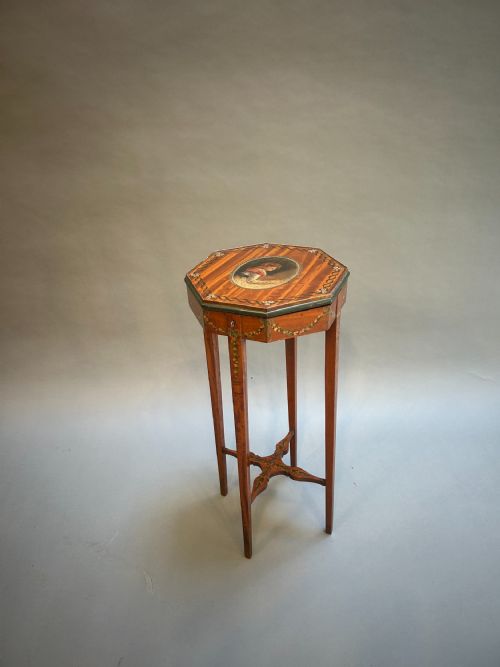
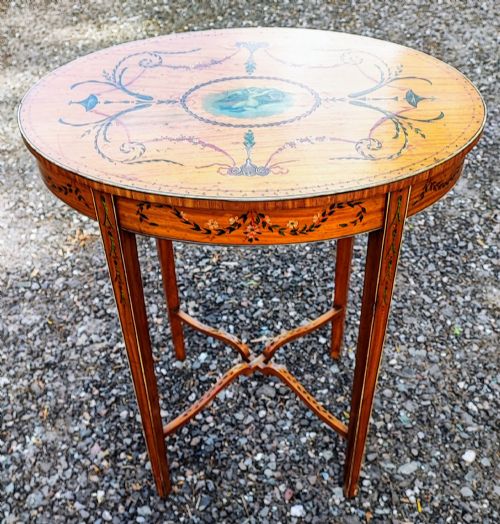
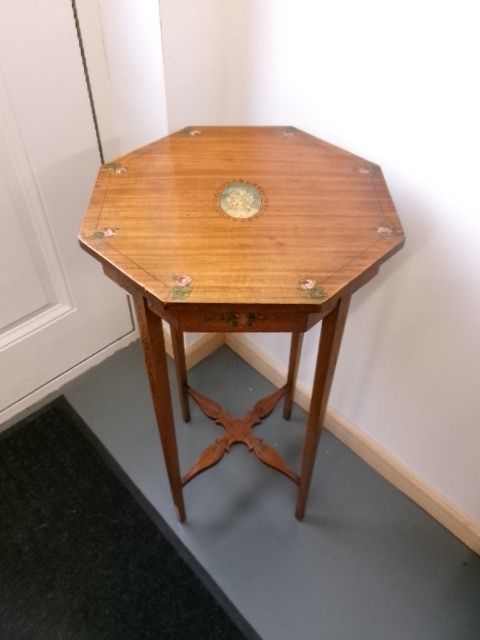


Edwardian Painted Satinwood Table
An edwardian painted satinwood table brings light timber and delicate brushwork together, offering a refined surface for a drawing room or study.
Edwardian Painted Satinwood Table
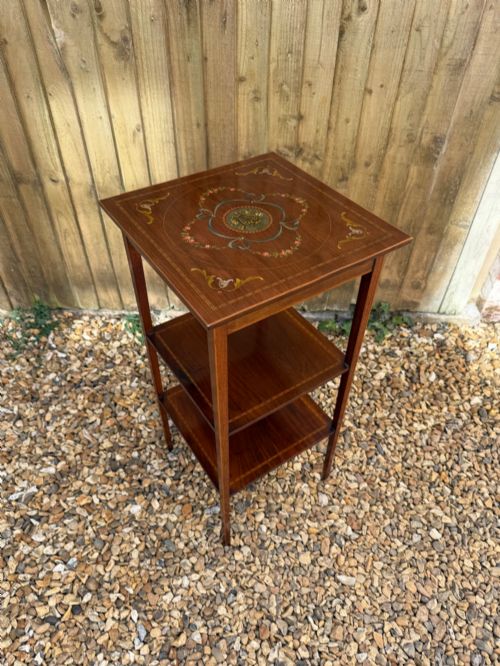
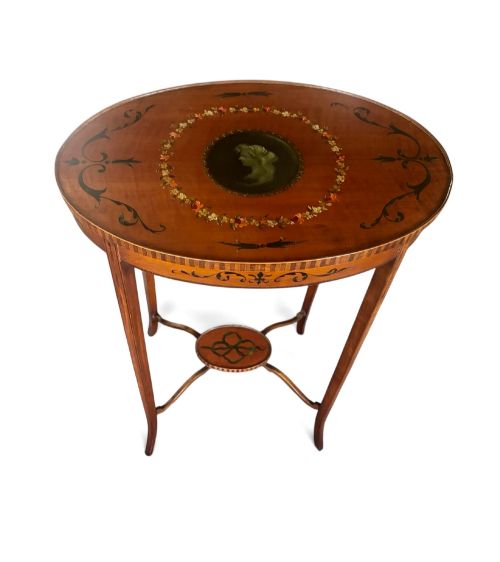
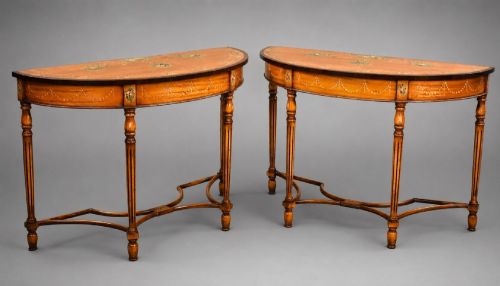
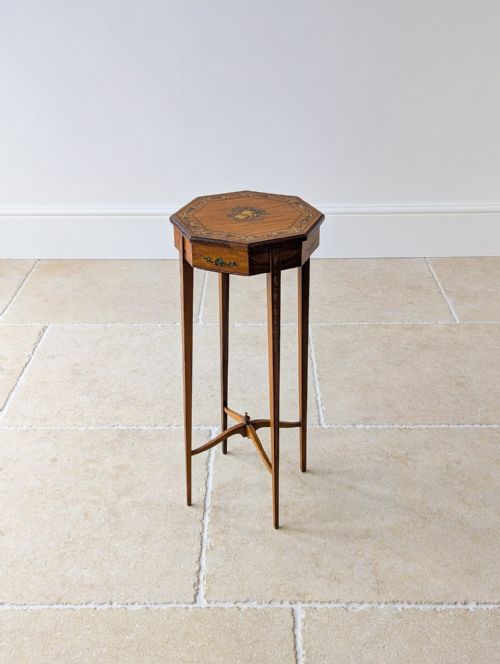
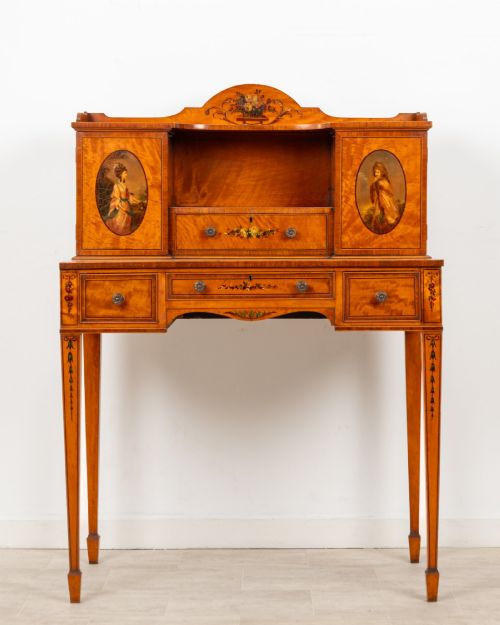
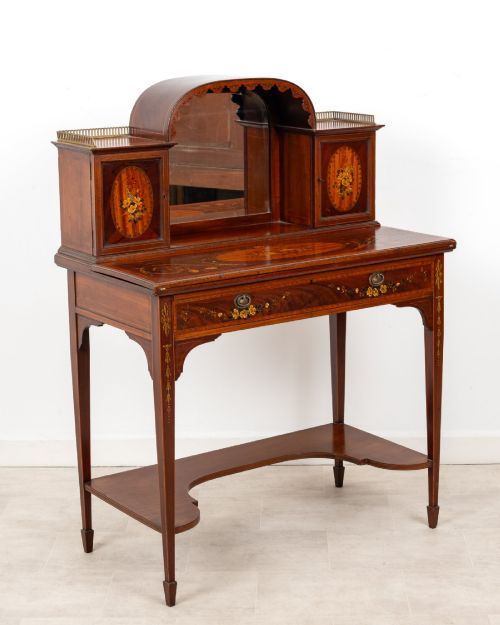
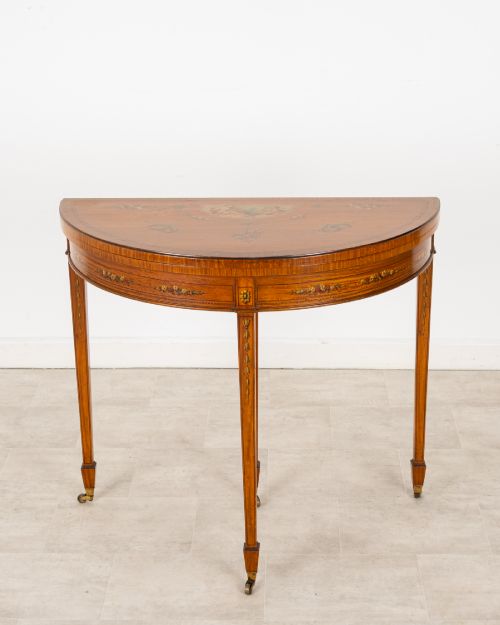
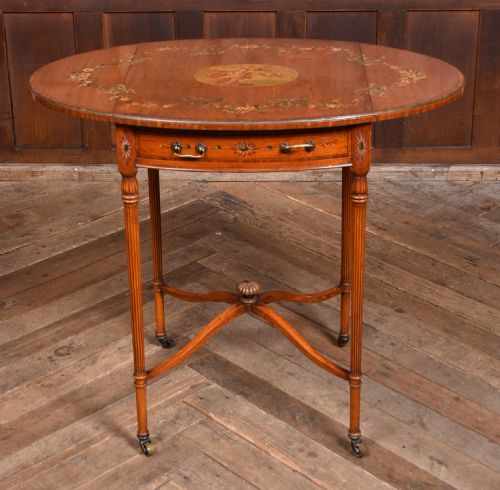
When searching for an edwardian painted satinwood table, a buyer encounters a refined group of occasional furniture produced around the turn of the twentieth century. These pieces draw heavily on earlier eighteenth-century designs, often appearing in forms such as small side tables, writing desks, pembroke tables, and demi-lune console tables.
The most common examples on this page are occasional and side tables featuring delicate floral decoration or neoclassical scenes on their timber surfaces. Makers of the period also produced specialised forms, including work tables, games tables, and bedside cabinets, all utilising the same light wood ground and painted ornament.
How They Were Made
Cabinetmakers constructed these pieces using satinwood veneers over a stable timber carcass, frequently incorporating contrasting woods like mahogany and rosewood for stringing and banding. Artisans then applied hand-painted floral motifs, swags, and classical figures directly onto the satinwood surface, sometimes protecting the delicate artwork with a clear polish.
Structural details often include tapered legs characteristic of the Sheraton revival style, alongside fine brass fittings such as castors or handles. Some examples incorporate leather writing inserts, glass panels for bijouterie displays, or mirrored superstructures depending on the specific form of the table.
Materials recorded across the inventory include satinwood, mahogany, rosewood, brass, leather, glass, and painted timber.
What Varies in Quality
The distinction between ordinary and exceptional pieces rests primarily on the crispness and hand of the painted decoration. Superior examples display finely rendered brushwork with subtle shading in floral garlands and classical medallions, whereas lesser items rely on stiffer, mechanical application.
Timber selection and cabinetmaking standards also define the hierarchy of these tables. Higher quality pieces utilise dense, highly figured satinwood veneers with precise mahogany crossbanding and tight joinery, while simpler items feature plainer timber boards and minimal inlay.
The Edwardian Painted Satinwood Table Glossary
- Satinwood
- A hard, yellow timber with a natural sheen that takes a fine polish. It serves as the primary ground for painted decoration on late nineteenth and early twentieth-century furniture.
- Sheraton Revival
- A style of furniture popular in the late nineteenth and Edwardian periods. It reinterprets the light, classical forms and satinwood veneers associated with eighteenth-century designer Thomas Sheraton.
- Demi-lune
- Half-moon in shape. This term describes console and card tables designed to stand flat against a wall.
- Pembroke table
- A small rectangular table with two hinged drop leaves on opposing sides. It often includes a single drawer and slender tapered legs.
- Etagere
- A piece of furniture consisting of a set of open shelves for displaying small objects. These are frequently executed in painted satinwood or mahogany during the Edwardian era.
Edwardian Painted Satinwood Table: Frequently Asked Questions
Where should I place an edwardian painted satinwood table?
These pieces suit drawing rooms, studies, or hallways where their bright timber and painted details can catch indirect light. Because bright sunlight can fade delicate pigments and dry out satinwood veneer, position the table away from direct south-facing windows.
Keep the surface protected from moisture by using coasters beneath drinks or vases. A soft, dry cloth is sufficient for routine dusting to maintain the polished finish without harming the painted artwork.
How do I distinguish Edwardian pieces from earlier originals?
Look closely at the construction methods, secondary timbers, and the character of the painted decoration. Edwardian revival pieces often use modern fixings or machine-cut components hidden beneath the veneer, whereas genuine eighteenth-century examples display hand-cut joinery and different wear patterns.
The style of the painted decoration also offers clues, as Edwardian artists frequently reproduced neoclassical motifs with a brighter, more uniform palette than their Georgian predecessors.
Were these tables purely decorative?
While many examples prioritized visual charm for the drawing room, most forms served practical household functions. Writing desks, work tables with integrated storage bags, and pembroke tables were designed for daily letter writing and needlework.
Console and lamp tables provided stable surfaces for lighting and ornamental displays. The combination of utility and refined decoration made them versatile additions to fashionable homes.