




Edwardian Oriental Carpet
When you want an edwardian oriental carpet, you are looking for hand-knotted room-sized floor coverings and smaller tribal rugs woven in wool, cotton, and silk.
Edwardian Oriental Carpet
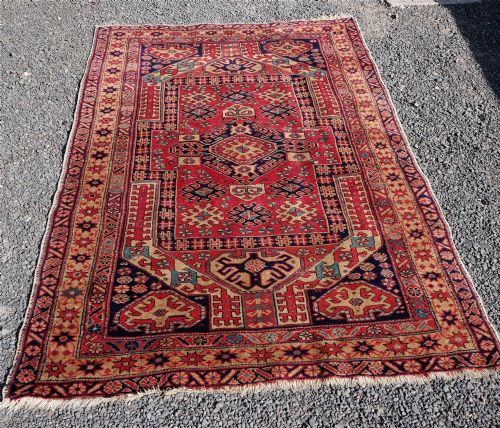
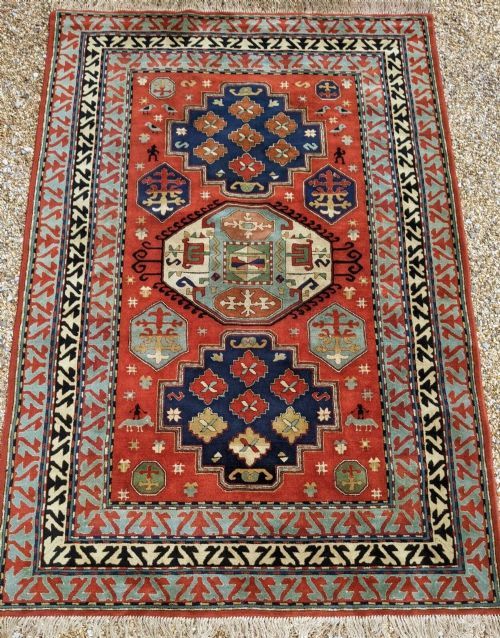
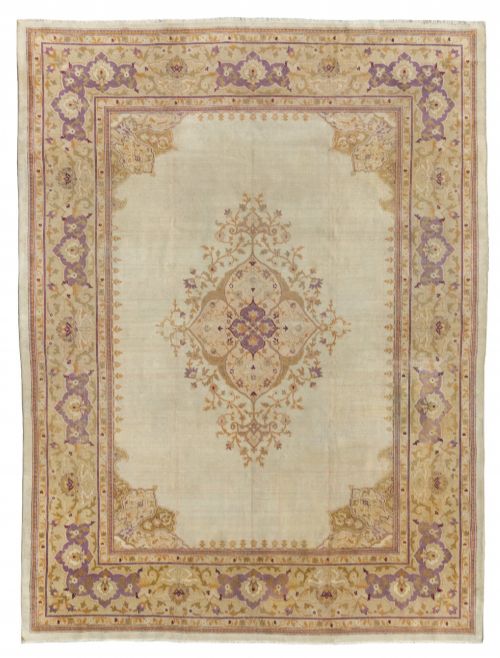
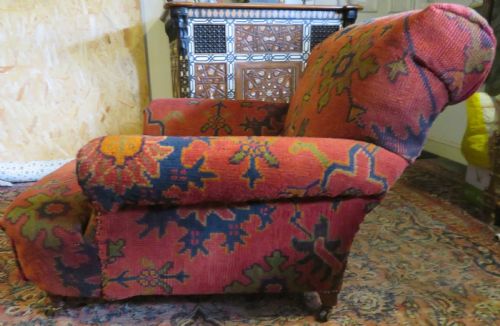
An edwardian oriental carpet brings together traditional Persian, Turkish, and Turkmen regional weaving traditions traded or made during the early decades of the twentieth century. The selections available on this page include room-sized carpets, runners, and smaller village rugs originating from workshops and tribal communities.
Buyers will encounter workshop pieces from major Persian centres like Tabriz, Mahal, and Heriz alongside tribal torbas and runner rugs woven by Turkmen, Baluch, and Kurdish groups. These textiles served both grand country house interiors and eclectic domestic spaces with distinct regional medallion, floral, and geometric layouts.
Materials and construction methods
These floor coverings are primarily constructed using wool pile knotted onto cotton or wool foundations, occasionally incorporating silk for finer city pieces. Natural dyes dominate the palette, yielding soft pastels, ivory grounds, and deep red and blue tones that mellow gracefully over decades of use.
Weavers utilised upright looms and hand-tied knots specific to their villages or nomadic groups, creating varying pile densities from coarse tribal torba faces to very fine urban workshop weaves. Edges are typically wool-selvedged and ends secured with flatwoven kilim finishes.
Listings span production dates from the 1870s through the 1930s, featuring wool, cotton, silk, natural dyes, wood, and brass.
Factors that separate examples
Quality in these textiles rests upon the density of the knotting, the precision of the design execution, and the depth of the palette derived from natural dyes. Finer urban workshop carpets display intricate curvilinear floral motifs, whereas tribal examples rely on bold geometric structures and saturated wool.
The integrity of the foundation and the preservation of the original pile height dictate the structural merit of each piece. Surviving examples retaining their full dimensions and vibrant natural colour command greater interest than heavily worn or structurally altered specimens.
Howard And Sons·Maples
The Edwardian Oriental Carpet Glossary
- Torba
- A small bag face or storage sack produced by Turkmen tribes, often displaying gul motifs and woven for domestic utility.
- Gul
- An octagonal medallion motif repeated across Turkmen and tribal carpets, functioning as a tribal emblem or clan marker.
- Boteh
- A stylised almond or pear-shaped motif of Persian origin, frequently repeated across village and workshop rug fields.
- Kilim
- A flatwoven textile produced without a pile, often utilised as an end finish or structured as a standalone rug.
- Mihrab
- An architectural arch design representing a prayer niche, central to the composition of specific devotional rugs.
Edwardian Oriental Carpet: Frequently Asked Questions
How do I identify a tribal rug?
Tribal rugs display geometric patterns, bold primary colours, and rectilinear designs passed down through nomadic weaving communities rather than urban workshops.
These pieces often feature motifs like guls or repeating field symbols tied with heavier wool on wool or cotton foundations.
Where were these carpets woven?
The pieces originate across Persia, Turkey, Central Asia, and the Caucasus, reflecting distinct regional styles and village traditions.
Workshop production centered in towns like Tabriz, Ushak, and Heriz, while nomadic and village pieces came from Kurdish, Baluch, and Turkmen groups.
How should I care for wool rugs?
Protect antique wool floor coverings by using a breathable underlay to prevent sliding and reduce friction against the floorboards.
Vacuum gently with a brushless suction attachment and keep the textile away from direct, prolonged sunlight to preserve natural dye integrity.
What is a prayer rug?
A prayer rug incorporates a mihrab design element representing a niche, traditionally used for directional Islamic prayer.
These portable formats were woven in regions such as Turkey and Baluchistan with specific directional motifs oriented toward Mecca.