
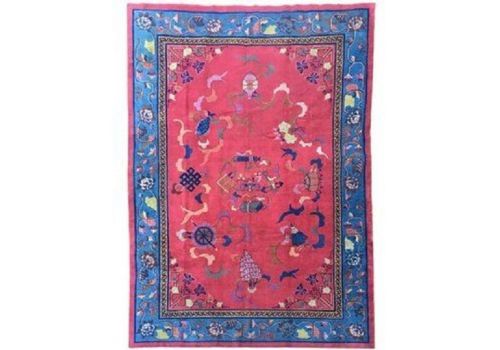
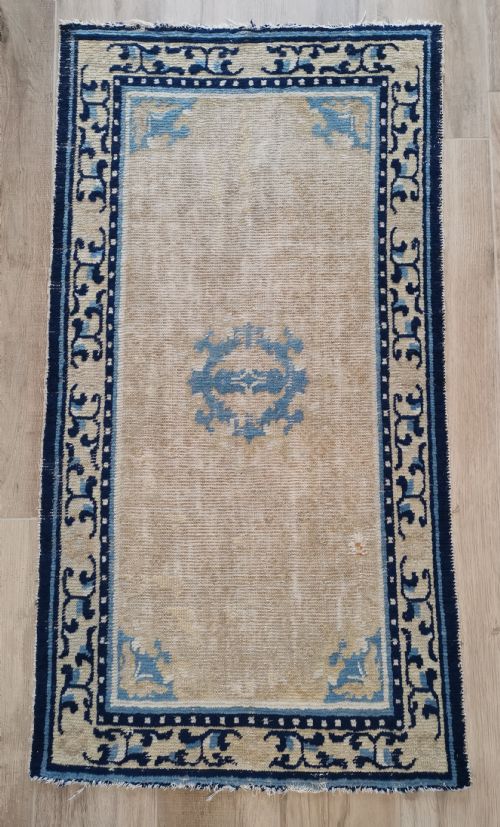
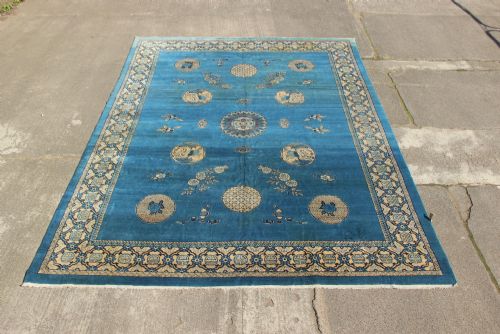


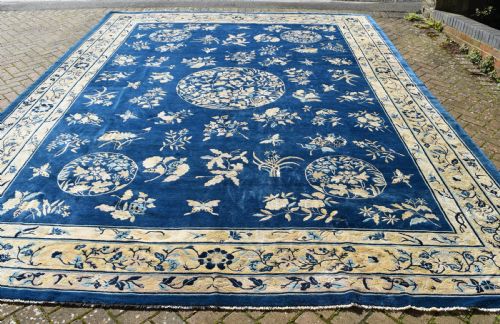


Chinese Wool Carpet
A chinese wool carpet brings heavy pile and distinct regional patterns to a room, offering both durability and historic floor cover design.
Chinese Wool Carpet
A chinese wool carpet encompasses floor coverings originating from various periods including the nineteenth and twentieth centuries, spanning Qing Dynasty traditions through to Art Deco designs. Buyers searching for a chinese wool carpet encounter formats ranging from small seating mats and pillar rugs to large roomsize floor coverings.
Most examples found in the current selection date from the early twentieth century or the mid-nineteenth century. They serve as functional floor textiles or decorative area rugs with substantial wool construction.
What varies in quality
Knot density and wool pile retention determine the structural integrity of a chinese wool carpet. Tighter knots and resilient wool indicate superior workshop execution and better survival against wear.
The clarity of regional design and the preservation of original dimensions differentiate standard examples from exceptional roomsize carpets. Completeness of early borders and historical integrity elevate the standing of individual rugs.
Listings span periods from 1800 to 1920, incorporating Wool and Cotton materials across Qing Dynasty and Art Deco styles.
The Chinese Wool Carpet Glossary
- Ningxia
- A northern region known for producing traditional carpets with characteristic yellow or blue grounds and classical medallion layouts. These pieces often date to the nineteenth century.
- Khotan
- An origin associated with East Turkestan weaving traditions, featuring pomegranate motifs and bold central medallions. These rugs display distinct Central Asian influences.
- Peking
- A city style associated with roomsize carpets from the early twentieth century, often utilising open fields and subtle floral sprays. They represent urban Qing and transitional aesthetics.
- Pillar rug
- A narrow format designed to wrap around architectural columns in traditional buildings. These vertical textiles feature specific pictorial or symbolic layouts.
Chinese Wool Carpet: Frequently Asked Questions
How do I clean a chinese wool carpet?
Vacuum gently without a rotating brush to protect the vintage pile. Professional textile conservation cleaning is recommended for antique wool and cotton foundations.
Avoid chemical spot treatments that can strip natural dyes from the wool fibres.
Where were these carpets made?
Production centres include northern regions such as Ningxia, Peking, Pao Tao, and Khotan in East Turkestan. Each area developed distinct palettes and motif vocabularies.
City workshops and regional studios supplied both domestic use and export markets.
Are these carpets suitable for heavy foot traffic?
Thick wool pile on sturdy cotton foundations makes these carpets durable for living spaces. Placing a quality underlay beneath the rug reduces friction and extends pile life.
Consider room placement carefully to balance historical preservation with daily use.
How do I date a chinese wool carpet?
Dating relies on stylistic shifts from Qing Dynasty symbols to Art Deco geometry, alongside structural indicators like wool texture and knot count. Nineteenth-century examples often show distinct palette oxidation compared to 1920s pieces.
Comparing border motifs and regional weaving traits helps narrow the period of origin.