




Blue Chinese Rug
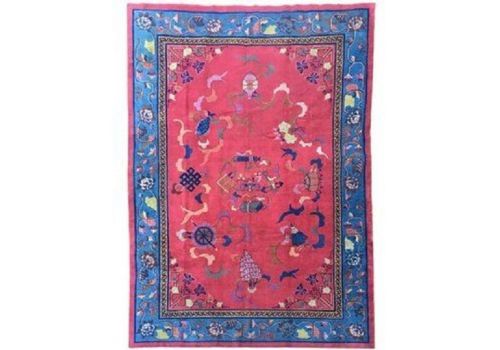
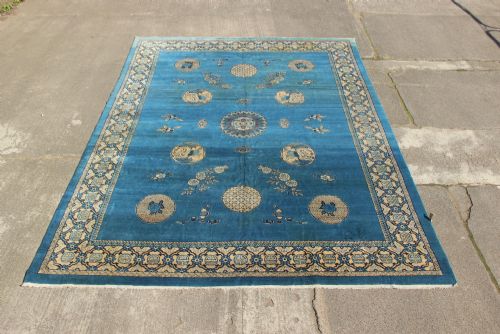
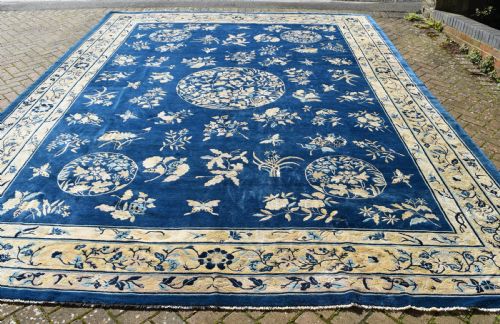
A blue chinese rug brings deep indigo and sapphire tones to a room, offering heavy wool pile and traditional motifs from Qing dynasty work to Art Deco design.
Blue Chinese Rug
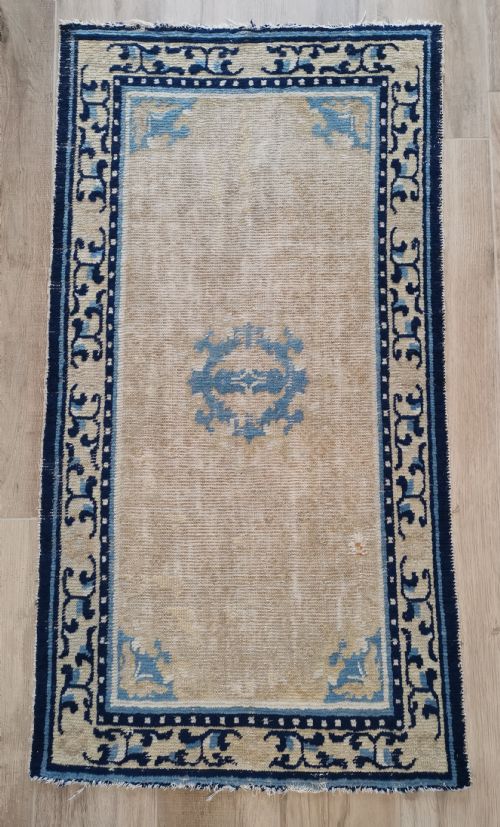
A blue chinese rug covers a range of floor coverings rooted in historic workshops and regional centres across China and East Turkestan. Buyers seeking this phrase encounter formats spanning small seating mats and pillar rugs up to generous roomsize carpets.
The selections on this page bridge distinct eras, featuring mid-nineteenth century Ningxia and Khotan examples alongside later twentieth century productions. Buyers frequently meet pieces from the Qing dynasty tradition as well as bold geometric compositions from the Art Deco period.
Regional weaving traditions shape the format and field design of each blue chinese rug. Northern Chinese formats include specialised pillar pieces and square mats, while larger roomsize carpets provide substantial floor coverage for primary living spaces.
Materials and construction
Traditional weavers constructed these textiles using durable wool pile anchored to sturdy cotton foundations. This pairing provided the structural stability required for dense knotting and long-term floor use.
Natural dyeing methods yielded the deep blue tones found across these examples, working in tandem with hand-spun wool fibres. Artisans knotted the pile by hand to create resilient surfaces that aged gracefully through generations of domestic wear.
The listings feature two primary materials, combining durable wool pile with sturdy cotton foundations across all available rugs.
Assessing quality
Quality in these carpets rests upon the density of the wool pile and the precision of the knotting. Finer examples display crisp delineation in traditional motifs and maintain structural integrity across the cotton foundation.
The visual impact of the blue dye lot and the preservation of the original pile depth separate superior weaving from standard production. Intact edges and balanced proportions further distinguish the finest examples from heavily worn fragments.
The Blue Chinese Rug Glossary
- Ningxia rug
- A textile woven in the Ningxia region of northern China, known for traditional seating mats and carpets featuring classic floral or geometric motifs.
- Khotan rug
- A carpet originating from East Turkestan, historically associated with distinct central Asian and Chinese design influences.
- Pillar rug
- A narrow textile specifically designed to wrap around architectural columns in traditional Chinese interiors.
- Qing dynasty
- The imperial era spanning from sixteen forty-four to nineteen twelve, which produced foundational styles for classical Chinese carpet weaving.
- Art Deco
- A twentieth century design movement that introduced bold geometric patterns and simplified motifs to Chinese rug production.
Blue Chinese Rug: Frequently Asked Questions
Where were these rugs placed?
Historic Chinese carpets served functional and decorative roles in formal rooms, temples, and domestic interiors. Specialised formats like pillar rugs wrapped around structural columns, while mats provided comfortable seating surfaces.
Larger roomsize carpets anchored primary living areas, adding warmth and colour to wooden floors. Their substantial wool construction made them suitable for high-traffic zones within traditional homes.
How do I care for wool pile?
Preserving historic wool pile requires regular, gentle vacuuming without rotating brush heads to prevent fibre damage. Professional cleaning by specialists familiar with antique textiles ensures proper handling of natural dyes.
Keeping these carpets out of direct sunlight prevents the indigo and blue tones from fading over time. Using appropriate underlays helps protect the cotton foundation from friction and wear.
What defines Art Deco style?
Art Deco Chinese carpets from the early twentieth century feature streamlined geometry and stylized botanical elements. These pieces departed from strict imperial Qing designs by embracing modernist symmetry and open fields.
The palette often paired striking blue fields with contrasting borders, reflecting international design trends of the period. Weavers adapted traditional techniques to execute these contemporary aesthetic demands.
How do I distinguish regional types?
Regional styles reveal themselves through format, border motifs, and structural proportions. Northern Chinese workshops often produced specific shapes like square mats and architectural pillar rugs.
Pieces originating further west, such as those from Khotan or East Turkestan, carry distinct regional palettes and medallion layouts. Examining the density of the wool pile and the weave helps identify the likely place of origin.