




Antique Chinese Carpet
An antique chinese carpet brings heavy wool pile and distinct regional motifs into a room, offering deep history underfoot.
Antique Chinese Carpet
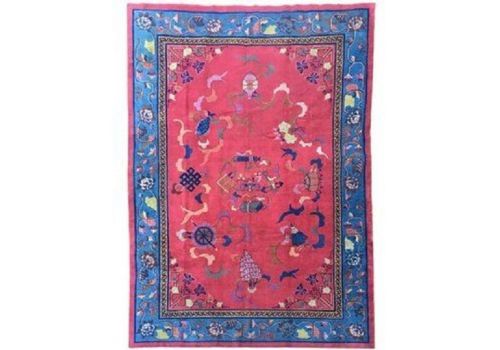
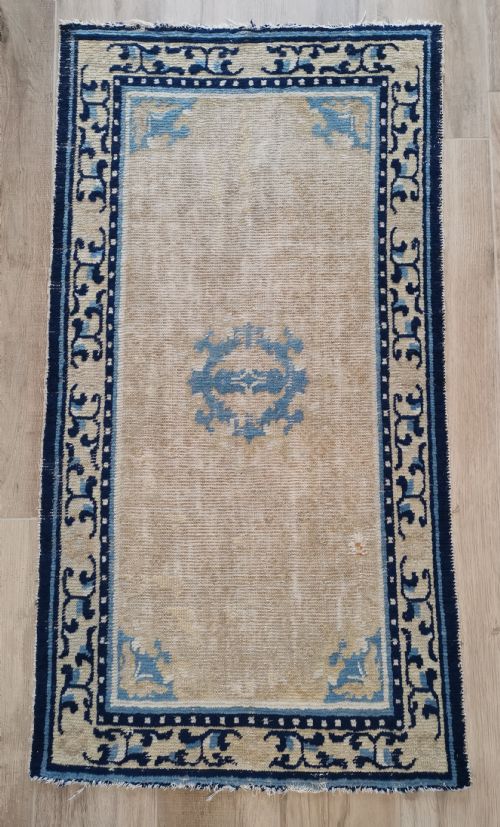
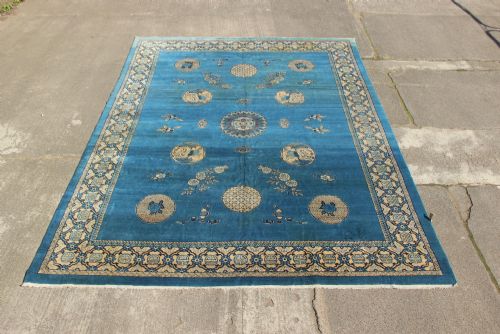
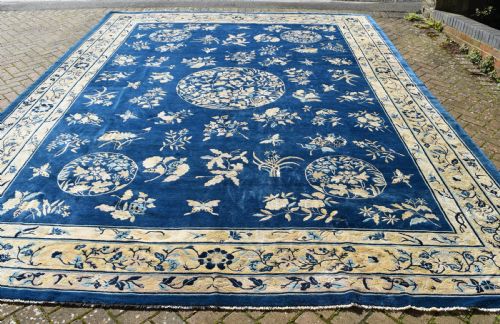
An antique chinese carpet spans several distinct regional styles, ranging from early nineteenth-century Khotan fragments and Ningxia seating mats to later Peking roomsize floor coverings and Chinese Art Deco pieces. You will most frequently encounter the larger roomsize Art Deco formats and Ningxia rugs on this page.
The materials used across these pieces consist primarily of wool and cotton, deployed in formats varying from small pillar rugs and mats to substantial roomsize carpets dating from the eighteen-hundreds up to nineteen-twenty.
Materials and construction
The construction relies fundamentally on wool pile worked upon a cotton foundation, yielding durable floor coverings designed for both utility and display.
Weavers utilised traditional techniques suited to the specific regional workshops of China and East Turkestan, incorporating local wool varieties to achieve distinct surface textures.
Listings span periods from eighteen-hundred to nineteen-twenty, featuring wool and cotton materials across Ningxia, Peking, Khotan, and Art Deco styles.
Judging quality and character
Quality resides in the density of the wool pile and the crispness of the regional design, whether depicting traditional dragons or geometric Art Deco fields.
The integrity of the cotton foundation and the retention of original dimensions distinguish superior roomsize carpets and smaller mats alike.
The Antique Chinese Carpet Glossary
- Ningxia rug
- A textile originating from the Ningxia region, known for traditional Chinese motifs and often produced as seating mats or smaller rugs. These pieces display distinct regional colouring and iconography.
- Khotan rug
- A carpet hailing from East Turkestan, blending Chinese and Central Asian design elements. Such pieces frequently incorporate medallions and distinctive border patterns.
- Peking carpet
- A floor covering produced in the region surrounding Beijing, often featuring prominent dragon designs or expansive monochromatic fields. These roomsize examples anchor formal interiors.
- Art Deco carpet
- A later twentieth-century textile reflecting modern aesthetic influences while retaining traditional pile-weaving methods. These items typically present stylised floral or geometric compositions.
- Pillar rug
- A narrow vertical textile designed to wrap around architectural columns in traditional buildings. They employ specific proportions suited to their original placement.
Antique Chinese Carpet: Frequently Asked Questions
How do I clean an antique carpet?
Gentle surface brushing and professional specialist cleaning are essential for maintaining wool pile without causing water damage to the cotton foundation.
Avoid harsh domestic detergents or immersion washing, as older dyes can bleed or weaken over time.
Where should I place a roomsize carpet?
Roomsize carpets suit formal reception spaces or low-traffic sitting areas where the wool pile receives minimal abrasion from heavy furniture legs.
Using a breathable underlay helps secure the textile and prevents slipping on smooth flooring.
What is the difference between Peking and Ningxia pieces?
Peking carpets often feature expansive fields with dragon motifs suited to larger room formats, whereas Ningxia examples frequently appear as smaller mats or specific regional formats.
Both utilise wool and cotton materials but serve different spatial functions within historic interiors.
How do I identify an Art Deco Chinese carpet?
Art Deco pieces display stylised twentieth-century motifs, often with simplified floral or geometric layouts distinct from traditional Qing dynasty symbolism.
They commonly appear in larger roomsize dimensions tailored to western domestic spaces of the period.