




Chinese Wool Rug
A chinese wool rug brings a distinct grounding texture to a room, shifting gracefully between nineteenth-century Qing traditions and twentieth-century geometric forms.
Chinese Wool Rug
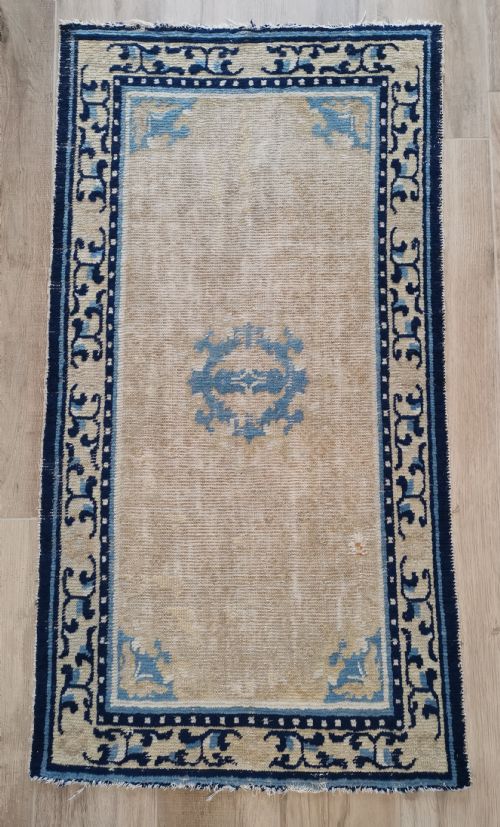
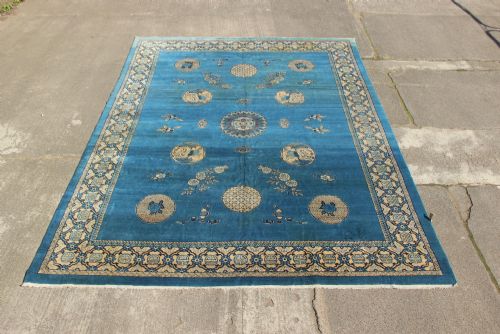
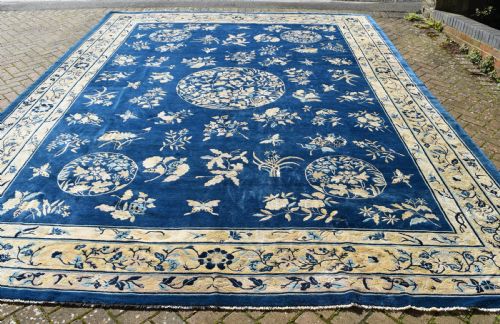
When you search for a chinese wool rug, you encounter floor coverings spanning from the early nineteenth century through the Art Deco period. The selection includes large carpets, smaller area rugs, pillar rugs, and seating mats.
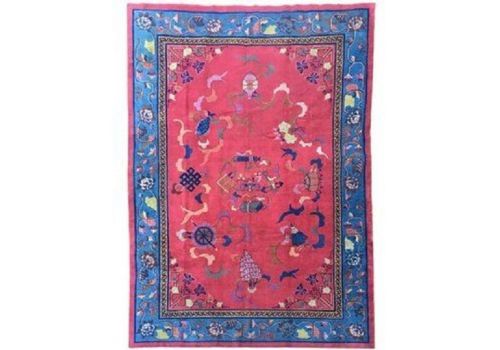
The most frequent examples on this page date from the 1920s, often showcasing either traditional regional motifs or striking Chinese Art Deco designs. Pieces from the mid to late nineteenth century, including Ningxia and Khotan origins, also appear regularly.
Forms range from intimate square mats designed for seating to room-size carpets intended for grander spaces. Northern Chinese and East Turkestan traditions provide the primary geographical foundations for these textiles.
Materials and construction
The fundamental materials recorded across these listings are wool and cotton. Wool provides the plush pile for the surface of each rug, while cotton typically serves as the robust foundation structure.
Weavers knotted the wool pile by hand onto sturdy cotton warps and wefts to create durable floor coverings. This technique allows for dense pile retention and structural integrity across centuries of use.
Listings span from 1800 to 1920, predominantly featuring wool and cotton construction across Qing Dynasty and Art Deco styles.
Evaluating quality and execution
The distinction between standard examples and finer pieces lies in the density of the wool knotting and the precision of the woven design. Tightly packed piles preserve intricate patterns with sharper definition over decades of wear.
Age and regional origin also influence the character of a piece, with well-preserved nineteenth-century examples demonstrating notable longevity. The integrity of the cotton foundation and the evenness of the wool pile determine overall preservation.
The Chinese Wool Rug Glossary
- Ningxia
- A northern region celebrated for distinctive classical rug production. Pieces originating here often display restrained palettes and traditional symbols.
- Khotan
- An East Turkestan origin known for carpets featuring bold central medallions and pomegranate or vase motifs. These rugs frequently blend Chinese and Central Asian design vocabularies.
- Art Deco
- A twentieth-century design style characterised by stylised geometric forms and simplified motifs. In these carpets, traditional imagery meets modern aesthetic sensibilities.
- Pillar rug
- A specialised narrow format designed to wrap around architectural columns in traditional settings. They present elongated vertical compositions tailored to specific structural uses.
Chinese Wool Rug: Frequently Asked Questions
Where were these rugs made?
These carpets originate from various weaving centres across China and East Turkestan, including regional hubs such as Ningxia, Peking, and Khotan.
Production spans different eras, reflecting both Qing Dynasty traditions and later twentieth-century stylistic shifts.
How do I care for antique wool rugs?
Gentle vacuuming without a rotating brush helps maintain the wool pile without straining the cotton foundation. Professional cleaning tailored to antique textiles preserves the natural lanolin in the wool.
Placing rugs away from direct, harsh sunlight prevents fading and keeps the dyed wool vibrant over time.
What is a pillar rug?
A pillar rug is a narrow, elongated carpet specifically woven to wrap around interior structural columns in traditional buildings. Their proportions differ significantly from standard rectangular floor carpets.
These pieces offer a glimpse into specific architectural traditions of northern China.
How do I distinguish Art Deco pieces?
Chinese Art Deco carpets from the 1920s typically feature stylised geometric patterns, open negative space, and asymmetrical floral arrangements. They diverge from heavier Qing Dynasty iconography by embracing cleaner lines.
The palette in these twentieth-century works often employs bold contrasts or soft pastel tones.