




Blue Medallion Area Rug
These hand-knotted floor coverings bring central decorative focus to a room through traditional central motifs.
Blue Medallion Area Rug
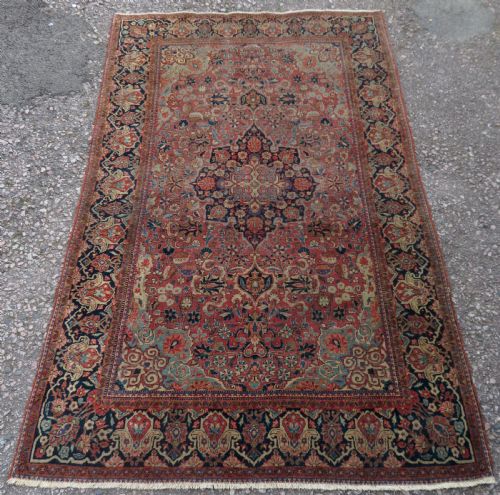
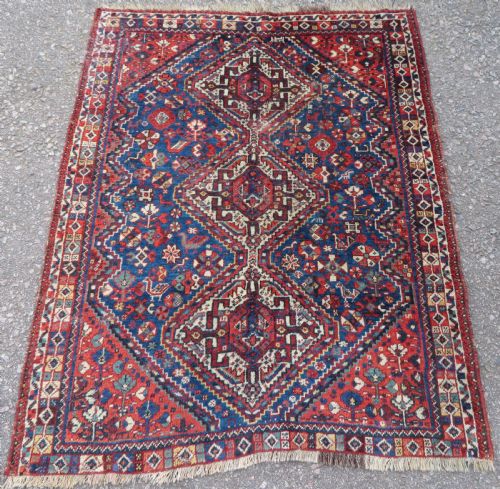
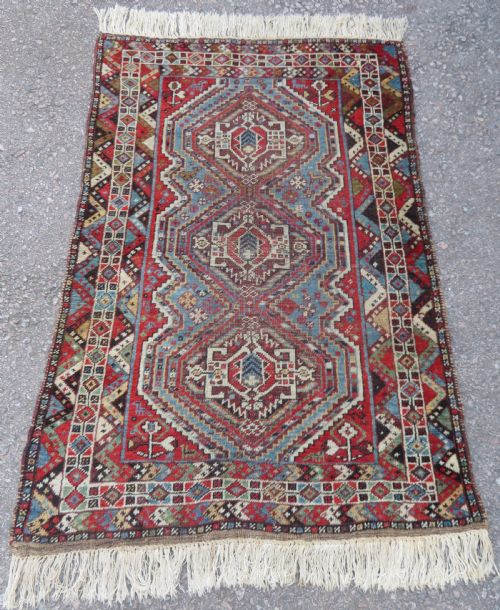
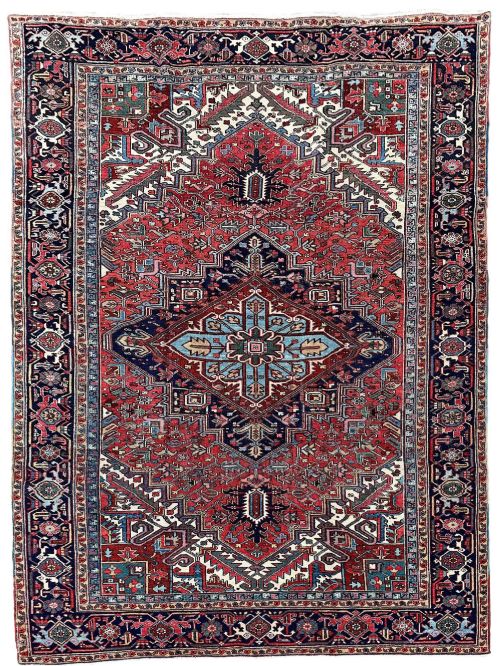
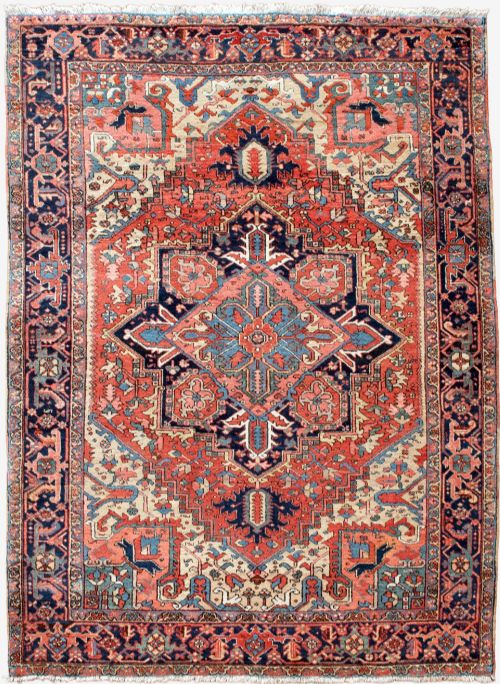
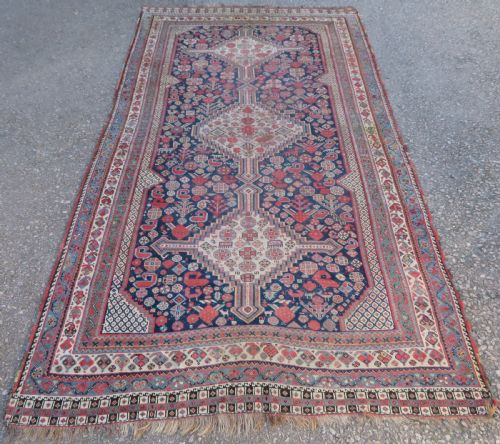
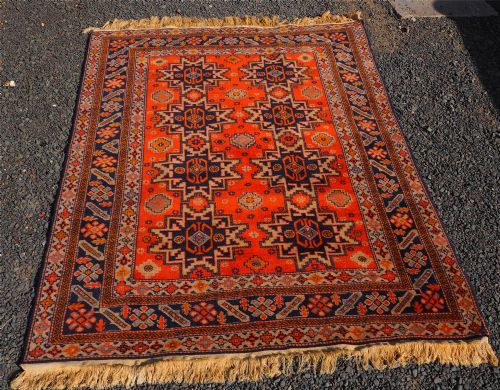
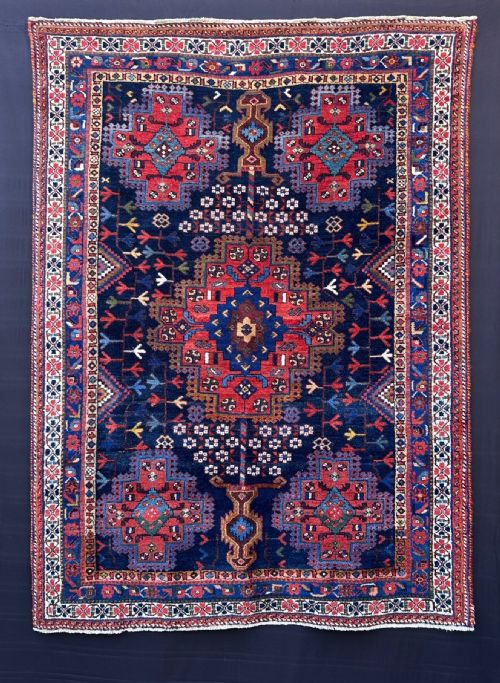
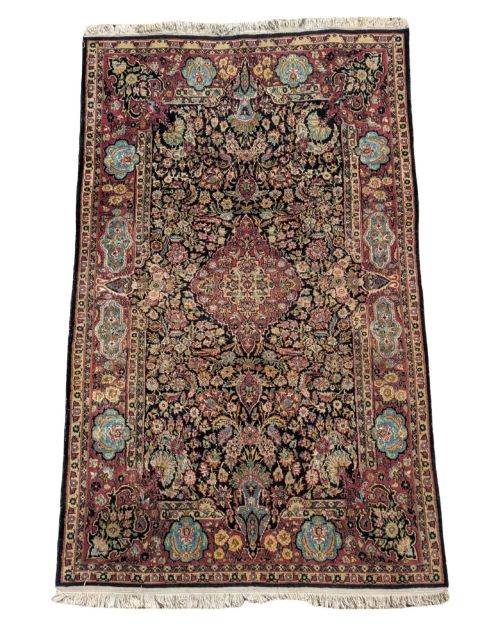
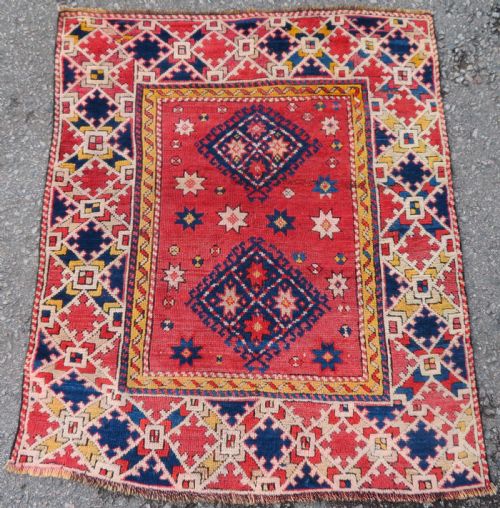
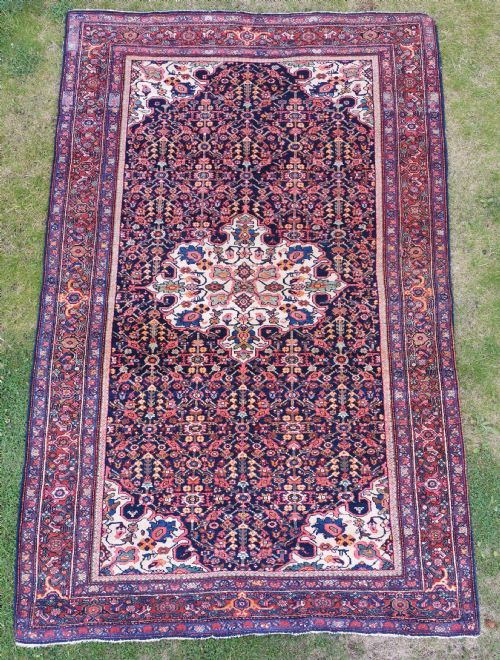
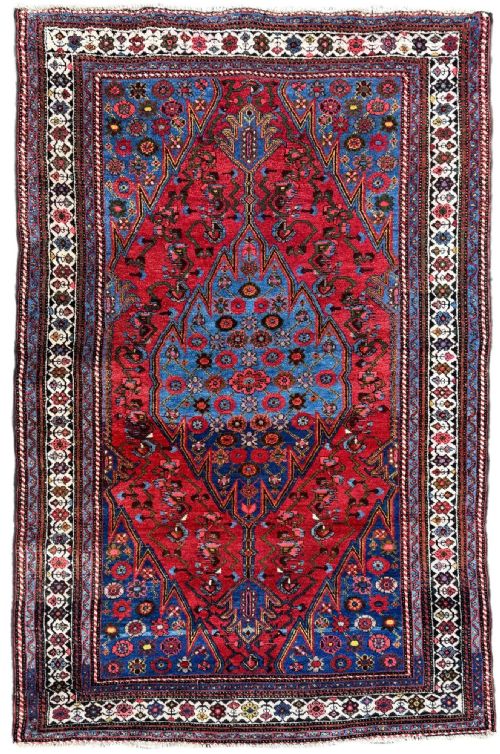
A blue medallion area rug brings together centuries of weaving traditions, predominantly from Persian and Caucasian workshops and tribal groups, spanning from the nineteenth century into the mid-twentieth century. Buyers searching this phrase encounter formats ranging from compact hearth-sized mats to expansive carpets, all anchored by a central focal design element.
The aesthetic leans heavily towards traditional styles such as Heriz, Bakhtiar, Kazak, and Khamseh, capturing the distinctive palette and geometric or floral iconography of these regions. Pieces appearing on this page reflect origins across specific locales like Jozan, Afshar, and Karadja, offering varied interpretations of central medallion compositions.
Materials and construction
These textiles rely primarily on wool for the pile, chosen for resilience and warmth, while cotton frequently serves as the foundation warp and weft for stability. Selected examples incorporate silk highlights to accentuate specific design details within the weave.
Artisans executed these works using hand-knotted techniques, tying individual knots onto the foundation threads by hand. This methodical process allowed weavers to build complex geometric and curvilinear medallion layouts using natural and early synthetic dyes.
Listings span multiple decades from the 1880s through the 1960s, utilising wool, cotton, and silk materials across Persian and Caucasian styles.
Distinctions in quality
The fineness of the knot count per square unit dictates much of the detail and crispness achievable in the central medallion and surrounding field. Higher knot densities permit sharper geometric lines and more intricate floral curves.
The choice of wool and the depth of saturation in the dyes determine the visual richness and longevity of the pile under foot traffic. Uniformity in the hand-spun wool and skillful execution of the foundational weave separate standard output from exceptionally fine examples.
Haji Jalili
The Blue Medallion Area Rug Glossary
- Medallion
- The central ornamental motif dominating the field of the rug. It serves as the primary visual anchor for the entire composition.
- Warp
- The vertical foundation threads stretched tightly on the loom before weaving begins. The pile knots are tied directly around these parallel strands.
- Weft
- The horizontal threads passed alternately over and under the warp threads after rows of knots. This locks the knots securely into place.
- Pile
- The dense surface layer of upright wool, cotton, or silk ends forming the textured face of the carpet. Its thickness and material determine the tactile feel.
- Hand-knotted
- A construction method where individual strands are tied by hand onto the foundation warp. This distinguishes authentic traditional pieces from machine-made textiles.
Blue Medallion Area Rug: Frequently Asked Questions
How do I place an area rug?
Position the piece to anchor your furniture arrangement, ensuring the central motif remains visible rather than entirely concealed beneath a table.
Allow sufficient exposed flooring around the perimeter of the room to frame the textile correctly.
What is a tribal rug?
Tribal rugs are woven by nomadic or village communities rather than urban workshops, utilising memory patterns passed down through generations.
These pieces often display bolder geometry and expressive, less symmetrical interpretations of traditional motifs.
How do I date an antique rug?
Dating relies on examining the dye palette, wool consistency, structural materials, and regional weaving characteristics recorded in the piece.
19th-century and early 20th-century examples display specific chemical and natural dye shifts alongside distinct structural wear patterns.
Are these carpets suitable for daily use?
Traditional hand-knotted wool textiles possess inherent durability designed to withstand centuries of domestic foot traffic.
Appropriate underlays protect the foundation fibres and prevent slipping on smooth flooring.