


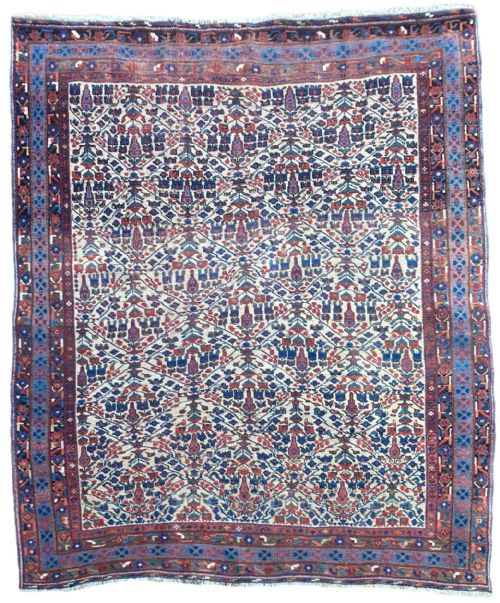


Cream and Blue Rug
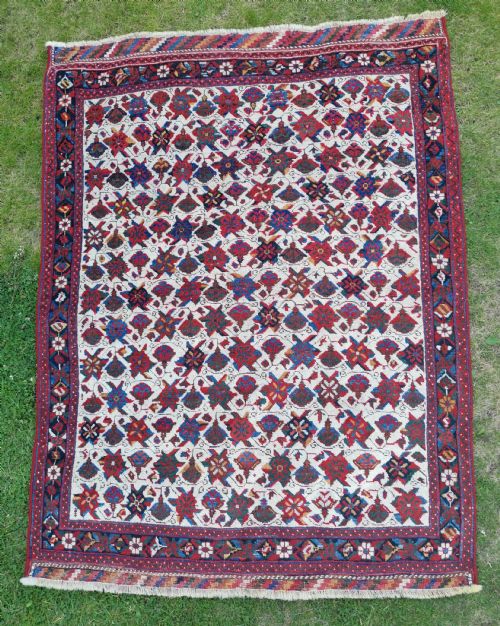
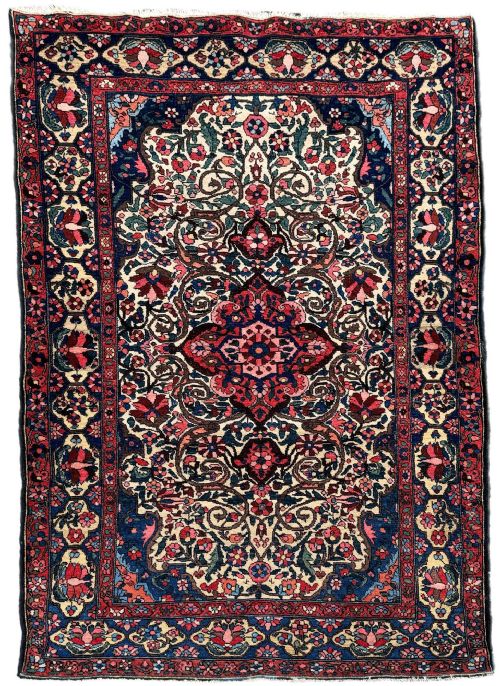
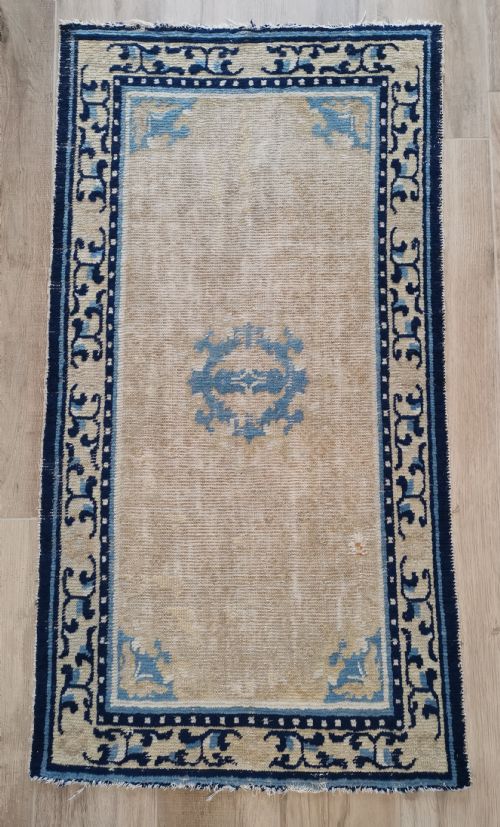
These woven floor coverings bring together pale backgrounds and indigo or azure motifs across various Persian and Turkish traditions.
Cream and Blue Rug
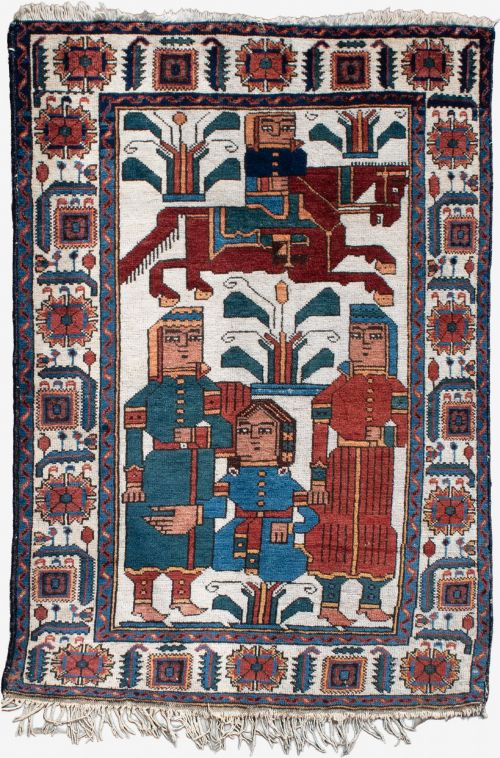
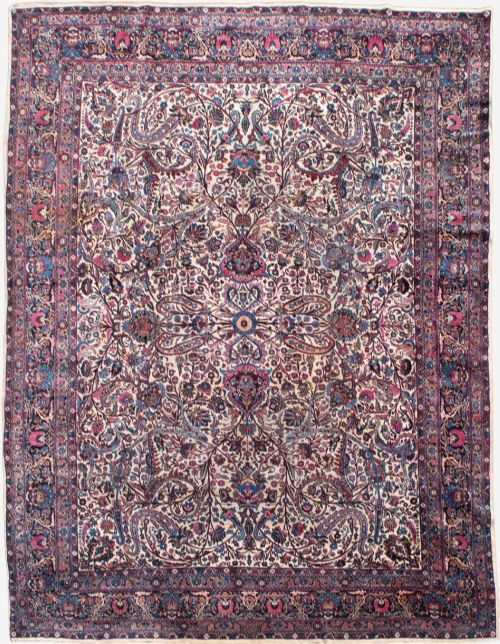
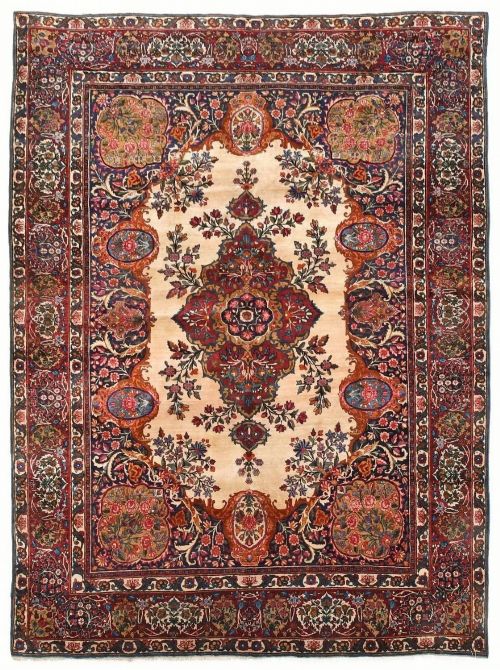
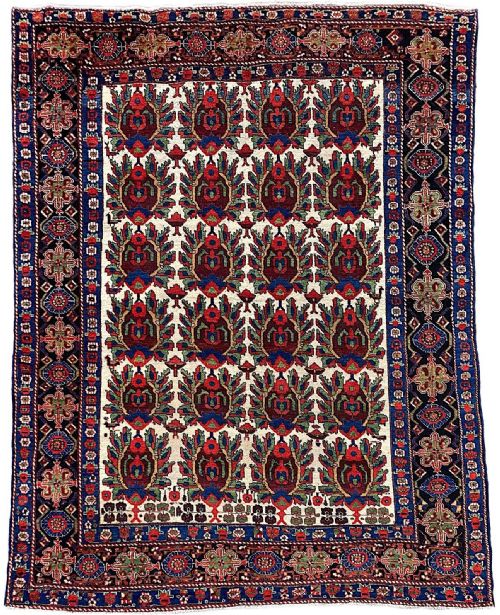
A cream and blue rug unites pale ivory or cream fields with contrasting indigo, cobalt, or sky-blue patterns, drawing from traditions spanning the nineteenth and early twentieth centuries. These floor coverings emerge predominantly from Persian weaving centres like Kirman, Tabriz, and Heriz, alongside Turkish and Chinese workshops.
The format ranges from small tribal scatter sizes and prayer rugs to large room-sized carpets and narrow runners. Buyers encounter village productions alongside formal city pieces, reflecting distinct regional designs on pale grounds.
Materials and technique
Weavers construct these textiles predominantly from wool, occasionally incorporating cotton foundations, goat hair, or silk details. Hand-spun wool takes natural dyes effectively, producing the deep blues and soft ivories seen across the pieces.
Nomadic and village pieces employ pile knots on wool or cotton warps, whilst flatwoven kilims and needlepoints utilise alternative structural techniques without knotted piles.
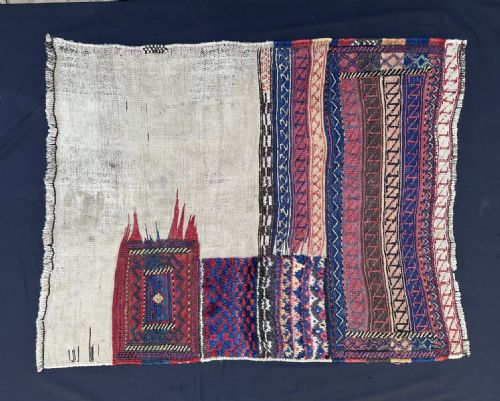
Several nomadic wheat sacks made unexpected journeys from village looms to modern floors.
Distinctions in quality
The fineness of the knot density and the crispness of the drawing separate standard village works from master city productions. Tighter knots allow intricate curvilinear patterns to hold their definition over decades of use.
The depth and consistency of natural dye saturation dictate the visual richness of the surface. Uniformity in wool preparation and spinning yields a stable pile that wears evenly across the field.
Mohtasham Kashan
The Cream and Blue Rug Glossary
- Pile
- The vertical tufts of wool, silk, or goat hair that form the soft surface of a rug. This upper layer absorbs foot traffic and displays the woven design.
- Warp
- The stationary longitudinal threads stretched tightly on the loom before weaving begins. These parallel strings carry the structural load of the entire carpet.
- Weft
- The horizontal threads passed alternately over and under warp strings to lock the knots in place. Packing the weft tightly secures the pile rows.
- Natural Dyes
- Colourants extracted from plants, insects, and minerals rather than synthetic compounds. These substances yield complex tones that mature gracefully over time.
Cream and Blue Rug: Frequently Asked Questions
How do I clean a wool rug?
Regular gentle vacuuming without a beater bar removes loose grit from the pile before it settles into the foundation. Professional washing by a specialist who understands natural dyes prevents bleeding and fibre degradation.
Avoid harsh household detergents or excessive water immersion, which can damage the wool lanolin and distort the foundation structure. Spot cleaning requires blotting with cold water rather than rubbing.
Where were these carpets woven?
Production centres span western, central, and northern Persia, including regions such as the Chahar Mahal valley, Tabriz, and Kirman. Other pieces originate from Turkish weaving communities and Chinese workshops.
Each region utilises distinct knotting techniques, material combinations, and characteristic motifs that identify its geographical origin.
Are these rugs suitable for high traffic?
Durable wool pile combined with tight knotting allows many traditional room-sized carpets and runners to handle everyday hallway or living room use. Placing a quality underlay beneath the textile prevents slipping and cushions the foundation against hard floors.
Lighter ivory cream grounds show dirt more readily than darker fields, requiring more frequent attentive maintenance in busy communal spaces.
How are different tribal designs identified?
Tribal pieces like those from Bakhtiari or Afshar groups display geometric medallions, stylized animals, and repeating floral motifs tied to specific weaving communities. City workshops produce more elaborate curvilinear vine scrolls and central medallion layouts.
Structural details such as selvedge finishes and cord binding further distinguish nomadic work from urban workshop output.