


Vintage Chinese Rug
A vintage chinese rug brings distinct Eastern geometry and deep texture into a room, offering both history and tactile warmth.
Vintage Chinese Rug
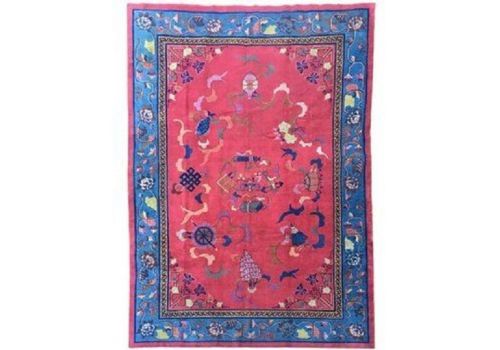
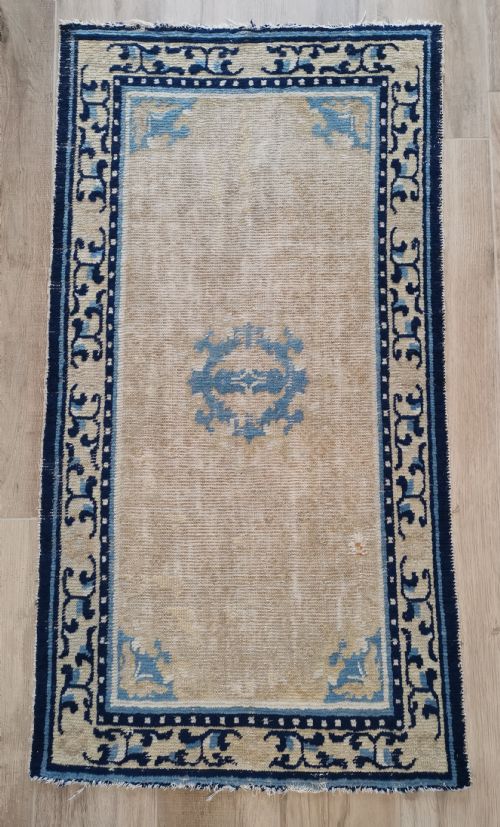
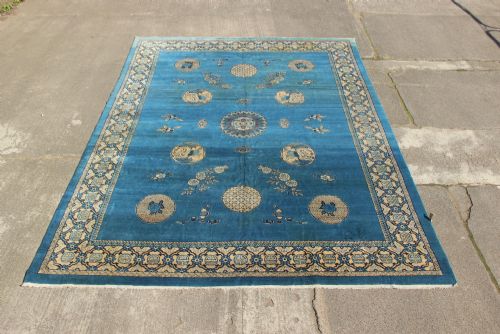
A vintage chinese rug encompasses floor coverings spanning from the Qing Dynasty through the Art Deco period, including pieces attributed to centres such as Ningxia, Peking, and Pao Tao. Buyers encounter formats ranging from small scatter mats to room-sized carpets.
The most prevalent examples on this page date from the early twentieth century, particularly the nineteen-twenties, alongside nineteenth-century weaving traditions. These rugs bridge traditional iconography and modernist design influences.
Regional variations such as Khotan or East Turkestan carpets also appear, broadening the stylistic scope beyond mainland workshops. Each type presents specific motifs rooted in its place of origin.
Materials and construction
Weavers utilised natural fibres including wool, cotton, and silk, employing hand-knotting techniques to build dense, durable piles. Foundation structures typically rely on cotton warps and wefts to secure the pile.
Dye methods relied on natural extracts to achieve rich indigo blues, yellows, and neutral tones that patinate gracefully over decades of use. Pile height and knot density vary according to the regional workshop and period of production.
Current listings span periods from eighteen-fifty to nineteen-thirty, incorporating wool, cotton, and silk materials.
Assessing quality
Quality rests upon knot density, pile preservation, and the crispness of the drawn design across the field and border. Tightly knotted specimens retain their structural integrity and motif definition far better than loosely woven equivalents.
The sophistication of the palette and the fluidity of the drawing separate standard commercial production from masterwork pieces. Original proportions and balanced borders further elevate a piece within its category.
The Vintage Chinese Rug Glossary
- Ningxia rug
- A carpet originating from the Ningxia region, known for sober palettes and classical Buddhist or Taoist symbols.
- Pao Tao carpet
- A floor covering produced in Baotou, typically featuring bold blue and white medallions or floral sprays.
- Khotan carpet
- A textile from East Turkestan characterised by pomegranate motifs and distinctive oriental framing.
- Art Deco carpet
- A twentieth-century style merging traditional Chinese iconography with modernist geometric framing and asymmetric layouts.
Vintage Chinese Rug: Frequently Asked Questions
How do I clean an old carpet?
Professional specialist cleaning is essential for delicate wool and silk piles to prevent dye bleed and fibre damage.
Regular gentle surface vacuuming without a beater bar helps maintain the pile between professional treatments.
Can I place these on heated floors?
Natural fibres generally tolerate moderate underfloor heating provided a breathable underlay is used.
Excessive heat can dry out historical cotton foundations, so monitoring temperature remains important.
What underlay should I use?
A quality natural felt or rubber mesh underlay prevents slipping and cushions the foundation against hard flooring.
This layer reduces friction between the rug back and the floorboards during daily foot traffic.
How do I date a carpet?
Dating relies on stylistic markers, dye analysis, and structural evidence such as warp depression and knot type.
Art Deco pieces display distinct modernist geometry, whereas nineteenth-century Qing examples lean towards strict symmetry.