
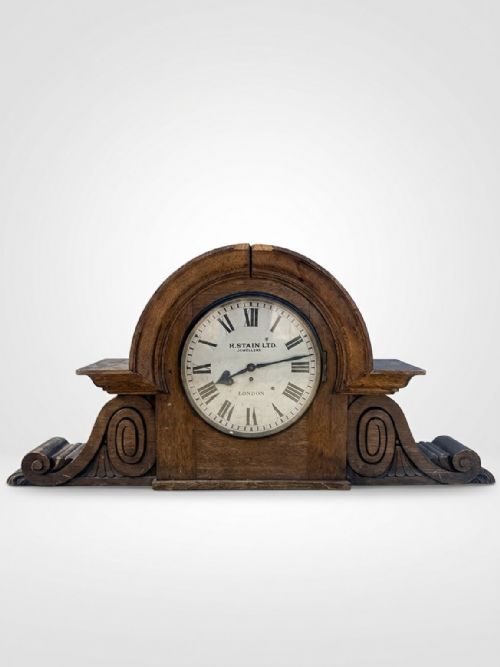
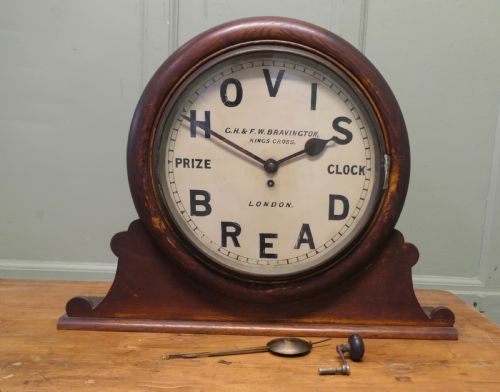


Edwardian Oak Table Clock
An edwardian oak table clock brings warmth and architectural presence to a mantelpiece, offering both reliable timekeeping and robust cabinetwork.

Edwardian Oak Table Clock
When you search for an edwardian oak table clock, you encounter solid and veneered timber cases that span the late nineteenth century through to the nineteen-twenties. These timepieces appear primarily as mantel and bracket clocks, housing movements designed to sit firmly on furniture rather than hang upon a wall.
The pieces on this page emerge from several distinct design movements, ranging from Arts and Crafts hand carving to Art Nouveau inlay and traditional Victorian Gothic Revival forms. You will find compact timepiece clocks alongside large boardroom examples and quarter-striking bracket clocks fitted with glass sides.
Origins stretch across British workshops and continental makers, including German movements and pieces retailed by London names. The timber varies from golden oak to dark carved variants, often accompanied by brass mounts and silvered metal dials.
Materials and construction
Makers utilised solid oak and framed timber alongside brass dials, cast bezels, and bevelled glass panels to protect the mechanical movements. Cases frequently incorporated decorative elements such as copper details, inlaid banding, and hand-carved foliage characteristic of the period.
Internal mechanisms relied on brass gear trains, ranging from simple eight-day striking movements to fusee and Westminster-chime systems. Dials commonly featured silvered metal chapters, enamel cartouches, or etched numerals behind protective glass doors.
Some boardroom clocks are so loud they could wake the dead accountant in the corner.
Assessing quality and craftsmanship
The distinction between standard production items and superior examples lies in the depth of cabinetwork and the complexity of the internal movement. Heavy, solid timber cases with crisp hand-carving or precise inlay sit above simple mass-produced boxes.
Movement sophistication also divides the range, moving from basic timepieces to intricate quarter-striking bracket clocks and four-glass designs that reveal the mechanical gear train from all angles.
G.H. & F.W. Bravington London·Jas Whitelaw of Edinburgh
The Edwardian Oak Table Clock Glossary
- Fusee
- A conical pulley mechanism that ensures even tension on the clock movement as the mainspring unwinds. This device improves timekeeping accuracy across the duration of the wind.
- Bracket clock
- A portable table clock historically designed to sit upon a matching wall bracket. These pieces typically feature substantial mechanical movements and arched or architectural wooden cases.
- Ting-tang
- A two-hammer striking system that sounds two different notes on the quarters or hours. It produces a distinctive chime pattern rather than a standard hourly gong.
- Enamel
- A glassy substance fused to a metal dial face through high-heat firing. This technique creates a durable, bright white surface for painted clock numerals.
- Silvered metal
- A brass or copper dial plate treated with a silver finish and engraved with numbers. This treatment reduces glare and provides a clear contrast against dark timber cases.
Edwardian Oak Table Clock: Frequently Asked Questions
What is a fusee movement?
A fusee is a conical pulley inside the clock that equalises the pull of the mainspring as it runs down. This mechanical addition helps the clock maintain steady timekeeping from a full wind to empty.
You will typically find fusee movements in better quality British bracket and mantel clocks from the nineteenth and early twentieth centuries.
How do I wind my clock?
Most mechanical clocks use a dedicated winding key inserted into small holes on the dial face. Turn the key gently until you feel firm resistance, taking care not to overwind the spring.
Different arbours control the timekeeping and the striking trains, so check which hole corresponds to each function before turning.
Where should I place a heavy clock?
Place your oak clock on a sturdy, level surface such as a mantelpiece, sideboard, or heavy table. A stable foundation ensures the pendulum swings evenly and the escapement ticks in a steady beat.
Avoid locations near direct heat sources or damp exterior walls, as temperature swings can affect the wooden case and metal movement.
How do I identify an Arts and Crafts clock?
Arts and Crafts timepieces emphasise visible hand-craftsmanship, featuring unadorned golden oak, exposed joinery, and hand-carved plant motifs. They reject excessive factory ornamentation in favour of honest structural form.
You may also spot hammered copper hinges or strapwork complementing the timber case.