


Edwardian Oak Secretary Desk
An edwardian oak secretary desk offers a practical writing surface and enclosed storage built with the sturdy timber characteristic of the period.
Edwardian Oak Secretary Desk
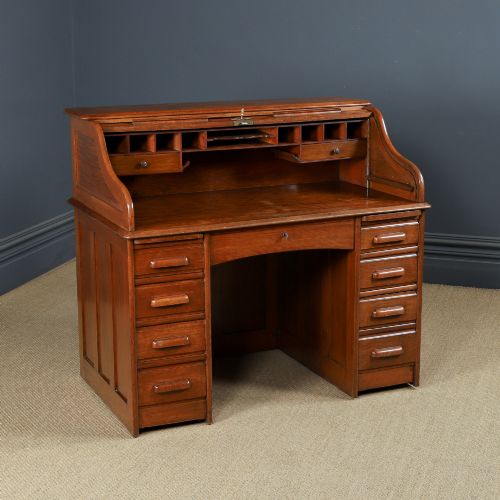
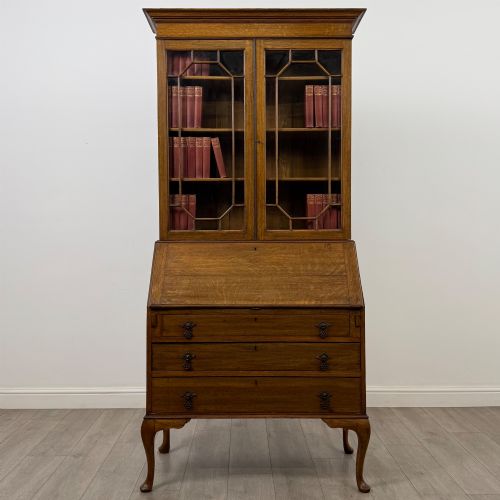
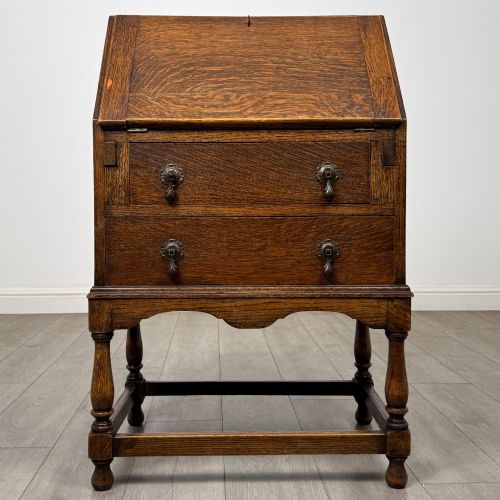
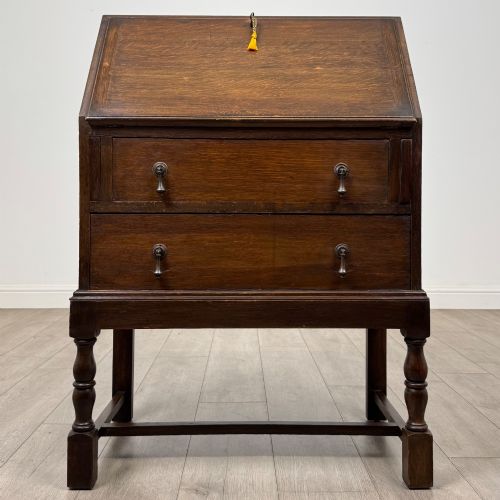
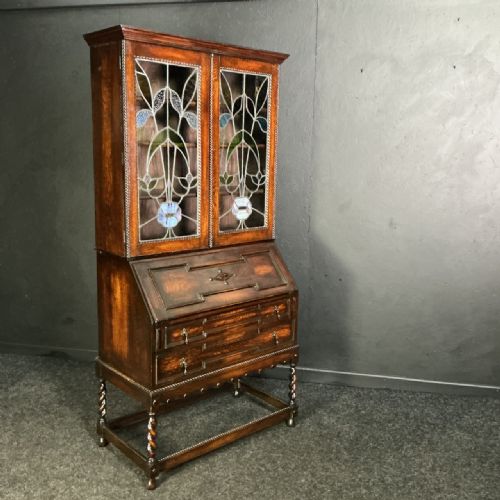
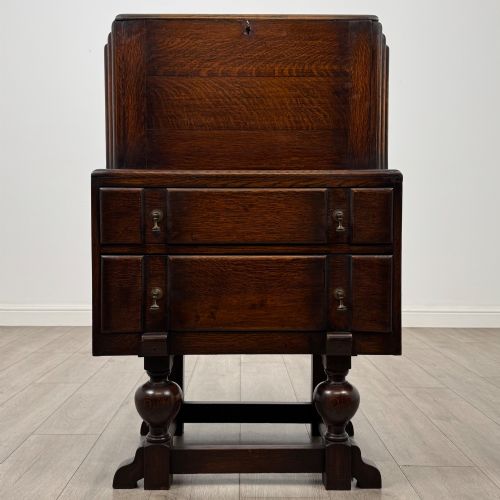
When you search for an edwardian oak secretary desk, you encounter writing furniture spanning bureaux, bureau bookcases, and roll-top desks. The primary form on this page is the Edwardian oak writing bureau, often fitted with a sloping fall-front that opens to reveal internal letter compartments and drawers.
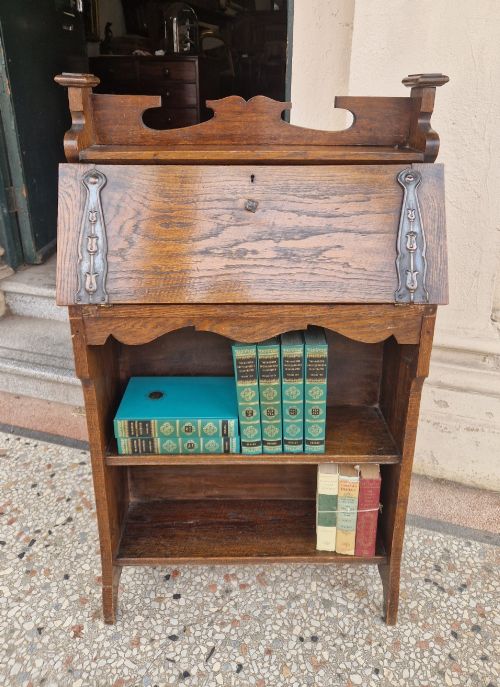
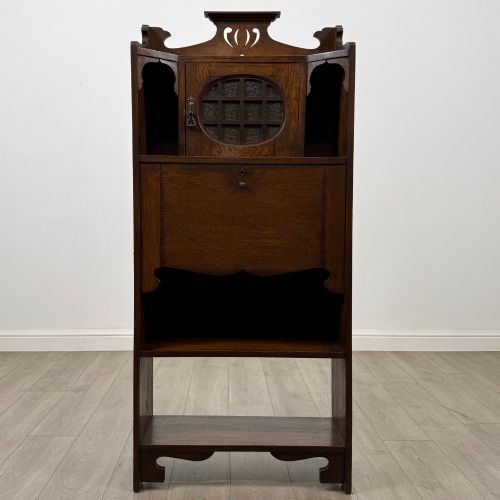
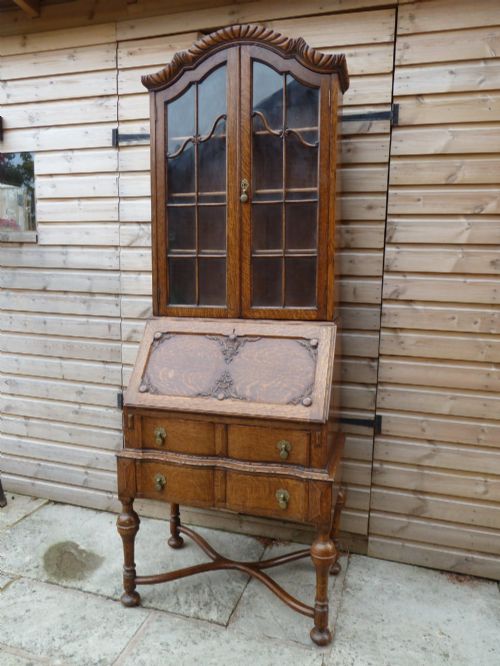
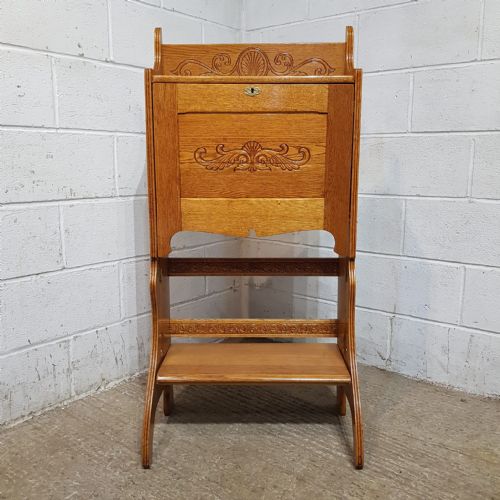
The selection ranges from compact narrow writing bureaux to taller two-part bureau bookcases and display cabinets. Pieces appear in various styles including Arts and Crafts, Jacobean Revival, and Tudor Revival alongside standard Edwardian designs.
Origins trace principally to the Edwardian era, with related examples stretching back to the late Victorian period and forward into the nineteen-twenties and thirties. Golden oak and dark oak finishes predominate across these functional workspace items.
How they were made
Construction relies heavily on solid oak and golden oak timbers, sometimes complemented by satinwood or brass handles. Interior drawers frequently feature oak linings, while glass and lead appear in the doors of bookcase variants.
Cabinetmakers utilised traditional joinery methods to build these desks, incorporating carved ornamentation, drop-front mechanisms, and fitted stationery interiors. Certain pieces combine display shelving with writing surfaces in multi-functional units.
Several desks include moving interiors and hidden compartments designed to keep private correspondence safe from curious household guests.
What varies in quality
Differences in quality stem from the choice of timber and the precision of the cabinetwork. Superior examples display carefully selected grain patterns, robust internal fittings, and well-executed carving rather than mass-produced uniformity.
Harris Lebus·Liberty of London·Liberty and Co·James Shoolbred and Co
The Edwardian Oak Secretary Desk Glossary
- Bureau
- A writing desk featuring a sloping hinged lid that covers fitted pigeonholes and small drawers. This form serves as the central staple of the selection.
- Fall-front
- The hinged sloping panel of a bureau that pulls down to create a horizontal writing surface. It conceals the internal compartments when closed.
- Roll top
- A flexible tambour shutter made of narrow slats of wood that slides in tracks to cover the desk workspace. It provides secure closure without a projecting flap.
- Bureau bookcase
- A dual-purpose piece combining a lower writing bureau with an upper glazed cabinet for books or display. These tall units unite storage and workspace.
- Crossbanding
- A decorative border of veneer laid around the edges of a panel with the grain running at right angles to the centre. It frames the primary wood surface.
Edwardian Oak Secretary Desk: Frequently Asked Questions
How do I identify an Edwardian bureau?
An Edwardian bureau is identified by its characteristic timber choice, predominantly oak in golden or darker tones, and construction traits typical of the period around nineteen hundred. Stylistic touches often include simple Arts and Crafts influences or revival details.
Many examples feature fitted internal stationary compartments and brass hardware. Dating relies on construction methods, timber preparation, and associated hardware styles rather than maker marks alone.
Where were these desks placed in a home?
These desks were typically positioned in studies, drawing rooms, or bedrooms where correspondence and household accounts were managed. Their compact footprint allowed them to fit into smaller domestic spaces than large partners desks.
Bureau bookcases were often placed in libraries or parlours to store reference volumes alongside writing materials. The enclosed fall-front kept papers hidden from view when not in use.
How do I care for an oak writing desk?
Caring for an oak writing desk involves keeping the timber away from direct heat sources and dramatic humidity changes to prevent wood movement. Regular dusting with a soft, dry cloth preserves the finish without chemical buildup.
Leather or wooden writing surfaces benefit from occasional gentle cleaning and conditioning appropriate for antique finishes. Keeping the interior free of clutter ensures the fall-front mechanism operates smoothly.