
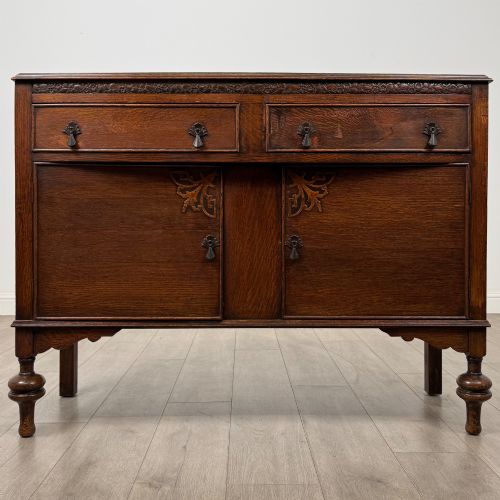
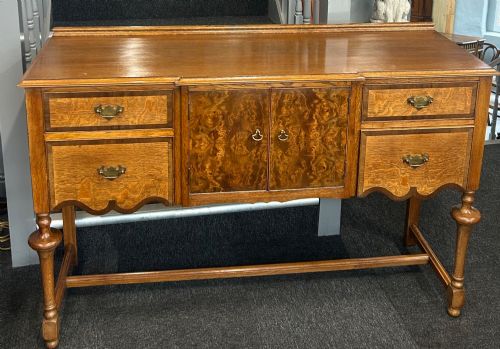
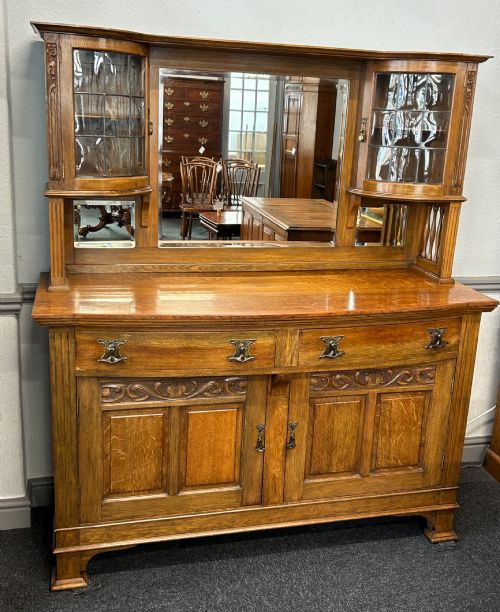


Edwardian Oak Dining Sideboard
An edwardian oak dining sideboard anchors a room with solid presence, offering substantial storage and the rich grain of native timber.
Edwardian Oak Dining Sideboard
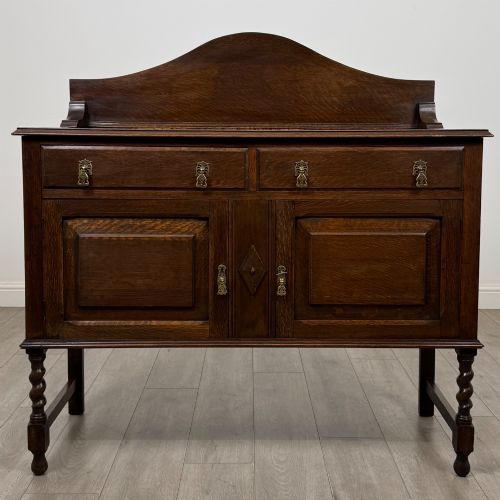
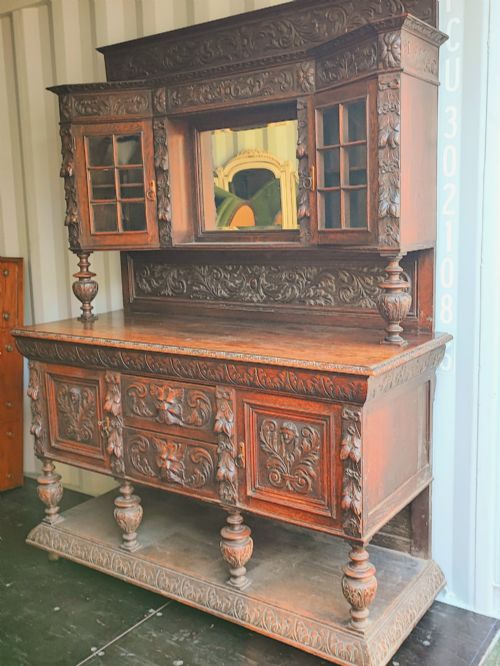
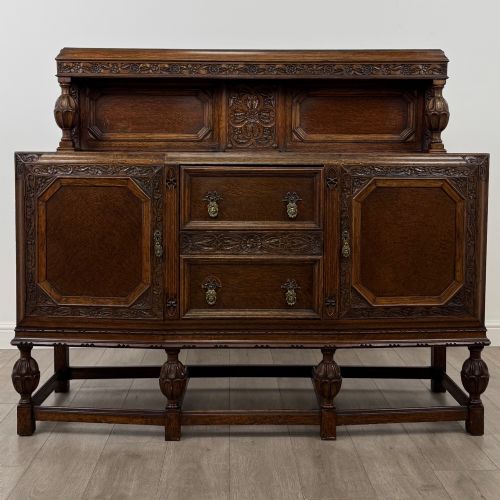
When searching for an edwardian oak dining sideboard, buyers encounter heavy timber storage furniture spanning the late nineteenth century through to the interwar decades. The pieces appearing in this category range from tall mirrorback server units to low dresser bases and carved buffets intended for formal dining rooms. While the Edwardian period dominates, related Victorian and early twentieth-century examples share the same domestic function of holding silver, linen, and dining china.
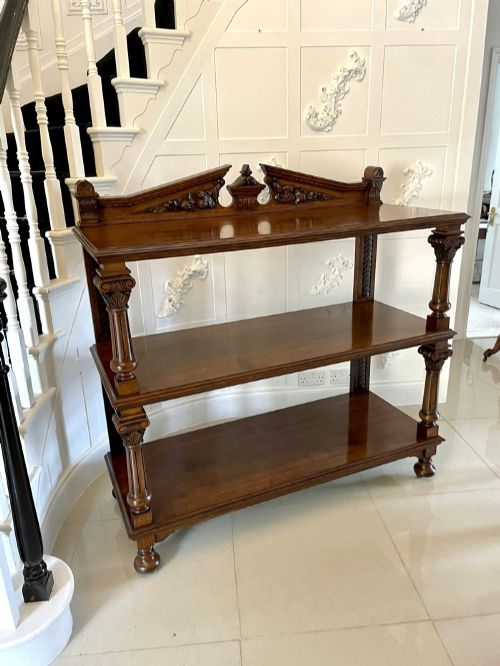
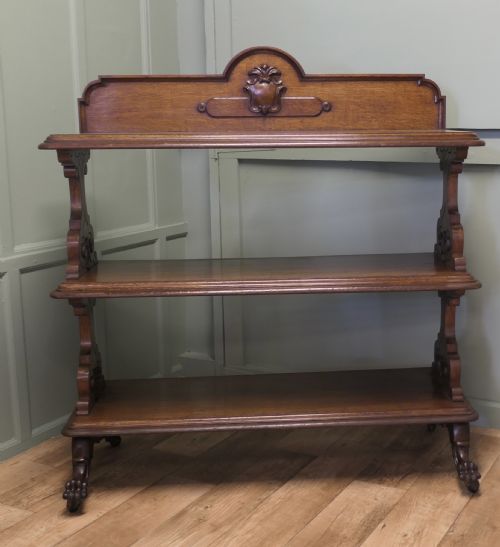
The predominant forms include standard two-door and three-door cupboards, sometimes fitted with top shelves, plate racks, or bevelled mirror backs. Buyers also meet variants such as dumbwaiters, side cabinets, and large buffet servers featuring wine racks or multiple drawers. These items reflect the heavy entertaining customs of their era, built to withstand daily household service.
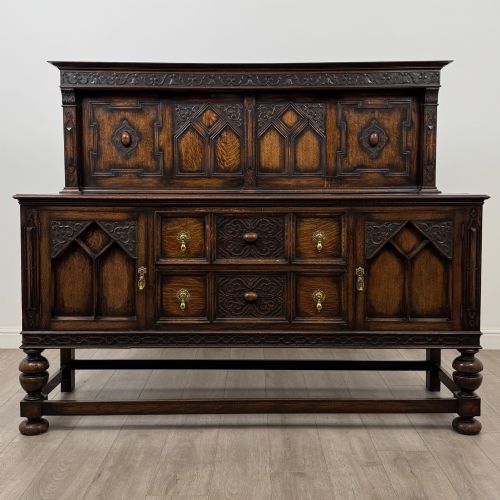
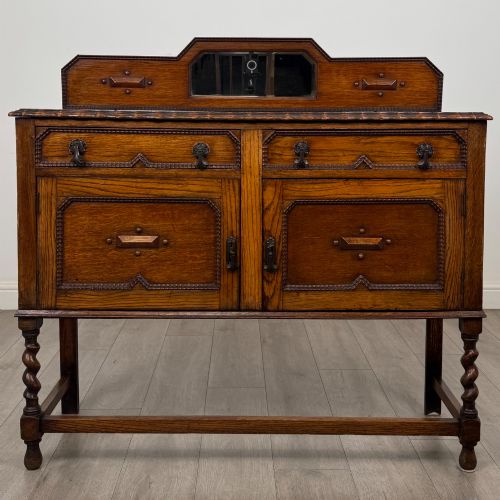
Stylistic influences stretch beyond strict Edwardian design, incorporating Jacobean revival twists, Gothic revival motifs, and the clean lines of the Arts and Crafts movement. Golden oak and dark carved oak finishes appear frequently alongside pollard oak and occasional burr walnut accents. Most survivals retain their original brass or copper hardware and glass components where mirror backs are fitted.
Materials and construction methods
Solid oak serves as the primary structural material for these dining pieces, chosen for its durability and strong grain patterns. Cabinetmakers utilised golden oak, pollard oak, and fumed finishes to achieve varied surface tones, pairing the timber with brass or copper handles, hinges, and strapwork. Mirror glass appears frequently in tall back panels, secured within carved wooden frames.
Construction relies heavily on traditional joinery methods combined with deep relief carving, turned barley twist columns, and pegged joints. Workshops employed subsidiary woods for internal drawer linings and carcass backs, applying hand-finished wax or polish to protect the timber surfaces. Metal mounts and decorative hinges anchor firmly into the solid oak framework.
Listings feature oak alongside brass, copper, and mirror glass across Edwardian, Victorian, and Arts and Crafts styles.
Assessing quality in construction and detail
The distinction between standard utility furniture and finer production lies in the depth of hand-carving, the selection of figured oak veneers, and the weight of the timber. Superior pieces display crisp relief work on panels, robust dovetail joints on drawers, and substantial brass or copper hardware rather than stamped sheet metal.
Design ambition also separates the tiers, with plain golden oak carcasses sitting at the functional end while architectural mirror backs, Green Man carvings, and integrated wine racks elevate the piece. The integrity of the original mirror glass, the matching of timber grains across large doors, and balanced proportions define the better examples.
Maple and Co·T Simpson and Son·Liberty·Liberty of London
The Edwardian Oak Dining Sideboard Glossary
- Sideboard
- A large dining room piece designed for storing tableware, linen, and serving food. It typically combines cupboards, drawers, and sometimes a top tier or mirror.
- Barley twist
- A type of woodturning shaped like a spiral helix. It appears frequently on the legs and upright supports of Edwardian and Jacobean revival furniture.
- Mirror back
- An upright wooden frame containing a bevelled mirror attached to the rear of a sideboard. This feature reflects light and displays decorative ceramics.
- Pollard oak
- Oak timber taken from trees that have been pollarded, producing tightly clustered knots and highly decorative grain patterns. Cabinetmakers used it for surface veneers.
- Buffet
- A low serving table or sideboard equipped with cupboards and flat top surfaces. It functions as a staging area during large meals.
Edwardian Oak Dining Sideboard: Frequently Asked Questions
What is a mirrorback sideboard?
A mirrorback sideboard incorporates an upright wooden superstructure fitted with a large mirror and sometimes small display shelves above the main serving surface. This design brightens dining spaces and provides a backdrop for decorative items.
These pieces were popular in formal dining rooms during the late Victorian and Edwardian eras. They offer standard lower cupboard storage combined with elevated display capacity.
How do I care for oak furniture?
Maintain oak surfaces by dusting with a soft cloth and applying a traditional beeswax polish periodically to nourish the timber. Avoid placing these pieces in direct sunlight or near heat sources to prevent the wood from splitting.
Solid oak tolerates regular domestic use well if kept away from excessive moisture. Proper wax application preserves the natural grain and deepens the colour over time.
Where were sideboards used?
Dining sideboards stood primarily in formal dining rooms as auxiliary furniture for serving meals and storing tableware. They held heavy ceramics, silver, and table linen close to the dining table.
In modern homes, these substantial cabinets transfer easily into hallways, living rooms, or large kitchens. Their deep cupboards provide practical storage for contemporary household items.
What defines Arts and Crafts furniture?
Arts and Crafts furniture emphasises visible construction, honest materials, and functional design over excessive factory ornamentation. Pieces often feature plain oak surfaces, exposed pegged joints, and handmade copper or brass hardware.
This style emerged in reaction to mass production, favouring craftsmanship and simple geometric lines. Sideboards from this movement display a restrained elegance distinct from heavily carved Victorian revivals.