

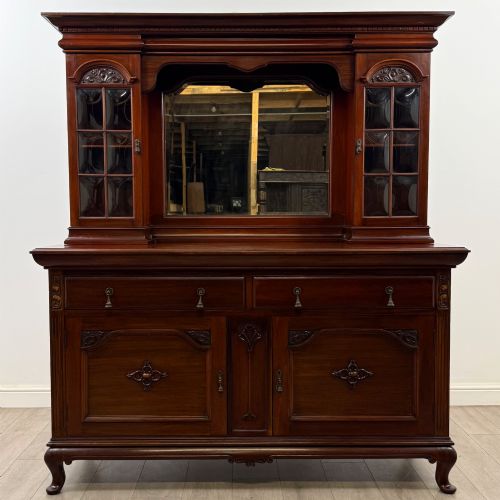


Leaded Glass Sideboard
A leaded glass sideboard brings together timber and joined panes to anchor a dining room or hall with solid utility.
Leaded Glass Sideboard
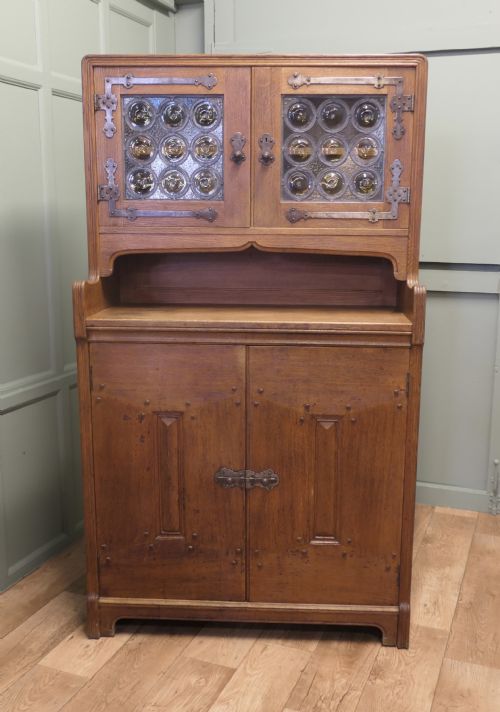
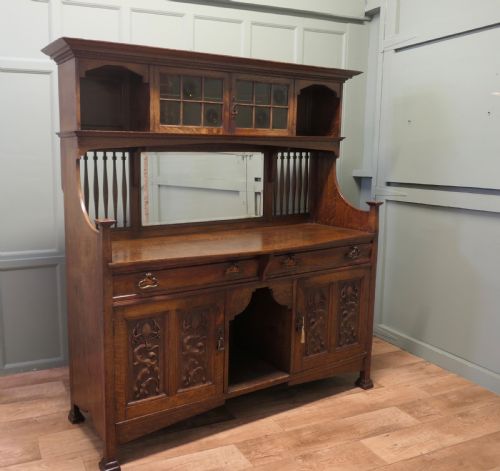
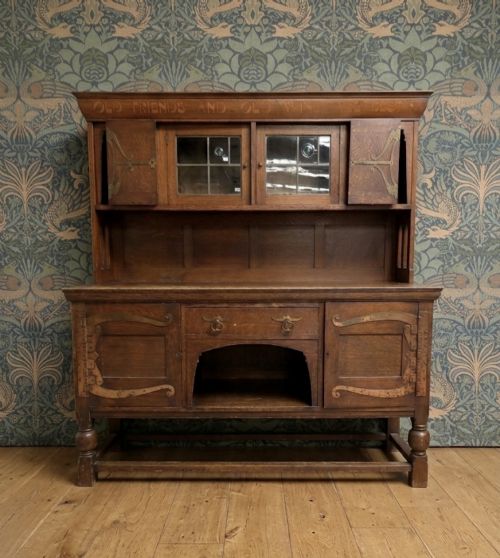
A leaded glass sideboard combines storage space with glazed display areas, appearing across periods from the late nineteenth century into the nineteen-thirties. You will most frequently encounter oak examples influenced by the Arts and Crafts movement or Edwardian tastes.
The form spans straightforward kitchen cupboards and bookcases alongside elaborate dining room pieces with leaded glass doors. These items function as heavy furniture designed to store tableware or display books while showing distinct regional styles.
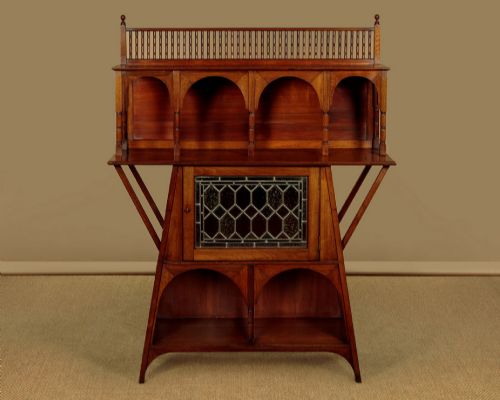
Makers working within revival styles also produced sideboards and cabinets incorporating leaded or stained glass panels. The selection ranges from dark Victorian Gothic revival pieces to lighter Edwardian oak and mahogany designs.
Materials and construction
Construction relies heavily on solid oak and mahogany timbers, joined to support the weight of heavy timber shelving and glass doors. Brass handles and iron hinges provide structural support and functional hardware across the periods.
Individual pieces of glass are held together within lead cames to form geometric or floral patterns on the cabinet doors. Artisans shaped the wood using traditional joinery methods, incorporating carved details or marquetry alongside the glazed sections.
Leaded Glass Sideboard Retail Price Guide 2026
Typical asking prices for leaded glass sideboard among the pieces listed under this phrase on Sellingantiques today, from the lower quarter to the upper quarter. They describe what is for sale here now, not the wider market.
Some cabinets hide their contents behind sturdy leaded glass while proudly displaying your grandmother's heaviest gravy boat.
Assessing quality and execution
Quality shows in the weight of the timber used and the precision of the lead work securing the glass panes. Better examples demonstrate careful selection of oak or mahogany grain that complements the proportions of the cabinet.
Superior pieces display thoughtful integration between the solid wooden base and the glazed upper section, rather than an awkward combination of parts. The execution of carved details or inlaid marquetry distinguishes standard production from exceptional workshop output.
Ambrose Heal for Heal & Son·Liberty & Co.
The Leaded Glass Sideboard Glossary
- Leaded glass
- Glass panes assembled using narrow strips of lead called cames. This technique secures the glass while creating geometric or decorative patterns.
- Arts and Crafts
- A design movement prioritising traditional craftsmanship and simple forms. Pieces from this style often feature honest construction and minimal surface ornament.
- Marquetry
- The art of applying decorative veneer pieces to a structure. This technique creates pictorial or geometric patterns on wooden surfaces.
- Came
- A slender strip of cast lead with a grooved channel. It holds individual pieces of glass securely within a window or cabinet door.
- Revival
- A style that consciously imitates the architecture or decorative arts of a previous era. Examples include Jacobean and Tudor revivals.
Leaded Glass Sideboard: Frequently Asked Questions
What is a leaded glass sideboard?
A leaded glass sideboard is a storage cabinet featuring glazed doors held together by lead cames, paired with a wooden base or cupboard space.
These pieces were primarily built for dining rooms and hallways to store and display household items.
How do I date a sideboard?
Dating relies on identifying the prevailing style, such as Arts and Crafts or Art Deco, alongside the choice of timber and hardware.
Nineteenth-century pieces often use heavier carved oak, while Edwardian and later examples tend toward lighter woods and simpler geometric glazing.
Where should I place one?
These sideboards suit dining rooms, large hallways, or living spaces where they can function as display cabinets and storage units.
Ensure the floor can support the substantial weight of the solid timber and glass construction.
How do I care for the wood and glass?
Maintain the timber by dusting regularly and applying appropriate wax polish sparingly to nourish the surface.
Clean the glass and lead cames gently with a soft cloth, avoiding harsh chemicals that might corrode the metal.