


Vintage Oak Sideboard Mirror
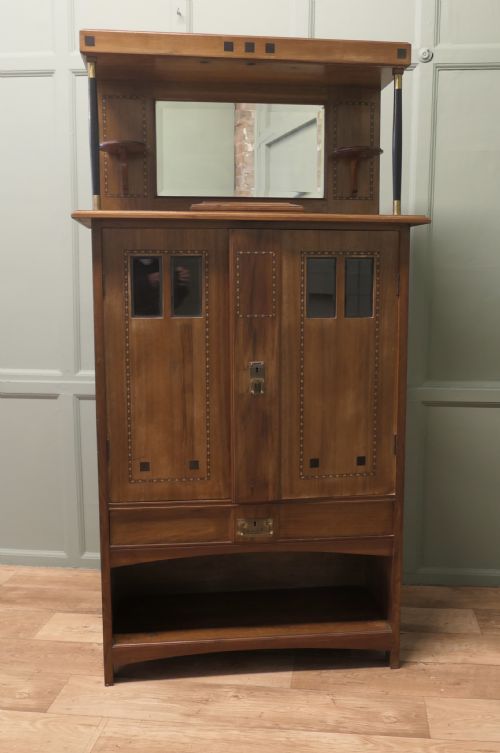
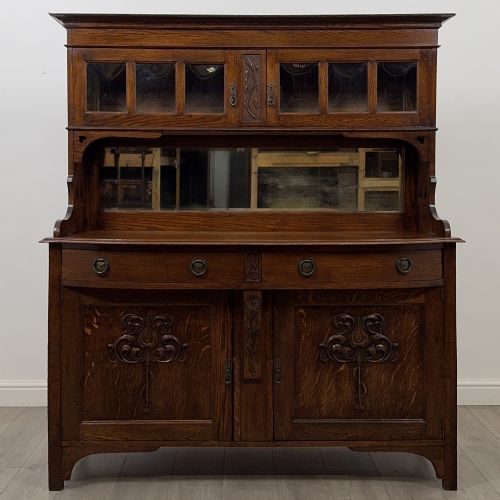
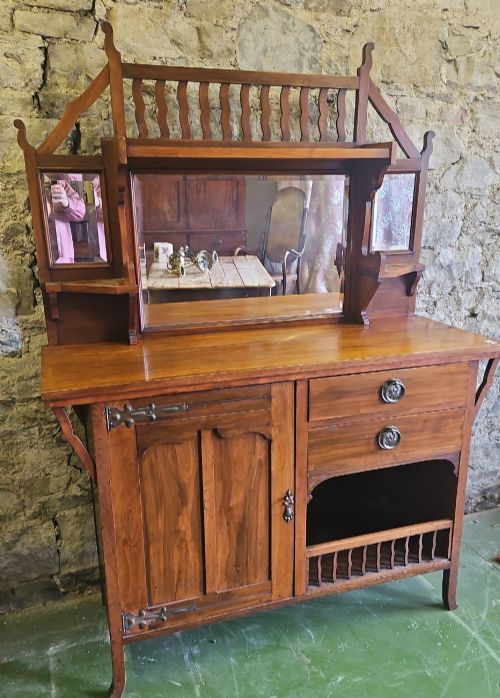
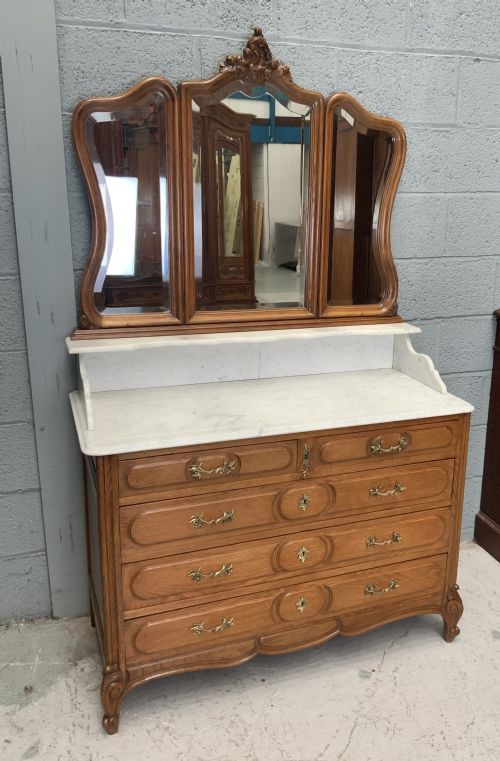
These vintage oak sideboard mirror pieces combine generous storage with reflective glass, spanning Edwardian and Victorian periods in rich timber and brass.
Vintage Oak Sideboard Mirror
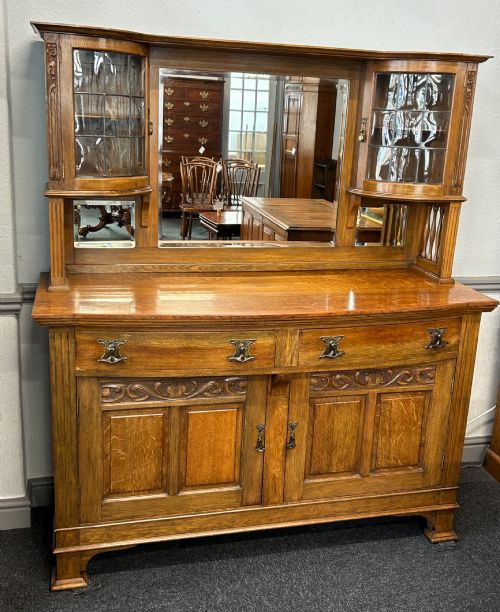
A vintage oak sideboard mirror brings together solid timber casework and polished glass, serving practical storage and display functions in dining rooms or hallways. The selection here leans heavily towards Edwardian and late Victorian examples, often featuring tall mirror backs designed to brighten domestic interiors.
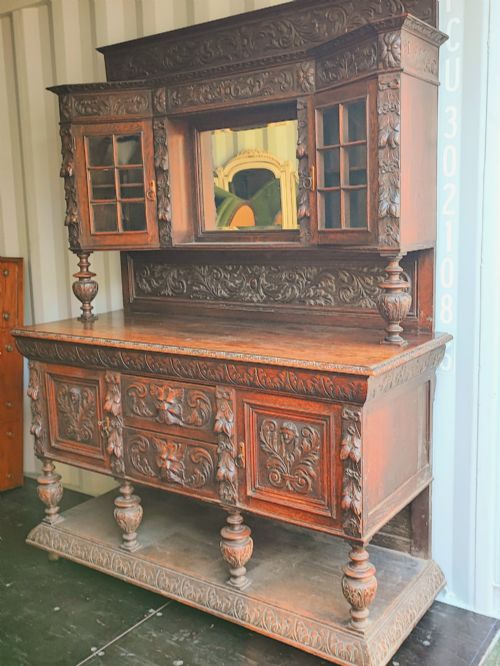
Forms range from compact washstands to substantial pedestal sideboards and cocktail cabinets, frequently incorporating carved details or leaded glass doors. The prevailing styles draw upon Arts and Crafts, Art Nouveau, and Jacobean Revival traditions, reflecting the diverse design movements of the late nineteenth and early twentieth centuries.
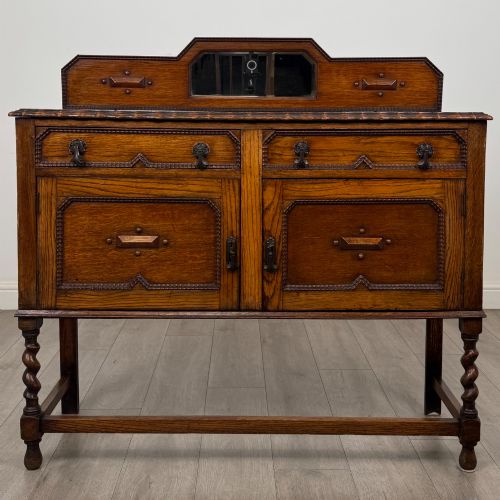
Most pieces combine functional cabinetry with decorative timber work, utilising golden oak, pollard oak, or bleached finishes. Buyers encounter everything from simple mirror-back sideboards to elaborate green man carvings and barley twist supports.
How they were made
Makers relied on solid oak and oak veneers, shaping the timber through traditional joinery and hand-carving techniques. Structural elements often incorporate brass hardware and iron fittings to secure heavy mirror glass and doors.
Surface finishes range from natural golden tones to bleached treatments and dark revivals, sealed with traditional polish or wax. Mirror glass is typically bevelled and set into carved wooden frames mounted securely to the sideboard superstructure.
Several pieces feature carved green man motifs, quietly watching over your dining room with foliage spilling from their mouths.
What varies in quality
The standard of craftsmanship shows in the depth and precision of the carved ornamentation, particularly on friezes and door panels. Pieces executed within the Arts and Crafts tradition often demonstrate superior hand-joinery and distinctive metalwork details compared to mass-produced equivalents.
Timber selection heavily influences the overall character, with figured golden oak and pollard oak marking out more ambitious commissions. The quality of the mirror glass and the stability of the superstructure also separate standard utility items from finer workshop pieces.
The Vintage Oak Sideboard Mirror Glossary
- Mirror back
- A tall wooden superstructure fitted with a large glass mirror, attached to the rear of a sideboard to reflect light and display decorative items.
- Arts and Crafts
- A design movement emphasising handcraftsmanship, simple forms, and traditional materials, frequently seen in oak furniture from the late nineteenth and early twentieth centuries.
- Barley twist
- A type of furniture turning resembling a twisted rope or barley sugar stick, popular in Jacobean and later revival pieces.
- Pedestal sideboard
- A heavy cabinet design featuring two distinct pedestals or cupboards flanking a central section or drawer.
- Green man
- A sculptural motif representing a human face entwined with leaves, vines, or branches, common in nineteenth-century carved oak decoration.
Vintage Oak Sideboard Mirror: Frequently Asked Questions
How do I clean an antique oak mirror back?
Dust the timber regularly with a soft, dry cloth and nourish the wood occasionally with traditional beeswax to maintain its lustre.
Clean the mirror glass using a mild glass cleaner applied to a cloth rather than directly onto the glass, preventing moisture from reaching the silvered backing or wood frame.
Are these sideboards difficult to move?
These pieces are constructed from solid oak and incorporate heavy mirror glass, making them exceptionally heavy and requiring at least two people for relocation.
The mirror back assemblies on many Edwardian and Victorian models can be detached from the base cabinet to ease transport and placement within a room.
What rooms suit a mirror back sideboard?
Dining rooms remain the traditional home for these pieces, providing surface space for serving food and storage for tableware.
Living rooms and spacious hallways also accommodate them well, where the reflective glass helps amplify natural light in the interior space.
How do I distinguish Edwardian oak from Victorian oak?
Victorian oak furniture tends to feature heavier, darker finishes and elaborate revival carving styles like Renaissance or Jacobean influences.
Edwardian pieces often display lighter golden tones and cleaner lines associated with Arts and Crafts simplicity, though crossover periods exist.